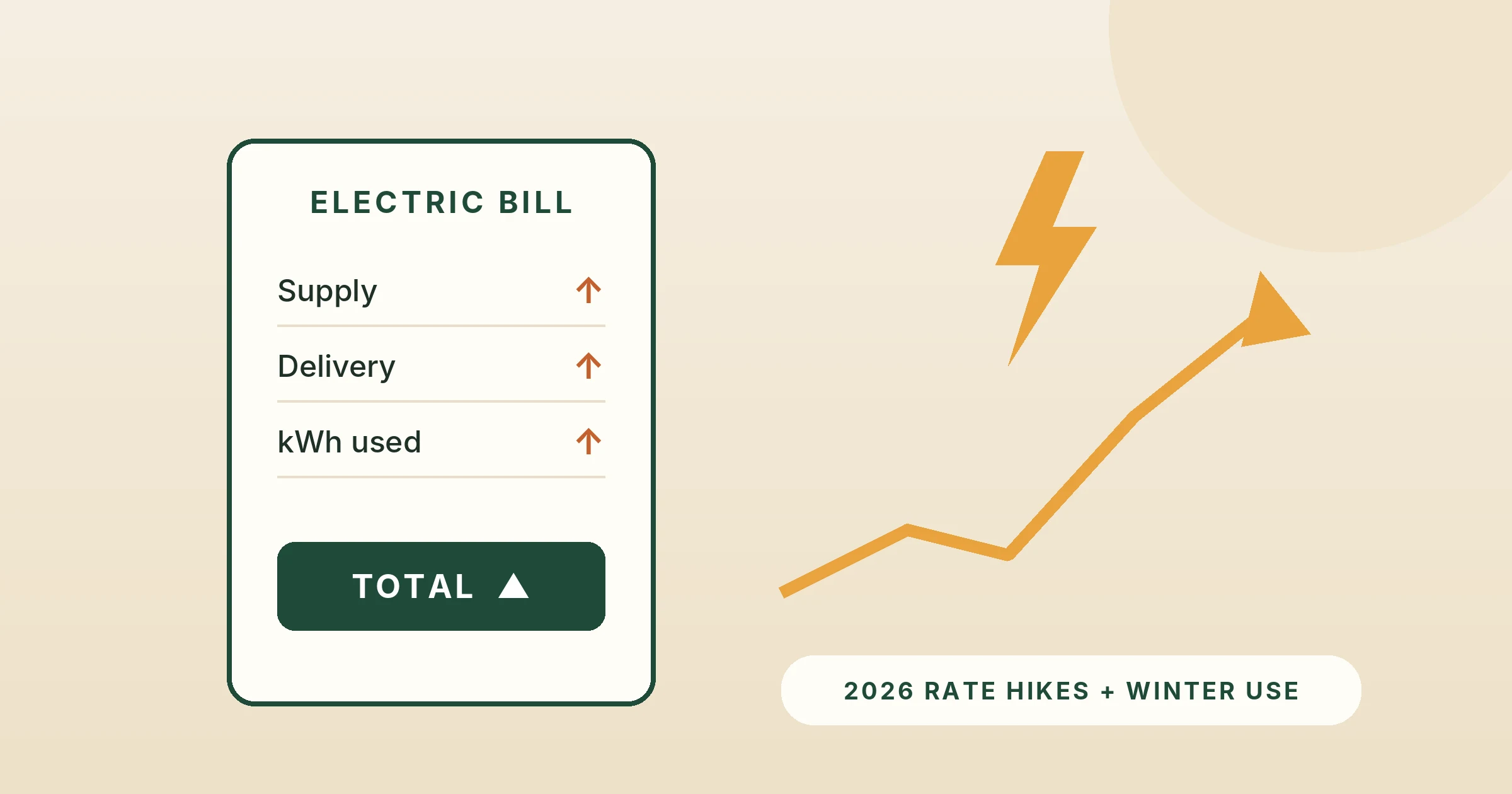
Two things usually drive a higher bill: a higher price per kWh and more kWh used. On price, regulators approved 43 utility rate increases in 2025 that will raise bills for about 56 million Americans, and the EIA expects residential electricity prices to rise again in 2026. On usage, winter adds space heaters, electric heat, longer lighting hours and holiday lights.
Check line 1 of your bill (price) and line 2 (kWh) against last year. Then fix whichever one moved.
Why electric bills are up in 2026
- Rate increases. According to the nonprofit PowerLines, regulators approved 43 rate increases worth $11.6 billion in 2025, raising bills for about 56 million people, with dozens more requests pending. Utilities point to aging lines and equipment, storm damage, fuel costs and rising demand, including from data centers.
- Wholesale power. After a record hot summer, EIA forecasts 2026 wholesale electricity prices up 41% in the PJM region, which covers much of the Mid-Atlantic and parts of the Midwest. Those costs reach homes through supply charges, often with a delay.
- Winter supply rates. Some utilities reset their supply price for the winter. In Rhode Island, for example, regulators approved a winter increase of about 16% that started on October 1.
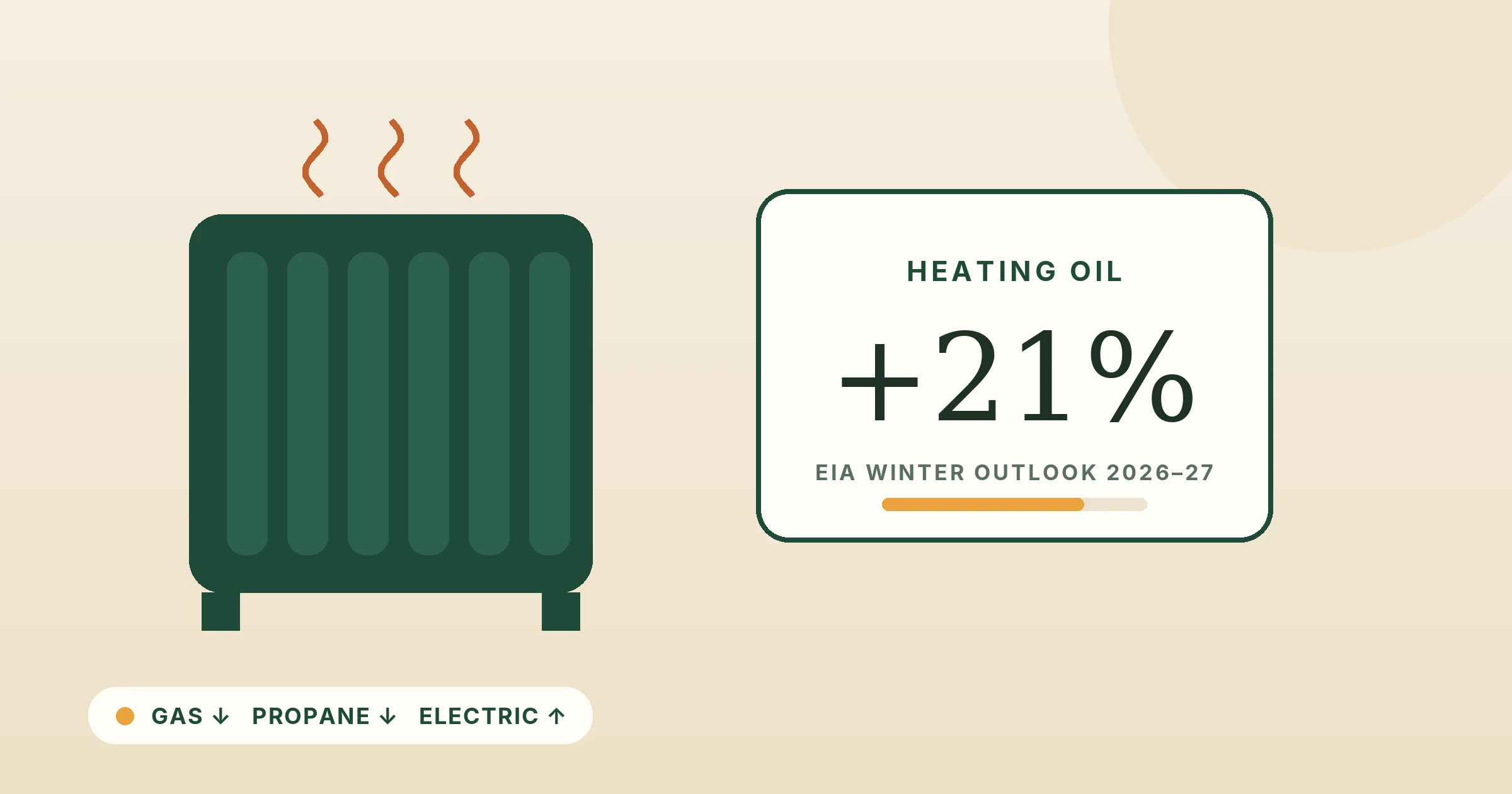
- Your own usage. Electric heat, space heaters and shorter days add kWh just as rates rise. See the 2026–27 winter heating cost forecast.
Read your bill in 3 minutes
- Find total kWh used and compare it with the same month last year. Most bills print a 12-month usage chart.
- Divide the total bill by kWh to get your real price per kWh, all charges included.
- Split supply from delivery. Supply (or generation) is the energy itself; delivery pays for the wires. Fixed monthly charges do not change no matter how little you use.
- Check the dates. A longer billing period or an estimated reading can inflate one bill by itself.
| What changed | Likely cause | Best fix |
|---|---|---|
| Price per kWh up, kWh flat | Rate increase or new winter supply price | Check your rate plan and budget billing |
| kWh up, price flat | Heating, space heaters, new appliance, guests | Find the big loads, then cut them |
| Both up | Winter plus a rate increase | Do both, starting with heating |
| One bill much higher than the rest | Longer billing period or estimated reading | Read your meter and ask the utility to correct it |
If your price went up
- Ask about every rate plan. Time-of-use plans can save money if you can run the dishwasher, laundry and EV charging late at night; they can cost more if you cannot.
- Use budget billing to spread winter peaks across the year. It does not lower the total, but it prevents a shock in January.
- Be careful with third-party supply offers. In states with retail choice, teaser rates often jump after a few months. Read the renewal terms.
If your usage went up: find the big loads
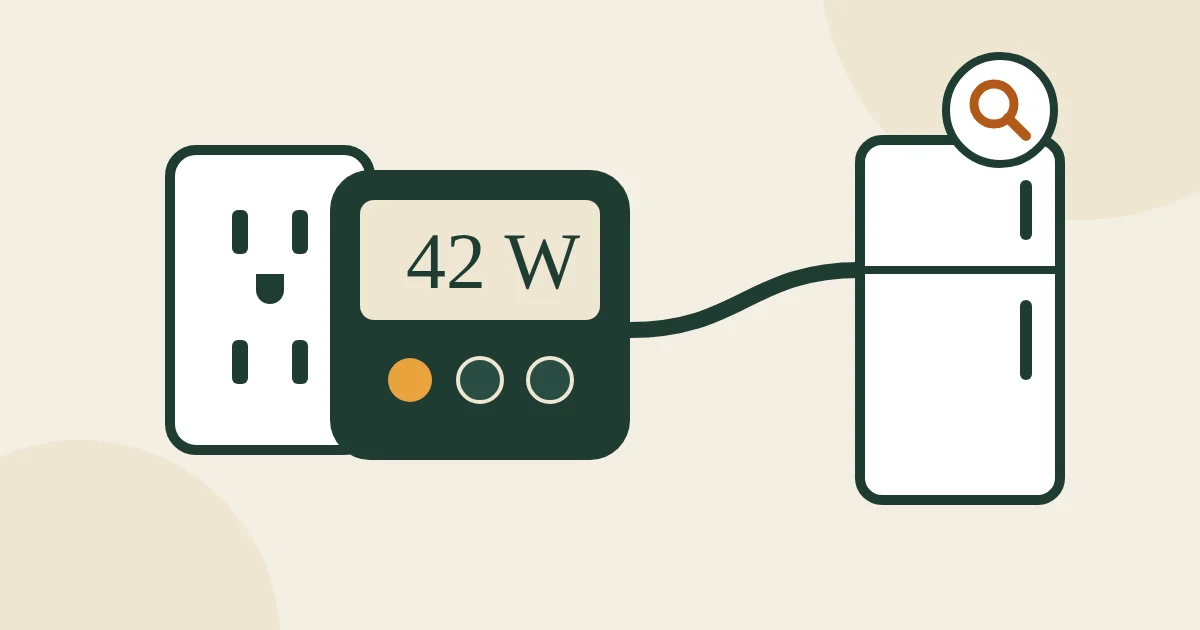
Heating is almost always the biggest winter load. After that, look at the water heater, the dryer, a second fridge or freezer and anything that runs all day. A plug-in meter shows what any 120-volt appliance actually uses; a whole-home monitor shows everything, including the furnace fan and water heater.
P3 Kill A Watt P4400
Plug it into the wall, plug the appliance into it, and it shows watts and total kWh. It is the simplest way to catch a space heater, old fridge or gaming PC that costs more than you think. Compare it with smart plugs in our Kill A Watt vs smart plug guide.
Emporia Vue 3 Home Energy Monitor
Installs in the electrical panel and shows real-time use by circuit in an app, including electric heat and the water heater. Installation means working inside the panel, so hire an electrician if you are not comfortable doing it.
10 fixes, ranked by payoff
- Turn the heat down at night and when you are out. Use the thermostat setback calculator. Heat pump owners should use smaller setbacks.
- Heat the room, not the house, only when it makes sense. Check with the space heater vs central heat calculator.
- Seal drafts around doors and windows: how to stop drafts.
- Warm yourself instead of the air with a heated throw or mattress pad: heated blanket vs space heater.
- Turn the water heater to 120°F and insulate an older tank: is a water heater blanket worth it?
- Swap to a 1.5 GPM shower head if you have an electric water heater: best low-flow shower heads.
- Cut standby power from TVs, consoles and chargers: phantom power explained.
- Finish the LED switch, especially for lights that stay on for hours: best LED bulbs.
- Put holiday lights on a timer: what Christmas lights cost to run.
- Run the dryer less: full loads, a high-speed spin first, and air-dry what you can.
If you are already behind
Call your utility before a shutoff notice, not after. Ask about payment plans, budget billing, hardship programs and your state’s winter shutoff protections. Eligible households can also apply for LIHEAP, the federal energy assistance program, through their state or local agency.
FAQ
Why did my electric bill double this month?
Usually because usage jumped, from electric heat or a space heater, or because the billing period was longer or based on an estimated reading. Compare kWh with the same month last year and check the dates on the bill.
Are electricity rates going up in 2026?
Yes, in many places. EIA expects average U.S. residential electricity prices to rise in 2026, and many utilities have approved or requested rate increases. The size varies a lot by state and utility.
Do data centers raise my electric bill?
They can add to demand and grid costs, but how much they affect your bill depends on your region, your market and how regulators assign costs. Aging infrastructure, storms and fuel prices also drive increases.
What uses the most electricity in winter?
Electric heating, including heat pumps, baseboard heat and space heaters, followed by the water heater and the dryer.
Is budget billing worth it?
It does not lower your total cost, but it spreads winter and summer peaks evenly across the year, which makes bills predictable.
Sources
- CBS News: Millions of Americans face higher utility bills as dozens of rate hikes take effect (PowerLines data)
- EIA: Winter fuels outlook press release (October 6, 2026)
- Rhode Island regulators approve winter electric rate increase starting October 1
- HHS: LIHEAP

Email me at hello@thelowbillhome.com. I read every message, and when a rate, a rule or a product changes, I update the guide. — Eugene
Affiliate Disclosure: The Low Bill Home is a participant in the Amazon Services LLC Associates Program. As an Amazon Associate we earn from qualifying purchases, at no extra cost to you. Rates, forecasts and product details change, so check the official sources and the listing before you decide.