Every December the same question comes up at the kitchen table: are the lights on the house going to show up on the electric bill? The honest answer depends on two things, what kind of lights you have and how many hours they burn. Old incandescent strands can quietly add $30 or more to a season. The same display in LED costs about as much as a cup of coffee. Here is the real math, a calculator for your own display, and the lights and timers worth buying before the rush.
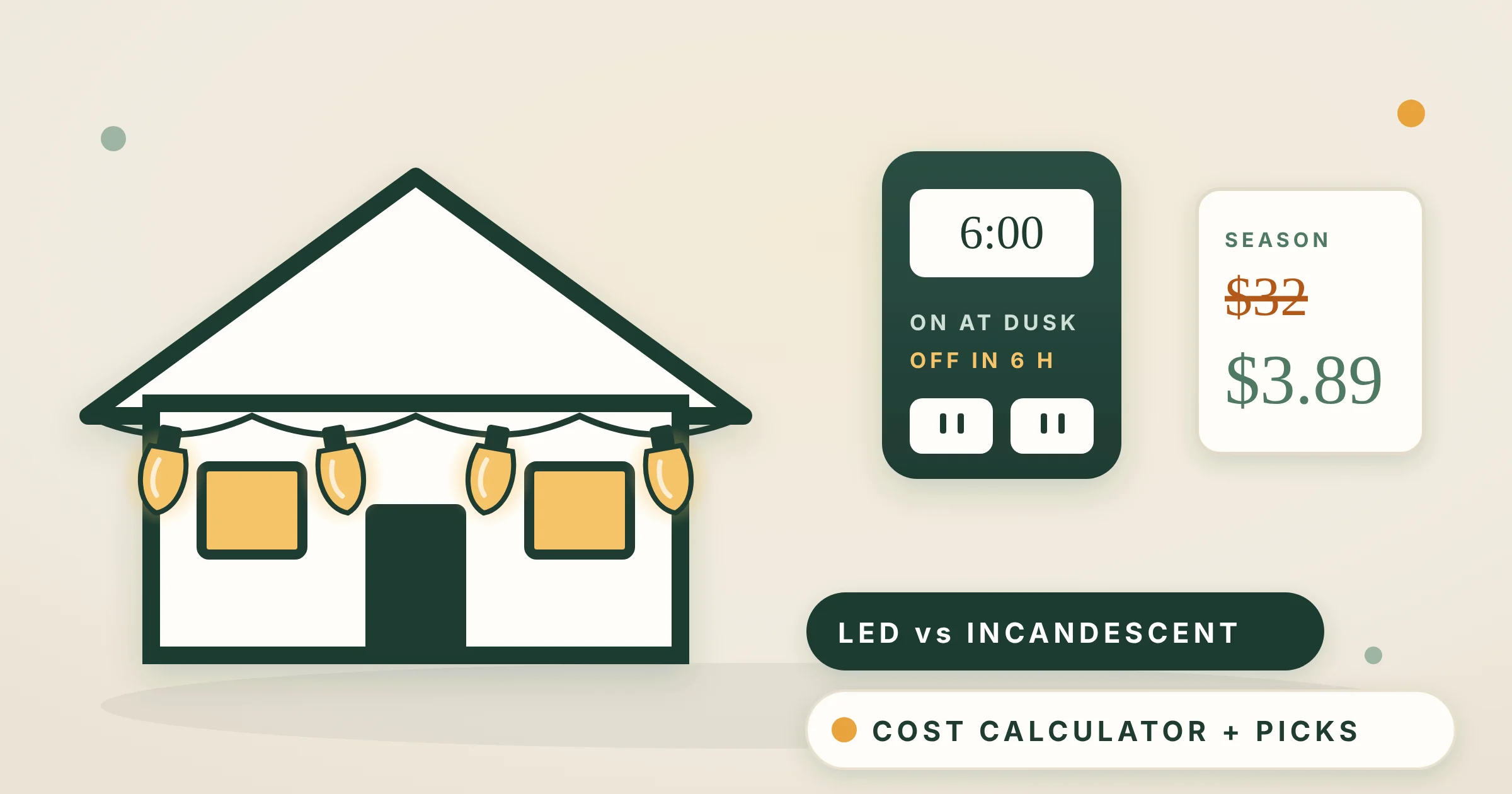
LED Christmas lights cost almost nothing to run. A 100-light LED mini strand draws about 6 watts: on for 6 hours a night for 40 nights, that is about 26 cents a season at 18 cents per kWh. The same strand in old incandescent bulbs draws about 40 watts, about $1.73. Big C9 bulbs are where the money goes: a 25-bulb incandescent C9 strand (7 W per bulb) costs about $7.56 a season, and the LED version about 65 cents. For a typical house, switching to LED and adding a timer cuts the lights from roughly $30 to under $5 a season. Our picks: Brightown LED C9 for the roofline, Brightown LED mini lights for the tree, and a BN-LINK dusk-to-dawn timer so you never leave them on all night.
Affiliate note: As an Amazon Associate, The Low Bill Home earns from qualifying purchases. Buying through our links costs you nothing extra. We have not tested these lights hands-on: picks are based on the makers’ published specs, safety listings and long-term buyer feedback, and we say where a product falls short.
Classic big-bulb look in shatterproof LED. 100 bulbs on 12-inch spacing, IP65, connect up to 7 sets.
Check price on AmazonWhy we picked it ↓6 W listed for 32 ft of lights, 8 modes and a built-in 6-hours-on timer.
Check price on AmazonWhy we picked it ↓On at dusk, off after 2, 4, 6 or 8 hours. No app, two grounded outlets, ETL listed.
Check price on AmazonWhy we picked it ↓Shopping on Black Friday? Add the lights to your Amazon cart now so they are ready when the deals start (Black Friday is November 27, Cyber Monday November 30, 2026). Popular holiday lights can sell out in early December.
The 10-second formula
Every light string has a wattage printed on the tag near the plug or on the box. Once you know it, the cost is simple:
watts ÷ 1,000 × hours on × price per kWh = cost
Example: a 40-watt incandescent mini strand, on 6 hours a night for 40 nights, is 40 ÷ 1,000 × 240 hours = 9.6 kWh. At 18 cents per kWh, close to the U.S. average residential price the EIA expects for 2026, that is $1.73. Check the price on your own bill: it runs from about 12 cents in some states to over 40 cents in others, and the calculator below lets you enter yours.
Two numbers matter more than anything else in that formula: the watts, which is mostly a question of LED versus incandescent, and the hours, which is a question of whether a timer turns them off or you do.
What each type costs per season
Here is what common light sets cost for a typical season: on 6 hours a night (about 5 to 11 p.m.) for 40 nights (Thanksgiving weekend to early January), at 18 cents per kWh.
| Light set | Watts | Per night | Per season |
|---|---|---|---|
| 100-light incandescent mini strand | about 40 W | 4.3¢ | $1.73 |
| 100-light LED mini strand | about 6 W | 0.6¢ | 26¢ |
| 25-bulb incandescent C9 strand (7 W bulbs) | 175 W | 19¢ | $7.56 |
| 25-bulb LED C9 strand (0.6 W bulbs) | 15 W | 1.6¢ | 65¢ |
| 100 ft permanent LED roofline (Govee, full brightness) | 72 W max | 7.8¢ | $3.11 |
| A 6-ft inflatable | see the blower tag | use the calculator’s “other” field | |
Wattages: incandescent minis are typically about 0.4 W per bulb; the NRDC cites 7 W for a traditional C9 bulb; LED figures are the listed specs of the products below. Your strands may differ: read the tag.
The pattern is clear. Mini lights are cheap either way; even the incandescent ones cost under $2 a strand. Big C9 and C7 incandescent bulbs are the expensive part of an old display, because each bulb draws as much as a whole strand of LED minis.
Christmas lights cost calculator
What your display costs this season
Count big bulbs one by one (a 25-bulb strand counts as 25). For anything else, add the watts from its tag in “Other watts”. Want the cost of any other device? Try our energy cost calculator.
Is switching to LED worth it?
For big bulbs, almost always. For minis, only when the old ones wear out. Here is why.
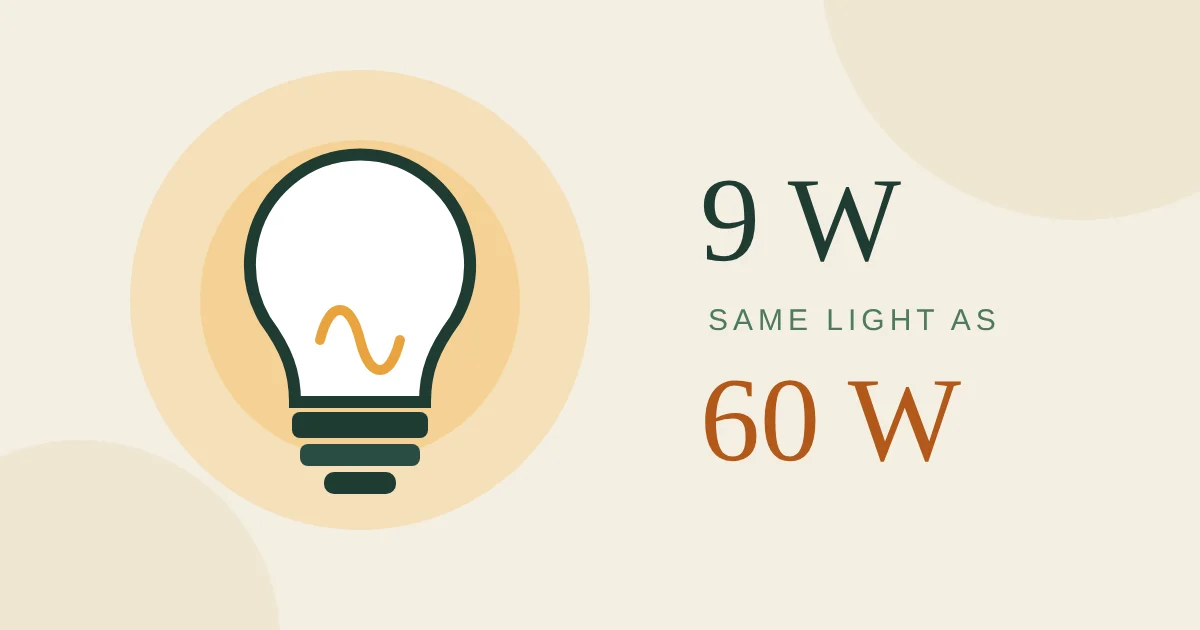
- The energy gap is huge. The NRDC puts LED holiday lighting at about 80% less energy than incandescent, and Canada’s energy regulator found LED Christmas lights use about 85% less. In our table the gap is even wider for C9 bulbs: 0.6 W versus 7 W, more than 90% less.
- Old C9 strands pay for new LED bulbs fast. A 25-bulb incandescent C9 strand costs about $7.56 a season to run; the LED version about 65 cents. You save nearly $7 a strand every year, so a pack of replacement LED bulbs usually pays for itself in a season or two. And you do not need new strands: LED C9 bulbs screw into the same E17 sockets.
- Old mini strands barely matter. An incandescent mini strand costs about $1.73 a season, so replacing a working one saves about $1.50 a year. Replace minis when they fail or when half a strand goes dark, not for the bill.
- LEDs last and stay cool. The NRDC notes LED holiday lights can last up to 20,000 hours, and they run cool to the touch, which is easier on a dry tree. Plastic LED bulbs also do not shatter when a strand falls off the gutter.
- More strands per outlet. Because each LED strand draws so little, you can connect many more end to end than incandescent ones. Always follow the limit on the tag.
The catch with LED is color. Cheap “cool white” LEDs look blue next to old bulbs. For the classic look, choose warm white around 2700K, which is what our C9 picks use.
The free saving: fewer hours
Hours matter as much as watts. A display left on all night, 6 p.m. to 7 a.m., burns 13 hours instead of 6: more than double the bill, at hours when nobody is looking. Three ways to cut hours without thinking about it:
- A dusk-to-dawn timer with a countdown. The lights turn on when it gets dark and off after the number of hours you pick. This is the simplest fix, and it adjusts by itself as the days get shorter.
- A smart plug with a sunset schedule. Set “on at sunset, off at 11 p.m.” in the app, and turn everything off from your phone when you go away.
- Built-in timers. Many LED strands now have a 6-hours-on, 18-hours-off timer in the controller. Turn it on once at dusk and it repeats every day.
Indoor tree lights belong on a timer too: they are the ones most often left on overnight and when nobody is home.
How we chose
- Listed wattage or bulb power where the maker publishes it, so you can run the numbers before you buy.
- Safety listing (UL or ETL) and an outdoor rating for anything meant for outside.
- Warm white options for the classic look, and shatterproof plastic bulbs.
- Long-term buyer feedback on dead sections, color and timers.
- In stock and sold by Amazon or the brand with U.S. delivery when we checked on October 23, 2026.
One listing we checked shows “1 watt” for a 100-bulb strand, which cannot be right for the whole set, so for C9 sets we use the listed per-bulb figure of a comparable LED bulb (0.6 W). If a listing’s numbers look odd, trust the tag on the product.
The picks
Brightown 100 ft LED Vintage C9 String Lights, Warm White
If you want the classic big-bulb roofline without the incandescent bill, this is the set to start with. You get 100 ft with 100 C9 LED bulbs on 12-inch spacing, plus 4 spares, in a 2700K warm white that sits close to the old glow. The bulbs are shatterproof plastic on standard E17 sockets, so you can swap a dead one in seconds, and the set is IP65 waterproof and UL listed. Brightown lets you connect up to 7 sets end to end.
One 100-ft run covers the front gutter line of many single-story houses. Measure your roofline first: runs that are too long leave a coil of wire at the end, and too short means a gap at the corner.
- 100 ft, 100 + 4 LED C9 bulbs, 12-inch spacing
- Warm white 2700K, E17 base
- IP65, UL listed, shatterproof
- Connect up to 7 sets
Good: the vintage look in LED, replaceable bulbs, long runs from one plug.
Watch out: the listing’s wattage figure looks wrong, so check the tag; plastic bulbs look slightly less sparkly than glass up close; 100 ft is a lot of wire for a small porch.
Skip it if: you already own incandescent C9 strands in good shape: just change the bulbs (next pick).
Austin Coast C9 LED Replacement Bulbs, 100-Pack, Warm White
This is the cheapest big saving in the whole guide. If your roofline already has C9 strands with incandescent bulbs, you do not need new strands: unscrew the old 7-watt bulbs and screw these in. Austin Coast lists them at 0.6 watts each, 2700K warm white, with an E17 base and faceted, unbreakable plastic housings. For a 25-bulb strand that is 15 W instead of 175 W, about $6.90 a season saved per strand on our numbers. The maker offers a 2-year warranty.
- 100 C9 LED bulbs, E17 base
- 0.6 W each listed, 2700K warm white
- Shatterproof faceted plastic
- 2-year warranty
Good: biggest saving per dollar, keeps strands you already own, cool to the touch.
Watch out: only for C9 / E17 sockets (C7 strands use the smaller E12 base); check old strands for cracked sockets or brittle wire before you reuse them.
Skip it if: your old strands have damaged cords or loose sockets: replace the whole set for safety.
Brightown 100-Count LED Mini String Lights (32 ft)
For the tree, the banister or the bushes, a good LED mini strand is all you need. This one is listed at just 6 watts for 32 ft and 100 lights, so ten of them together draw about as much as one and a half old incandescent strands. It has 8 lighting modes (including steady on), a built-in timer that runs 6 hours on and 18 off, and memory that keeps your last mode. You can connect up to 8 sets, and the IP44 rating covers indoor and sheltered outdoor use. This listing is multicolor; Brightown sells warm white versions too.
- 100 LED minis, 32 ft
- 6 W listed
- 8 modes, 6-on/18-off timer, memory
- IP44, connect up to 8 sets
Good: very low power, timer built in, easy to wrap a 6–7 ft tree with 3–4 strands.
Watch out: IP44 means splash-proof, not for puddles or buried outlets; the controller box needs to stay dry; flashing modes are not for everyone.
Skip it if: you want app control and color effects: see the permanent lights below.
Govee Permanent Outdoor Lights 2 (100 ft, RGBIC)
If you are tired of the ladder every November, permanent eave lights go up once and stay. Govee’s second-generation set covers 100 ft with individually colored segments, so it can do warm white for Christmas, orange for Halloween and plain white for the porch the rest of the year. You control it from the Govee app, Alexa or Google Assistant, with schedules and timers built in. The lights are IP67 and the control box and adapter IP65. Govee lists the set at 72 watts at most; at full white for 6 hours a night it costs about $3 a season, and less at lower brightness.
- 100 ft, RGBIC, app and voice control
- 72 W max listed, 36 V
- IP67 lights, IP65 control box
- Clips, screws and VHB tape included
Good: no more yearly hanging, timers in the app, use it all year for porch light.
Watch out: the biggest upfront cost here; it cannot be cut to length; Govee says not to mix it with first-generation sets; a year-round light adds up if left on every night.
Skip it if: you rent or only decorate for a few weeks: a C9 set is far cheaper.
BN-LINK Outdoor Light Timer with Dusk-to-Dawn Sensor
The single best money-saver for outdoor lights is a timer you never have to think about. This one has a light sensor: set the dial to 2, 4, 6 or 8 hours and the lights come on at dusk and switch off after that time, every day, with no app and no Wi-Fi. It has two grounded outlets, is rated 125 V / 15 A, is ETL listed and has a heavy 14-gauge outdoor cord. BN-LINK says to hang it vertically at least 2 ft off the ground, with the sensor where it sees the sky but not your porch light.
Prefer exact times? BN-LINK’s 7-day programmable outdoor timer runs up to 8 on/off programs, has a random vacation mode and a backup battery that keeps your settings through an outage.
- Dusk-to-dawn sensor + 2/4/6/8 h countdown
- 2 grounded outlets, 125 V / 15 A
- ETL listed, 14 AWG SJTW cord
- No app, no Wi-Fi
Good: set once for the whole season, follows the sunset by itself, cheap.
Watch out: a nearby porch light or street light can fool the sensor; no remote control; mechanical dial only.
Skip it if: you want phone control or voice: the Kasa plug below does that.
Kasa Outdoor Smart Plug EP40 (2 outlets)
A smart plug does what a timer does, plus control from your phone. The Kasa EP40 has two outlets you control separately, so the roofline and the yard can follow different schedules. Schedules can follow sunset and sunrise with an offset, say “on 15 minutes after sunset, off at 11 p.m.”, and you can turn everything off from your phone or with Alexa or Google Assistant. TP-Link rates each outlet up to 15 A / 1,875 W. It needs 2.4 GHz Wi-Fi that reaches the outlet outside, and this listing is shipped and sold by Amazon.
- 2 independently controlled outlets
- Up to 15 A / 1,875 W per outlet
- Sunrise/sunset schedules, countdown
- Alexa, Google Assistant, 2-year warranty
Good: two schedules from one plug, remote off when you travel, no hub.
Watch out: needs Wi-Fi at the outdoor outlet; app setup takes a few minutes; if Wi-Fi drops, schedules still run but remote control does not.
Skip it if: your Wi-Fi does not reach outside: the BN-LINK sensor timer needs nothing.
Safety before savings
Lights cost little to run, but they do start fires. The NFPA reports that U.S. fire departments responded to about 150 home fires a year that started with Christmas trees in 2017–2021, and electrical distribution or lighting equipment was involved in 44% of them. Decorative lights alone started about 19%. A few habits cover most of the risk:
- Use lights listed by a testing lab (UL, ETL or CSA) and marked for outdoor use if they go outside.
- Check every strand before it goes up: cracked sockets, bare wire or loose connections mean it goes in the trash.
- Plug outdoor lights into a GFCI-protected outlet, and use outdoor-rated extension cords and timers.
- Do not connect more strands than the tag allows, and do not overload one outlet.
- Turn lights off when you go to bed or leave home. A timer makes this automatic.
- Keep a real tree watered. The NFPA notes dry trees burn far more easily, and 30% of tree fires happen in January.
7 mistakes that cost money
- Leaving lights on all night. It more than doubles the hours, and the bill, for nobody.
- Keeping incandescent C9 bulbs. Each one draws more than a whole strand of LED minis, so a few dozen of them can be half the bill of an old display.
- Replacing working LED minis for the bill. They already cost pennies; spend the money on a timer.
- Buying “cool white” by mistake. Returns cost time; look for 2700–3000K for warm white.
- Running indoor lights while you are out. Put the tree on a plug-in timer too.
- Forgetting the inflatables. Fans run whenever they are lit: read the blower’s tag and add it to the calculator.
- Pulling strands off the gutter in January. Yanking breaks sockets; unclip them and wind them on a reel so they last.
FAQ
How much does it cost to run Christmas lights for a month?
At 6 hours a night for 30 nights and 18 cents per kWh: about 19 cents for a 100-light LED mini strand, about $1.30 for an incandescent mini strand, and about $5.67 for a 25-bulb incandescent C9 strand. A typical older display of 10 mini strands and 50 C9 bulbs (750 watts) costs about $24 a month; the same display in LED (90 watts) about $2.92.
Are LED Christmas lights worth it?
For big C7 and C9 bulbs, yes: a 7-watt incandescent C9 bulb uses more than ten times the power of a 0.6-watt LED one, so a 25-bulb strand saves nearly $7 a season. LED replacement bulbs fit the same E17 sockets. For mini lights the saving is about $1.50 a strand a season, so replace old minis when they fail rather than for the bill.
Is it cheaper to leave Christmas lights on all night?
No. Lights use power for every hour they are on, and there is no meaningful startup cost to switching them off. Running them 13 hours instead of 6 more than doubles the cost. A dusk-to-dawn timer with a countdown turns them on at dark and off after the hours you choose.
How many Christmas light strands can I connect together?
Follow the limit printed on the tag or box; it is set by the wire and fuse rating. LED strands allow many more than incandescent ones because each draws so little. Brightown says its C9 set connects up to 7 sets and its LED mini lights up to 8. Never mix brands end to end unless the maker says they are compatible.
Do Christmas inflatables use a lot of electricity?
It depends on the blower, so read the tag on the fan or the listing. As an example, a 100-watt inflatable running 6 hours a night for 40 nights uses 24 kWh, about $4.32 at 18 cents per kWh. Enter your inflatable's watts in the calculator's “other watts” field.
Can I use indoor Christmas lights outside?
No. Use lights marked for outdoor use, listed by a testing lab such as UL or ETL, and plug them into a GFCI-protected outlet with outdoor-rated cords and timers. Indoor lights are not built to handle rain, snow and cold.
Keep going
- Best LED light bulbs: the same swap for the lamps you use all year
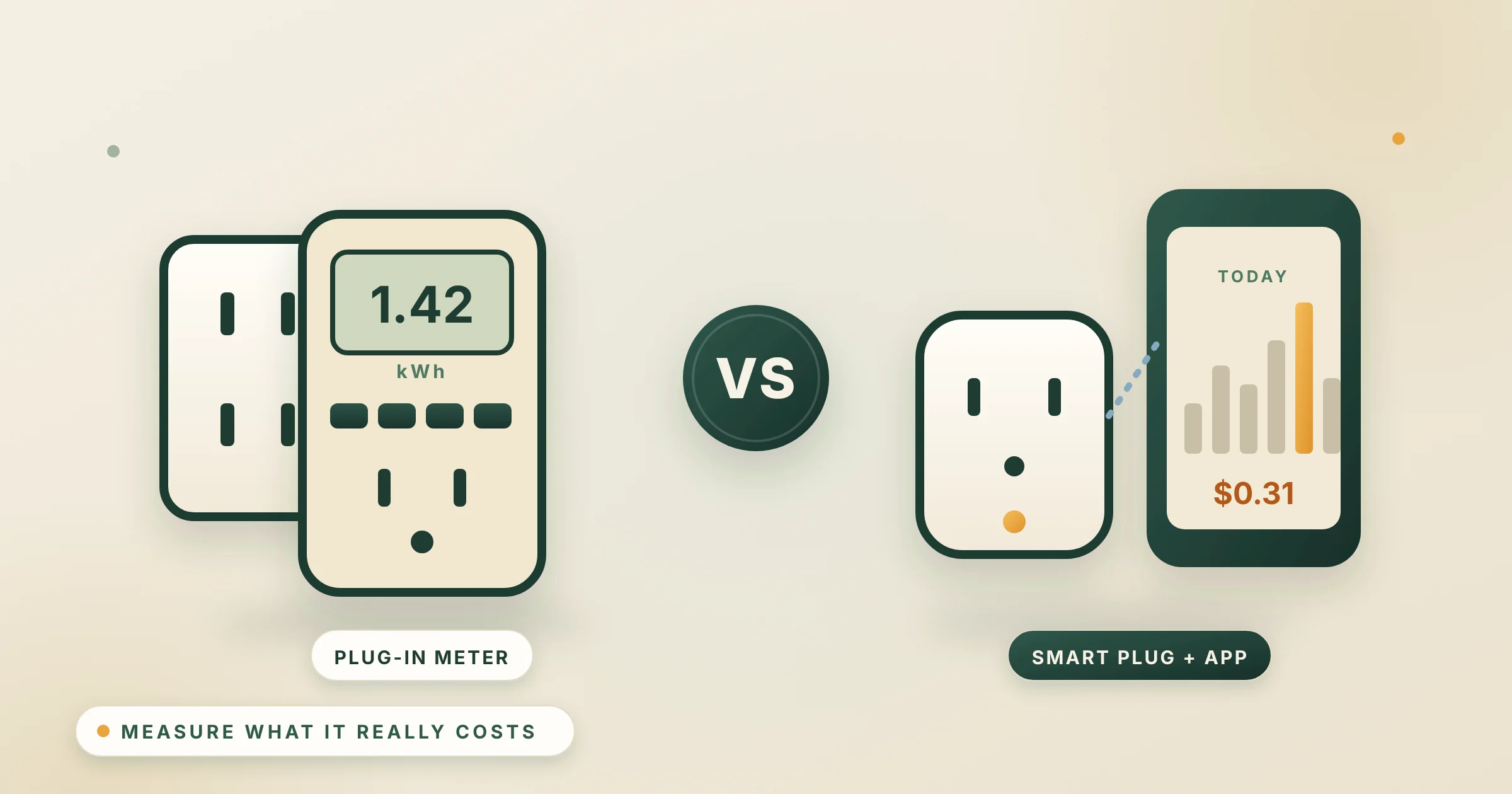
- Kill A Watt vs a smart plug: measure what your display really draws
- Phantom power: the devices that cost money even when they are off
- Energy cost calculator: what any appliance costs to run
Sources
- NRDC: LEDs, a holiday gift that keeps on giving
- Canada Energy Regulator: LED Christmas lights are cost and energy saving compared to incandescent
- NFPA figures on Christmas tree and holiday decoration fires (2017–2021), via Northern Kentucky Tribune
- U.S. EIA: Short-Term Energy Outlook, electricity
- U.S. Department of Energy: Deck those halls (LED holiday lights)

Email me at hello@thelowbillhome.com. I read every message, and when a rate, a rule or a product changes, I update the guide. — Eugene
Affiliate Disclosure: The Low Bill Home is a participant in the Amazon Services LLC Associates Program. As an Amazon Associate we earn from qualifying purchases, at no extra cost to you. Product details and availability change, so check the listing before you buy.