Your water heater keeps a tank of water hot around the clock, and an older tank loses some of that heat through its walls all day and night, even when nobody turns on a tap. A water heater blanket is a simple jacket of insulation that slows that loss. It is one of the cheapest energy fixes in the house, but it is not for every heater, and on some it is a bad idea.
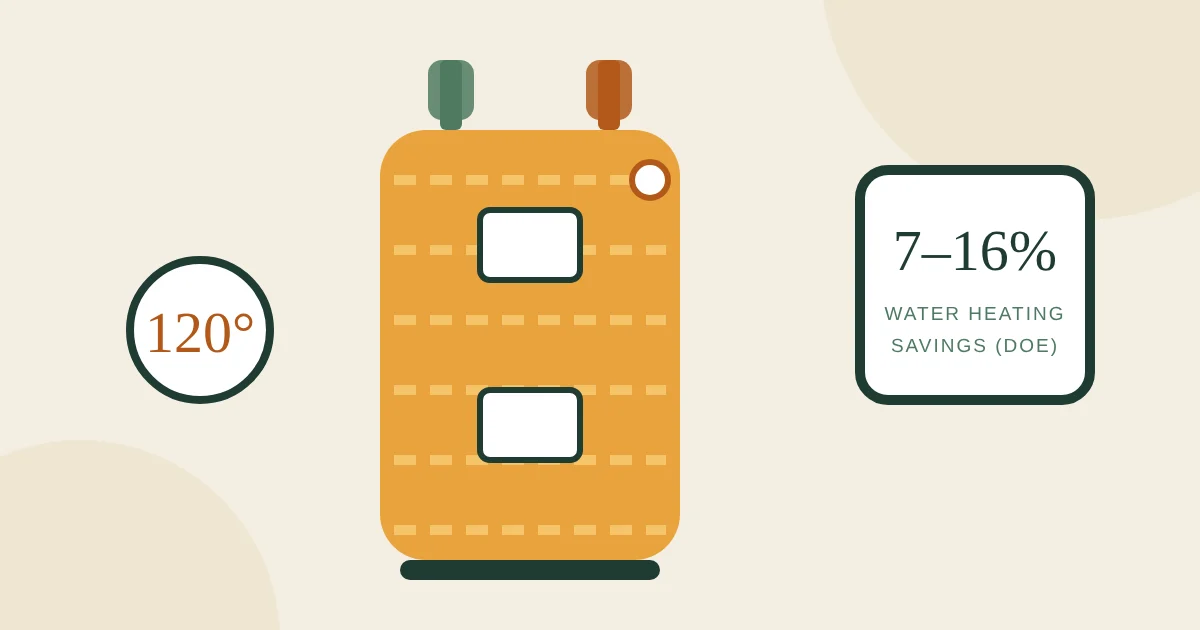
Worth it on an older electric tank that feels warm to the touch. The Department of Energy estimates that insulating the tank can reduce standby heat losses by 25–45% and save about 7–16% on water heating (DOE). Skip it on gas water heaters (most heat goes up the flue) and on newer tanks whose maker says not to. Either way, insulate the first few feet of pipe: that is a ten-dollar job for any heater.
Affiliate note: As an Amazon Associate, The Low Bill Home earns from qualifying purchases. Buying through our links costs you nothing extra. We have not tested every product hands-on: picks are based on the makers' published specs, official energy-saving guidance and long-term buyer feedback, and we say where a product falls short.
3-inch vinyl-backed fiberglass, R-10, for tanks up to 60 gallons; tape included.
Check price on AmazonWhy we picked it ↓Polyethylene jacket for 20–80 gallon tanks; easy to handle and wipe clean.
Check price on AmazonWhy we picked it ↓Pre-slit sleeves for the hot and cold pipes at the heater; R-3.6 per Duck.
Check price on AmazonWhy we picked it ↓Shopping on Black Friday? Add it to your Amazon cart now so it is ready when the deals start (Black Friday is November 27, Cyber Monday November 30, 2026).
Do you need one? The 60-second check
| Your water heater | Blanket? | What to do |
|---|---|---|
| Electric tank, side feels warm to the touch | Yes | Add a blanket, leave every panel and the relief valve uncovered, insulate the pipes |
| Electric tank, label shows insulation below R-24 | Yes | Same as above |
| Electric tank, cool to the touch, or the label says not to add insulation | No | Insulate the pipes and check the temperature setting |
| Gas tank | No | DOE says most heat leaves through the flue; insulate the pipes, keeping 6″ from the flue |
| Oil-fired tank | No (ask a technician) | Never block combustion air, burner access or the flue |
| Tankless or heat pump water heater | No | Insulate accessible hot water pipes |
| Rental | Ask first | The heater belongs to your landlord; pipe sleeves are usually fine |
How much it saves
The Department of Energy’s water heater tank project guide puts it plainly: insulation could reduce standby heat losses by 25–45% and save about 7–16% in water heating costs, in a project of about an hour and a half. Insulating hot water pipes raises the temperature of the water that reaches your tap by about 2–4°F, which can let you lower the thermostat setting and waits less for hot water (DOE).
To estimate your own number, you need your yearly water heating use. Every new water heater carries a yellow EnergyGuide label with an estimate of yearly electricity use in kWh; if yours is gone, look up the model number. Then multiply by your rate and by 7% and 16%.
Savings calculator
Water heater blanket savings calculator
4,000 kWh is only an example: use the number on your own tank’s label or your bill. The 7–16% range is the Department of Energy’s estimate for insulating a tank that needs it; a newer, well-insulated tank saves less.
How we chose
- Insulation value first. We favored blankets with a stated R-value and a size that covers a typical 40–60 gallon tank.
- Two materials. A fiberglass blanket for the highest R-value and a fiberglass-free jacket for people who would rather not handle fiberglass.
- Pipe insulation that meets the guidance. Foam sleeves for most pipes and fiberglass wrap for pipes close to a gas flue, as the Department of Energy recommends.
- Track record. Long-selling products with a large volume of buyer feedback.
We have not tested these products in our own home. Picks are based on the makers’ published specifications, safety certifications and patterns in long-term buyer feedback, especially the complaints.
The picks
Frost King SP60 All Season Water Heater Insulation Blanket
A 3-inch-thick, vinyl-backed fiberglass blanket rated R-10, sized 60 by 90 inches, with a roll of tape included. Frost King says it is designed for water heaters up to 60 gallons. The vinyl facing keeps the fiberglass contained and gives you a surface to tape and cut cleanly around the access panels and relief valve. Frost King’s description lists gas and oil heaters too, but the Department of Energy notes a blanket does little on a gas tank, so we recommend it for electric tanks.
- 3″ thick, R-10, vinyl-backed fiberglass
- 60″ x 90″ sheet; tanks up to 60 gallons
- Plastic tape included
- Ships from Amazon
Good: the highest R-value here, big enough for most tanks, simple to cut.
Watch out: fiberglass: wear gloves, long sleeves and a dust mask while you cut it.
Skip it if: you would rather not handle fiberglass: choose the SmartJacket.
SmartJacket SJ-80 Water Heater Blanket
A 5 mm polyethylene jacket made for 20 to 80-gallon tanks, with no fiberglass, so it is easier to handle and wipe clean. The maker lists an R-value of 7.1. That is lower than the Frost King fiberglass blanket, but it is quick to fit in a tight closet and does not shed fibers.
- 5 mm polyethylene, no fiberglass
- R-7.1 (maker’s figure)
- Fits 20–80 gallon tanks
- Wipe-clean surface
Good: no itchy fibers, easy to install and clean, fits larger tanks.
Watch out: lower R-value than 3-inch fiberglass; sold by a third-party seller.
Skip it if: you want the most insulation per dollar: the Frost King has R-10.
Duck Brand Foam Pipe Covers
Pre-slit foam sleeves with self-sealing edges that snap over 1/2 to 3/4-inch pipes. Duck lists an R-value of 3.6, above the R-3 minimum that weatherization programs use for the first 6 feet of pipe at a water heater. Put them on both the hot outlet and the cold inlet, then any hot water pipes you can reach in the basement or crawl space. Keep foam at least 6 inches away from a gas heater’s flue.
- Pre-slit, self-sealing foam
- Fits 1/2″–3/4″ pipes
- R-3.6 (maker’s spec)
- Also stops cold pipes sweating
Good: works with any water heater, no tools, minutes per pipe.
Watch out: foam must stay 6 inches from a gas flue; match the sleeve to your pipe size.
Skip it if: your pipes run within 8 inches of a gas flue: use fiberglass wrap there.
Frost King Foil-Backed Fiberglass Pipe Wrap
The Department of Energy recommends unfaced fiberglass pipe wrap at least 1 inch thick for pipes within 8 inches of a gas water heater’s flue, where foam is not safe. This roll is 1-inch fiberglass, 3 inches wide and 25 feet long, with a foil vapor barrier on the outside, and you spiral it around the pipe with each turn overlapping the last. Keep any insulation at least 6 inches from the flue itself.
- 1″ thick fiberglass, 3″ wide x 25 ft
- Foil vapor barrier
- Spiral wrap, overlap each turn by about 1/2″
- For hot and cold pipes
Good: the right material close to a gas flue, wraps around bends.
Watch out: messier than foam; wear gloves, long sleeves and a mask.
Skip it if: you have an electric heater: foam sleeves are quicker.
Frost King IT30/8 Rubber Insulation Tape
Straight sleeves leave gaps at elbows, tees and valves. This 2-inch rubber insulation tape wraps around fittings and fills the gaps between sleeves. A 30-foot roll is plenty for a water heater and a basement run.
- 2″ wide x 1/8″ thick x 30 ft
- Rubber insulation tape
- Hot and cold water pipes
Good: covers the awkward bits sleeves miss.
Watch out: thin on its own; not for use within 6 inches of a gas flue.
Skip it if: all your pipes are straight runs.
How to install a blanket safely (electric tanks)
These steps follow the Department of Energy’s project guide. Read your water heater’s manual first: if it says not to add insulation, stop here and do the pipes.
- Turn off the power to the water heater at the breaker panel.
- Measure the tank height and circumference, and trim the blanket if needed.
- Wrap the blanket around the tank and tape it temporarily, with the seam away from the access panels.
- Mark the cut-outs for the access panels (thermostat and elements), the temperature and pressure relief valve and its discharge pipe.
- Cut the openings, refit the blanket and tape it in place. Never cover the panels, the relief valve or its pipe, or the data label.
- Leave the top alone if the maker says so, and never cover any controls.
- Turn the power back on and keep the thermostat at or below 130°F; DOE warns that higher settings with a blanket can overheat the wiring.
Gas and oil water heaters: a blanket that covers the burner access, the air intake, controls or the draft hood can make the heater unsafe. DOE notes a blanket accomplishes little on gas tanks anyway. Insulate the pipes and leave the tank to a licensed technician.
Insulate the pipes (any water heater)
- Measure the pipe. Match the sleeve’s inside diameter to the pipe’s outside diameter; most homes have 1/2 or 3/4-inch lines (PNNL).
- Start at the heater. Cover at least the first 3 feet of the hot outlet and the cold inlet (DOE); weatherization crews insulate the first 6 feet to at least R-3 (DOE Weatherization job aid).
- Snap on the sleeves, cutting 45-degree ends where two pieces meet at an elbow, and close the seams with tape rather than relying on the built-in adhesive alone.
- Wrap the fittings with insulation tape.
- Gas heater: keep all insulation at least 6 inches from the flue, and use fiberglass wrap at least 1 inch thick on any pipe within 8 inches of it.
- Keep going along any hot water pipes in an unheated basement or crawl space. Insulating them also helps protect against freezing; see how to keep pipes from freezing.
Set it to 120°F
Many water heaters leave the factory set hotter than needed. The Department of Energy’s home energy checklist recommends 120°F, hot enough for showers and dishes, with less heat lost from the tank and pipes and a lower risk of scalding. On an electric heater, turn off the breaker before you open the access panel to adjust the thermostat.
FAQ
Are water heater blankets worth it?
On an older electric tank that feels warm to the touch, usually yes. The Department of Energy estimates insulation can cut standby heat losses by 25 to 45% and save about 7 to 16% on water heating costs, for a project that takes about an hour and a half. On a newer tank that already has good built-in insulation, the gain is small.
Can you put a blanket on a gas water heater?
The Department of Energy says most of a gas water heater's heat loss goes up the flue, so a blanket accomplishes little on a gas tank, and a blanket that blocks the air supply, burner access or flue can make the heater unsafe. For gas heaters, insulate the pipes instead and follow the manufacturer's instructions.
How do I know if my water heater needs insulation?
Touch the side of the tank. If it feels warm, heat is escaping and a blanket can help. If the label shows the tank's insulation R-value, the Department of Energy suggests tanks with less than R-24 are candidates.
Do new water heaters need a blanket?
Usually not. Newer tanks are built with more insulation, and some manufacturers say not to add a blanket. Check the label and the manual before you buy one.
What temperature should a water heater be set at?
The Department of Energy's home energy checklist recommends 120°F. With a blanket on an electric heater, DOE says not to set the thermostat above 130°F.
Which pipes should I insulate?
Start with the first few feet of both the hot and the cold pipes at the water heater; the DOE suggests at least the first 3 feet, and weatherization programs insulate the first 6 feet. Then do any hot water pipes you can reach in an unheated basement or crawl space.
Keep going
- How to keep pipes from freezing
- 20 ways to lower your heating bill this winter
- Best electricity usage monitors to see what else is raising your bill
- Energy cost calculator
Sources
- U.S. Department of Energy: Insulate your water heater tank (project guide)
- U.S. Department of Energy: Insulate hot water pipes (project guide)
- U.S. DOE Building America Solution Center (PNNL): Insulate hot water pipes
- U.S. DOE Weatherization: Insulate domestic hot water pipes (job aid)
- U.S. Department of Energy: Home energy checklist
Affiliate Disclosure: The Low Bill Home is a participant in the Amazon Services LLC Associates Program. As an Amazon Associate we earn from qualifying purchases, at no extra cost to you. Product details and availability change, so check the listing before you buy.