Heating is the biggest energy cost of the year in most homes, and it is also the one you have the most control over. The good news: the first eight changes on this list cost nothing, and the next seven cost less than a takeout dinner each.
The U.S. Energy Information Administration’s 2026–27 winter outlook (October 6, 2026) expects homes that heat with natural gas or propane to spend a little less than last winter, homes that heat with electricity to spend more, and homes on heating oil to pay about a fifth more for fuel. Whatever you heat with, the steps below cut how much of it you use.
Affiliate note: As an Amazon Associate, The Low Bill Home earns from qualifying purchases. Buying through our links costs you nothing extra. We have not tested every product hands-on: picks are based on the makers' published specs, official energy-saving guidance and long-term buyer feedback, and we say where a product falls short.
The short version
| Step | Cost | Why it matters |
|---|---|---|
| Turn the thermostat back 7–10°F at night and when you’re out | Free | Up to 10% a year off your heating bill (DOE) |
| Seal window and door drafts | Low | About 30% of a home’s heating energy is lost through windows (DOE) |
| Lower the water heater to 120°F | Free | Less standby heat loss and less risk of scalding |
| Warm the person, not the whole house | Low | A heated blanket uses a small fraction of a space heater’s power |
| Air seal and insulate the attic | Higher | Up to 10% off annual energy bills (ENERGY STAR) |
Free changes (1–8)
1. Turn the thermostat back at night and when you’re out
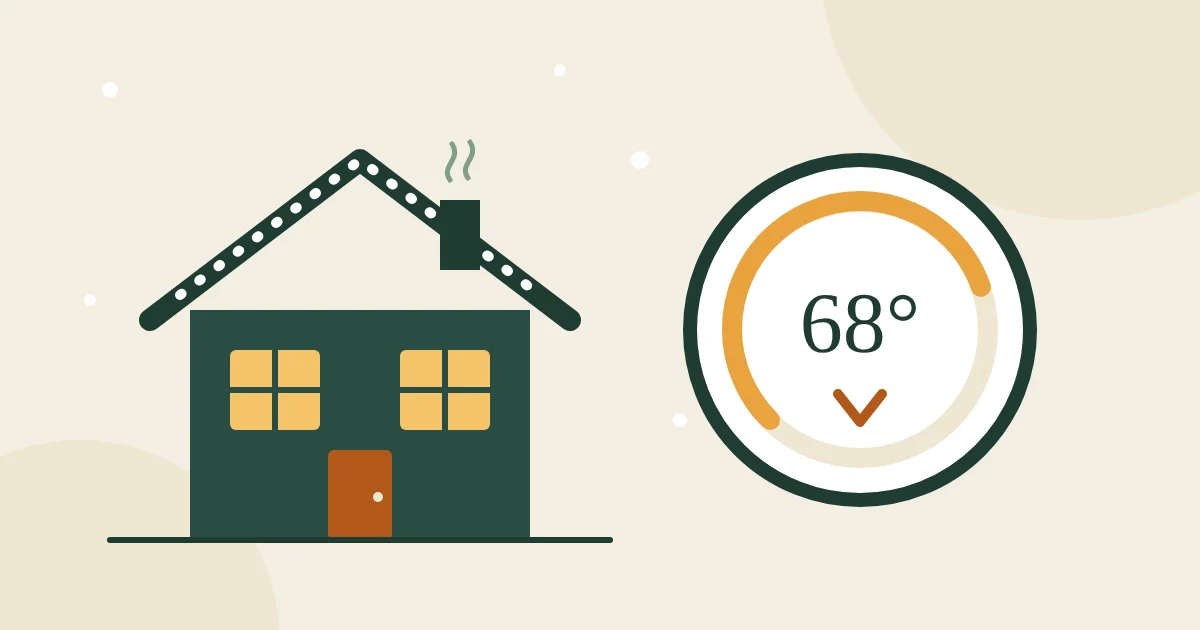
This is the single biggest free win. The U.S. Department of Energy says turning your thermostat back 7–10°F for 8 hours a day can cut as much as 10% a year off your heating bill. A house loses heat more slowly when it is cooler inside, so you use less fuel overall, even counting the warm-up in the morning. A good routine: around 68°F while you are home and awake, lower while you sleep or are at work.
Heat pump? Use smaller setbacks of a few degrees, or a thermostat that supports heat pumps. A big jump back up can switch on the backup electric strip heat, which costs far more to run.
2. Set it once and leave it
Cranking the thermostat to 80°F does not warm the house faster: most furnaces and heat pumps deliver heat at the same rate whatever the setting. It only overshoots and wastes energy. Pick your temperature and let the system get there.
3. Use the sun by day, curtains by night
Open curtains on south-facing windows on sunny days to let free heat in, and close them after dark to keep it there. Heavy or thermal curtains make the night-time part work much better (see step 14).
4. Lower the water heater to 120°F
Many water heaters are set hotter than they need to be. The Department of Energy’s home energy checklist recommends the warm setting, 120°F: hot enough for showers and dishes, with less heat lost from the tank and pipes and a lower risk of scalding. Check the dial on the tank (gas models) or behind the access panel (electric models, with the power switched off at the breaker).
5. Reverse your ceiling fans
Set ceiling fans to turn clockwise at low speed in winter. They gently push the warm air that collects near the ceiling back down into the room without creating a cold breeze. Most fans have a small direction switch on the motor housing.
6. Keep vents and radiators clear
Sofas, beds and long curtains over vents and radiators trap heat where it is not useful. Move them a few inches away. Avoid closing lots of supply vents in a forced-air system: it can raise pressure in the ducts and make the system work less efficiently.
7. Close the fireplace damper
An open damper is like an open window in the roof. Close it whenever the fireplace is cold. If you rarely use the fireplace, a chimney balloon or a fitted cover stops the draft for the whole season.
8. Change the furnace filter
A clogged filter makes the blower work harder and can shorten the life of the system. Check it monthly during the heating season and replace it when it looks gray.
Cheap fixes (9–15)
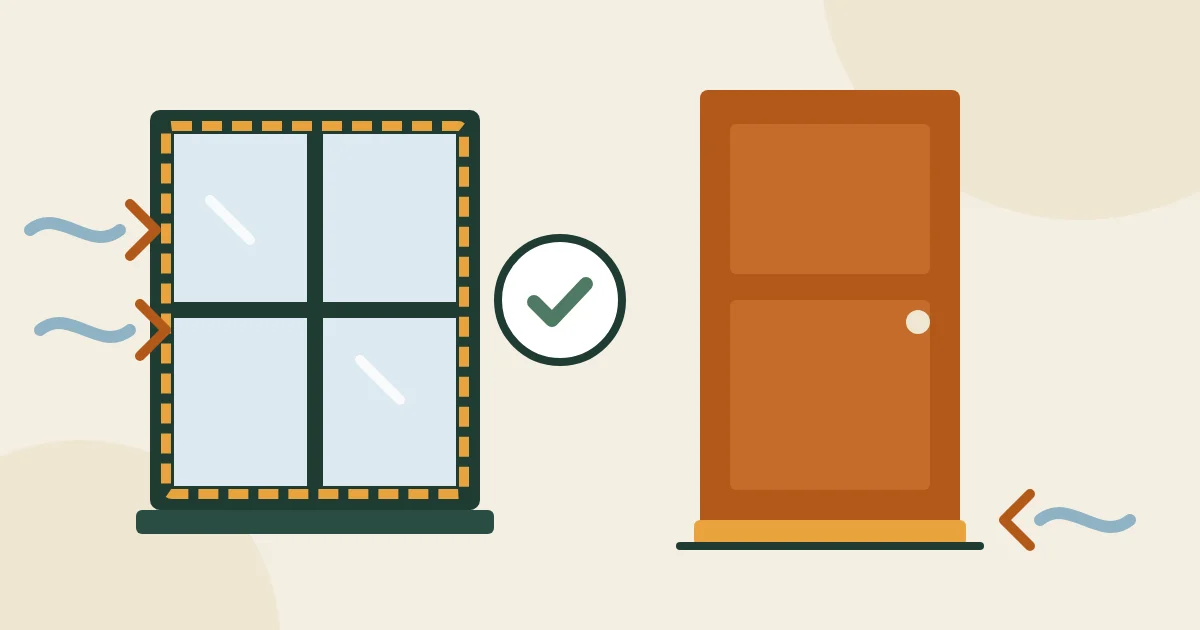
These are weekend jobs that pay for themselves quickly. Our step-by-step guide to stopping window and door drafts covers how to find leaks and fix each one properly.
9. Put shrink film on drafty windows
Clear indoor window film, applied with double-sided tape and tightened with a hair dryer, creates an insulating pocket of still air over single-pane or leaky windows. The Duck Brand Indoor 5-Window Shrink Film Insulator Kit covers five 3′ x 5′ windows and has nearly 20,000 ratings on Amazon.
10. Seal the gap under exterior doors
If you can see daylight under a door, cold air is coming in. A stick-on silicone door sweep such as the Holikme Door Draft Stopper fills gaps up to an inch and takes a couple of minutes to install.
11. Weatherstrip doors and window sashes
Self-adhesive rubber weatherstripping on the door frame and on window sashes closes the gaps you feel as a cold draft. Clean the surface first so the adhesive holds through the winter. The VITAM AMO weatherstripping is EPDM rubber that stays flexible in the cold.
12. Press removable caulk cord into window gaps
Rope caulk is a soft, putty-like cord you press into gaps around window frames and sashes by hand. It peels off in spring. Good for older windows you cannot permanently seal. Try the M-D Replaceable Caulk Cord.
13. Insulate outlets and switches on outside walls
Electrical boxes on exterior walls are small holes in your insulation. Foam gaskets go behind the cover plate in seconds: unscrew the plate, fit the gasket, screw it back. A multipack like the Tondiamo foam outlet gaskets covers a whole house.
14. Hang thermal curtains
Thick, tightly woven curtains slow heat loss through the glass at night, especially in bedrooms. The NICETOWN thermal insulated blackout curtains have more than 130,000 ratings and come in many sizes and colors. Close them at dusk.
15. Warm the person, not the house
A heated blanket or mattress pad uses roughly 100 watts, a small fraction of a 1,500-watt space heater. That lets you turn the whole-house thermostat down further at night without being cold. Our sister site compared the best heated blankets.
Smarter habits (16–17)
16. Use a space heater for one room, not the whole house
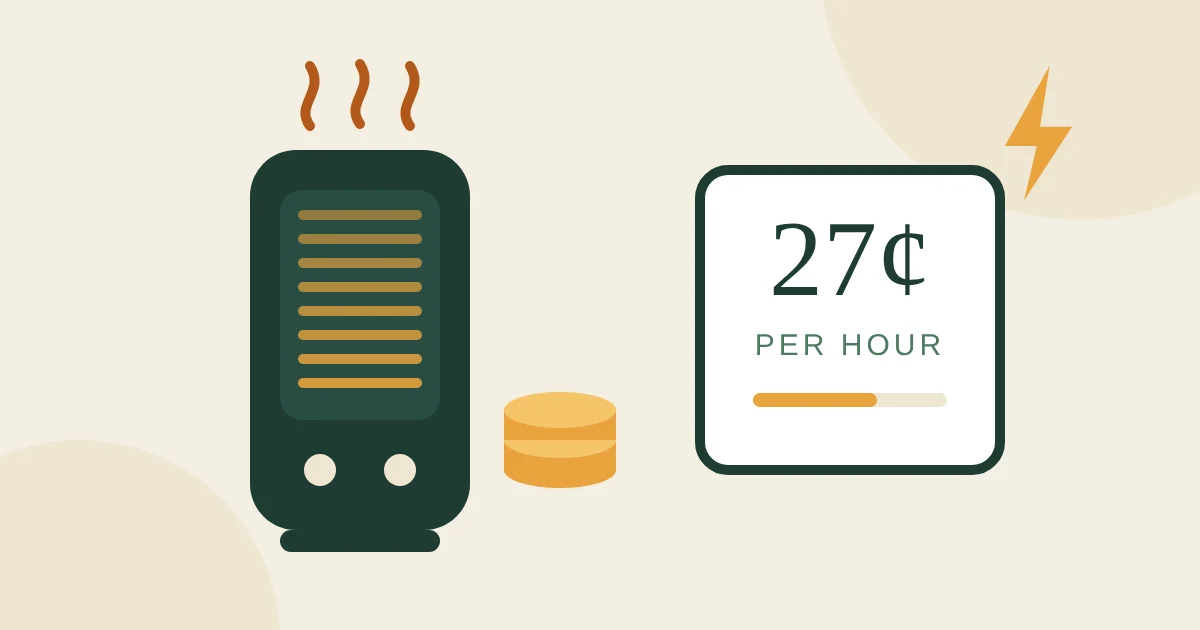
Electric space heaters are expensive per unit of heat. They only save money when they let you keep the central heat much lower while you heat just the room you are in. Read how much a space heater costs to run and try the calculator with your own electricity rate before you rely on one.
17. Run exhaust fans only as long as needed
Bathroom and kitchen fans pull warm indoor air straight outside. Switch them off once steam or cooking smells have cleared, typically within 15–20 minutes, or fit a fan timer switch.
Upgrades worth paying for (18–20)
18. A smart or programmable thermostat
A thermostat that sets back the temperature automatically makes step 1 happen every day without you thinking about it, and smart models learn your schedule and can drop the heat when everyone has left. Our sister site reviewed the best smart thermostats.
19. A heating system tune-up
A yearly service by a licensed technician keeps a furnace, boiler or heat pump running efficiently and catches problems before the coldest week of the year. Ask about it in the fall, before contractors get busy.
20. Air sealing and attic insulation
Sealing the hidden leaks around the attic hatch, plumbing pipes, recessed lights and chimneys, then topping up attic insulation, is the most effective upgrade for most older homes. ENERGY STAR says air sealing and insulation can save up to 10% on annual energy bills. Start with a home energy audit: many utilities offer one free or at a discount.
Tax credits in 2026: the federal Energy Efficient Home Improvement Credit (25C) ended for improvements placed in service after December 31, 2025. Check your state and your utility for rebates instead.
What does not work
- Space heaters in every room. Heating the whole house with plug-in heaters usually costs more than the central system.
- Closing off most of the vents. Forced-air systems are designed for the whole house; shutting many vents can backfire.
- Cranking the thermostat higher to warm up faster. It just overshoots.
- Turning the heat off completely when you leave in very cold weather. Set it back instead, to around 55°F, so pipes do not freeze.
FAQ
What temperature should I set my thermostat in winter to save money?
Around 68°F while you are at home and awake, and 7 to 10 degrees lower while you sleep or are away. The Department of Energy says this setback can cut up to 10% a year off your heating bill.
Is it cheaper to leave the heat on all day or turn it down?
Turning it down is cheaper. A cooler house loses heat more slowly, so you use less fuel overall even after the morning warm-up. The exception is heat pumps, where large setbacks can trigger expensive backup heat: use smaller setbacks or a heat-pump-aware thermostat.
Do window insulation kits really work?
Yes, on drafty or single-pane windows. Shrink film creates an insulating layer of still air and blocks drafts around the sash. The effect is smaller on modern double-pane windows that already seal well.
Are there federal tax credits for insulation or heat pumps in 2026?
The federal Energy Efficient Home Improvement Credit (25C) ended for improvements placed in service after December 31, 2025. Check your state energy office and your utility for current rebates.
Next: find and fix drafts in an afternoon, then use the energy cost calculator to see what your heaters and appliances really cost to run.
Affiliate Disclosure: The Low Bill Home is a participant in the Amazon Services LLC Associates Program. As an Amazon Associate we earn from qualifying purchases, at no extra cost to you. Product details and availability change, so check the listing before you buy.