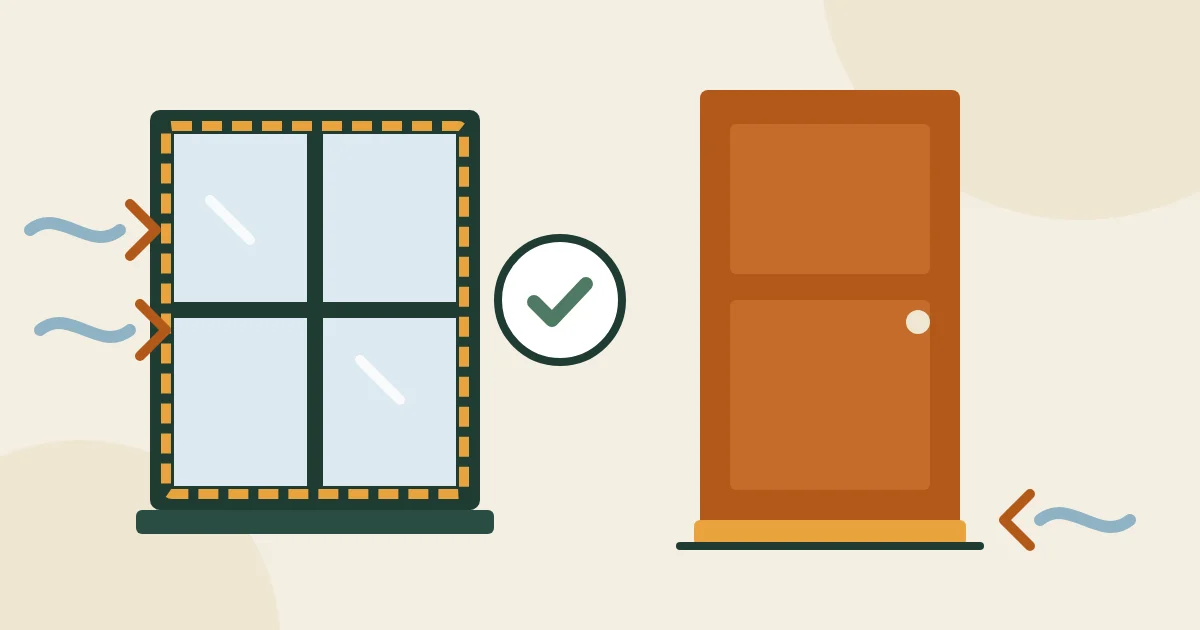
Drafts are the reason a room feels cold even when the thermostat says 68°F. According to the Department of Energy, about 30% of a home’s heating energy is lost through windows, and gaps around doors add more. You do not need new windows to fix most of it: a few inexpensive materials and an afternoon go a long way.
Affiliate note: As an Amazon Associate, The Low Bill Home earns from qualifying purchases. Buying through our links costs you nothing extra. We have not tested every product hands-on: picks are based on the makers' published specs, official energy-saving guidance and long-term buyer feedback, and we say where a product falls short.
Step 1: find the drafts
Pick a windy, cold day. Close all windows and exterior doors, and switch on the bathroom and kitchen exhaust fans to pull air through any gaps. Then move slowly around each opening with a lit incense stick (or a damp hand) and watch for smoke that wavers or gets pulled sideways. Check:
- where the window sash meets the frame, and where the two sashes meet in the middle
- the sides and bottom of exterior doors (daylight under the door means a big gap)
- outlets and light switches on outside walls
- the attic hatch, baseboards, and where pipes and cables go through walls
Mark each leak with a small piece of painter’s tape so you can come back with the right fix.
Which fix for which leak
| Leak | Best fix | Lasts |
|---|---|---|
| Whole window feels cold, single pane or very drafty | Indoor shrink film | One season |
| Gaps where a door or sash closes against the frame | Rubber weatherstripping | Several years |
| Gap under a door | Door sweep or bottom seal | Several years |
| Small cracks around old window frames | Removable caulk cord | One season |
| Outlets and switches on outside walls | Foam gaskets | Permanent |
| Cold glass at night | Thermal curtains | Permanent |
| Gaps between window trim and the wall outside | Exterior caulk | Many years |
The 7 fixes
1. Indoor window shrink film: best for drafty windows
Shrink film is the most effective cheap fix for old or single-pane windows. You stick double-sided tape around the inside of the frame, press the clear film onto it and tighten it with a hair dryer until it is smooth. The trapped layer of still air insulates the glass and seals every gap around the sash. The Duck Brand Indoor 5-Window Shrink Film Insulator Kit is the classic choice: enough film and tape for five 3′ x 5′ windows, and close to 20,000 Amazon ratings.
Good: very effective on single-pane and leaky windows, nearly invisible once tightened, removes in spring.
Watch out: you cannot open the window until you remove it; not for drywall, plaster or unfinished wood (the tape can lift paint).
For sliding patio doors and big picture windows, the Duck MAX Strength kit for patio doors and large windows uses film about twice as thick, which resists pets, kids and bumps better. It comes with two 84″ x 120″ rolls.
2. Rubber weatherstripping: best for door frames and sashes
Self-adhesive weatherstripping goes on the part of the frame that the door or window presses against when closed, so it compresses and seals the gap. The VITAM AMO weather stripping is EPDM rubber that stays flexible in freezing weather and fits gaps from about 5/16 to 15/32 inch. It has more than 12,000 ratings.
Good: seals the drafts you feel around a closed door, lasts for years, also cuts noise.
Watch out: measure the gap first: too thick and the door will not latch; clean and dry the surface or the adhesive will fail in the cold.
3. Door sweep: best for the gap under a door
If light shows under an exterior door, add a sweep. The Holikme Door Draft Stopper is a 41-inch silicone strip that sticks to the bottom of the door and fills gaps up to about an inch. It is one of the most popular draft fixes on Amazon, with nearly 50,000 ratings.
Good: two-minute install, no tools, works on interior and exterior doors.
Watch out: adhesive can let go on very rough or dirty doors; on heavily used doors, a screw-on metal sweep lasts longer.
4. Removable caulk cord: best for old window frames
Caulk cord (often called rope caulk) is a soft, putty-like bead you press into cracks by hand. It sticks without tools and peels off in spring, so it suits rentals and windows you need to open in summer. The M-D Replaceable Caulk Cord Weatherseal comes as a 90-foot roll.
Good: no caulk gun, no mess, fully removable, cheap.
Watch out: a seasonal fix, not a permanent seal; it can be picked off by pets.
5. Outlet and switch gaskets: best quick win on outside walls
Electrical boxes on exterior walls are gaps in the insulation, and you can often feel cold air from them on a windy day. Foam gaskets fit behind the cover plate. Unscrew the plate, press the gasket over the outlet or switch, and screw the plate back on. A multipack such as the Tondiamo foam outlet insulation gaskets has pre-marked cutouts for outlets, toggle and rocker switches.
Good: seconds per outlet, invisible, permanent.
Watch out: a small saving per outlet; only worth doing on exterior walls.
6. Thermal curtains: best for cold glass at night
Even a well-sealed window loses heat through the glass after dark. Heavy, tightly woven curtains slow that loss, and closing them at dusk is a habit that costs nothing. The NICETOWN thermal insulated blackout curtains use a triple-weave fabric, come in dozens of sizes and colors, and have more than 130,000 ratings.
Good: help in winter and summer, block light for better sleep, easy to install.
Watch out: only work when closed; for the best effect they should cover the whole frame and reach the sill or floor.
7. Exterior caulk: the permanent fix
Gaps between the window trim and the siding outside let cold air and water into the wall. Seal them with an exterior-grade caulk on a dry day, above the minimum temperature printed on the tube. It is a longer job than the others, so many people do it in the fall before the first hard freeze, or in spring.
Bigger leaks you can’t see
The largest air leaks in many homes are hidden in the attic: around the attic hatch, plumbing vents, recessed lights and chimneys. ENERGY STAR says air sealing and insulation can save up to 10% on annual energy bills. A home energy audit, often discounted by utilities, will find them with a blower door test.
FAQ
Does putting plastic on windows really help?
Yes, on drafty and single-pane windows. The film blocks air leaks around the sash and creates an insulating layer of still air in front of the glass. On modern double-pane windows that already seal well, the benefit is smaller.
Will window film tape damage paint?
It can on fresh, poorly bonded or latex paint, and it should not go on drywall, plaster or unfinished wood. Apply it to painted or varnished wood, vinyl or aluminum frames, and peel it off slowly in spring, pulling back along the surface.
Should I seal windows from the inside or the outside?
Both have a job. Indoors, weatherstripping, caulk cord and film stop drafts and are easy to remove. Outdoors, exterior caulk around the trim keeps out wind and water and is a permanent fix.
How do I know if my door needs a sweep?
Close the door on a sunny day and look for daylight underneath, or slide a sheet of paper under it: if it slips through easily with the door closed, the gap is big enough to lose heat.
Once the drafts are sealed, the other big lever is the thermostat. See 20 ways to lower your heating bill this winter.
Affiliate Disclosure: The Low Bill Home is a participant in the Amazon Services LLC Associates Program. As an Amazon Associate we earn from qualifying purchases, at no extra cost to you. Product details and availability change, so check the listing before you buy.