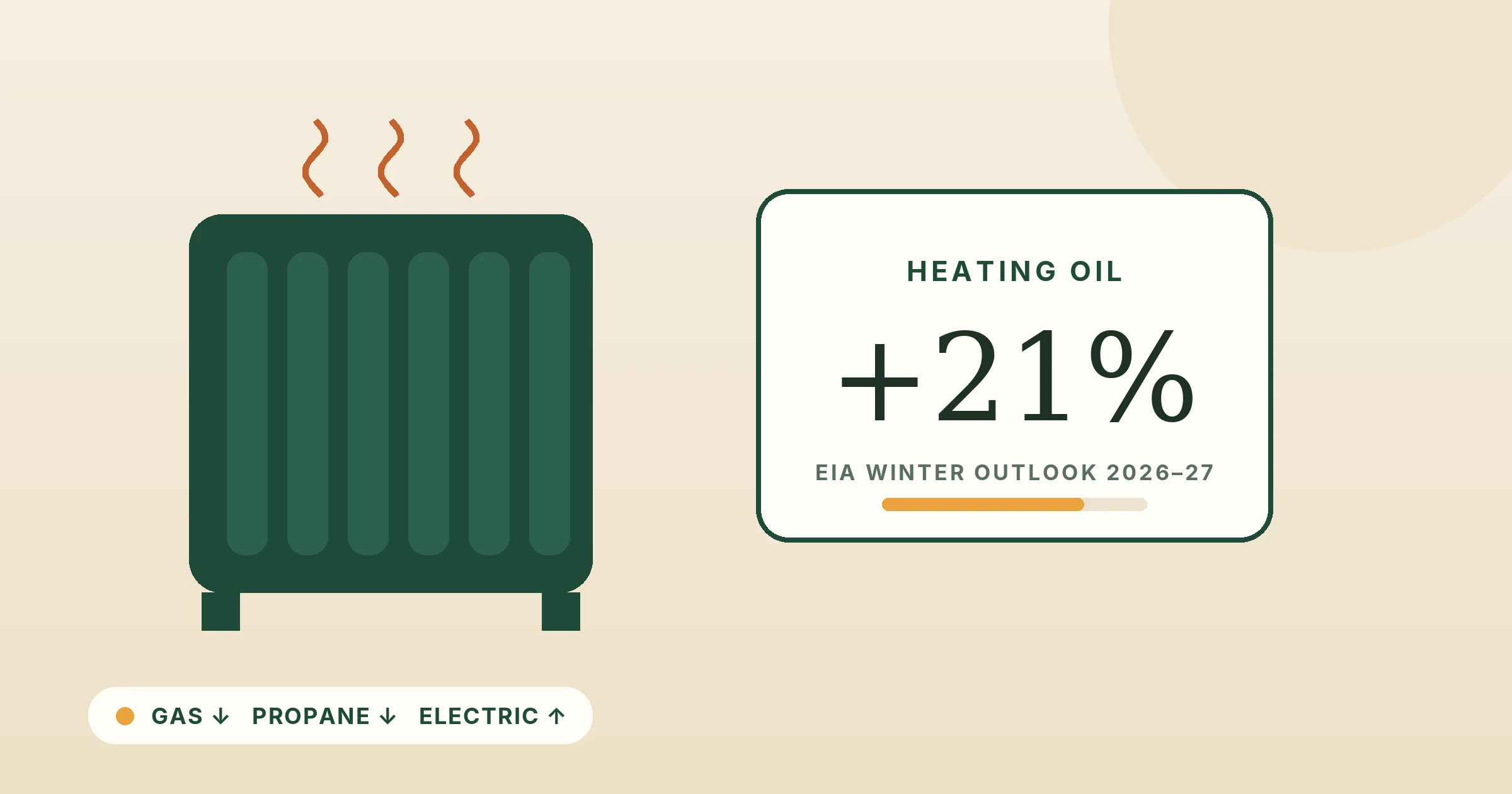
In its October 6, 2026 winter outlook, the U.S. Energy Information Administration (EIA) expects:
Natural gas and propane: lower spending than last winter (about half of U.S. homes).
Heating oil: about 21% more than last winter (about 3% of homes, mostly in the Northeast).
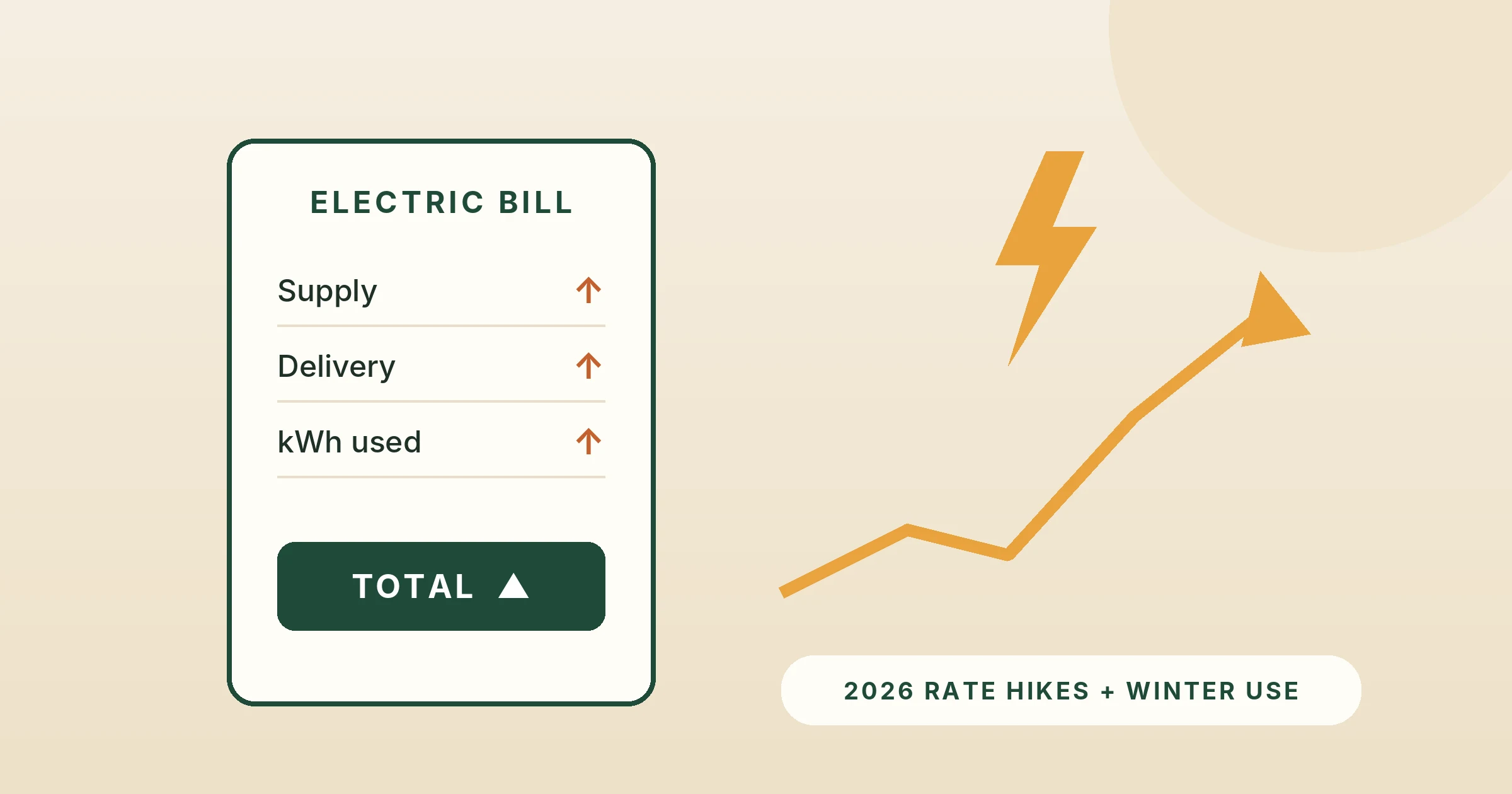
Electric heat: higher spending than last winter.
The forecast assumes a winter about as cold as last year. A colder winter, or a strong El Niño, would change every number. What it does not change is that the cheapest unit of heat is still the one you do not lose through a drafty window or burn heating an empty room.
The forecast by fuel
| Main heating fuel | Share of U.S. homes | EIA expects this winter | Where it matters most |
|---|---|---|---|
| Natural gas | About half, together | Lower spending than last winter | Midwest and most of the country |
| Propane | Lower spending than last winter | Rural homes | |
| Heating oil | About 3% | About 21% higher spending | New England, New York, Pennsylvania |
| Electricity | Most of the rest | Higher spending than last winter | South, Northwest, and anywhere in the PJM grid region |
Remember that these are national averages. Your own bill depends on your utility’s rates, how cold your winter turns out and how much heat your home loses.
Why prices are moving
- Heating oil: disruptions in the Middle East, including problems for tankers passing the Strait of Hormuz, have tightened global diesel and heating oil supplies. East Coast distillate stocks were 32% below their five-year average in September, and EIA expects them to stay 20 to 30% below average through the winter.
- Natural gas: storage entered the winter about 2% above its five-year average and production keeps growing, which limits price increases even with record exports.
- Electricity: record summer heat pushed up power use and wholesale prices. EIA forecasts wholesale prices up 41% this year in the PJM region, which covers much of the Mid-Atlantic and Midwest, while the Northwest sees prices fall. Many utilities have also raised delivery charges. Read why electric bills are so high this year.
If you heat with oil
You face the biggest jump, so act early:
- Ask your dealer about a budget or capped-price plan. It spreads the cost over the year and can limit a mid-winter price spike. Read the terms before you sign.
- Book a burner tune-up now. A clean, adjusted burner wastes less fuel, and technicians get booked up once it turns cold.
- Do not let the tank run low. Emergency deliveries cost more, and sludge from the bottom of a nearly empty tank can clog the filter.
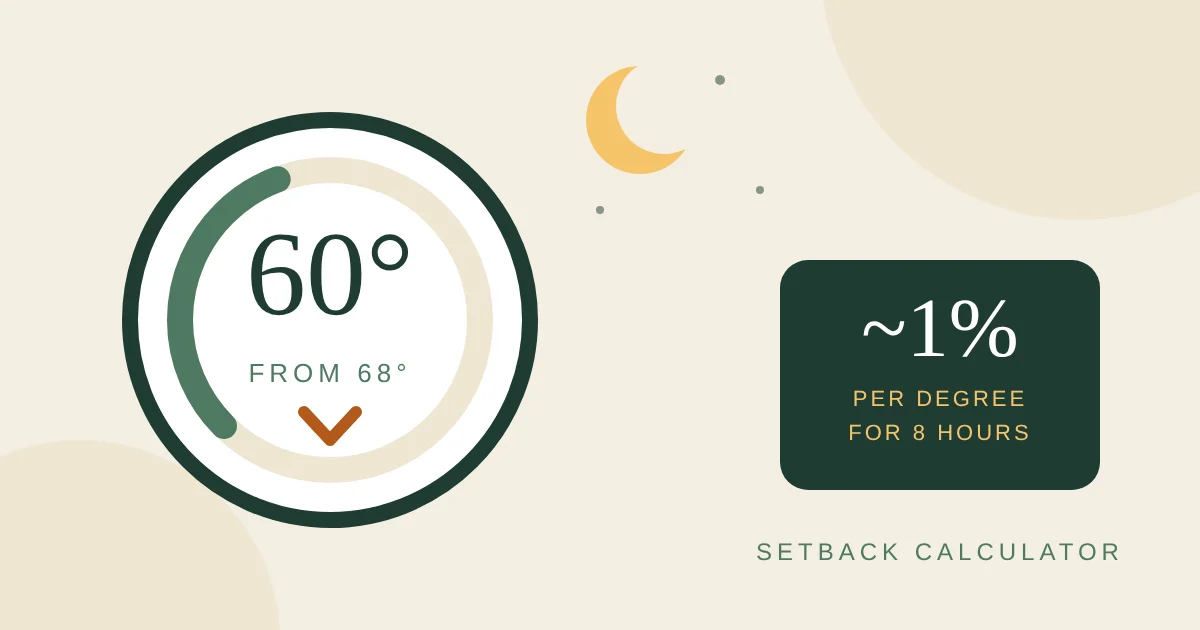
- Turn the heat down at night and when you are out. Our thermostat setback calculator shows what each degree saves.
If you heat with electricity
- Heat pump: set it and leave it. Big setbacks can make the backup resistance heat kick in, which costs far more. Clean or change the filter monthly in winter.
- Baseboard or furnace with resistance heat: heat only the rooms you use. A 1,500-watt space heater costs about 27 cents an hour at the U.S. average rate. Check yours with the space heater cost calculator and compare it with your central system using the space heater vs central heat calculator.
- Warm the person, not the room: a heated throw or mattress pad uses a fraction of a space heater’s power. See heated blanket vs space heater.
If you heat with gas or propane
Your fuel should be a little cheaper this winter, but delivery charges and colder weather can still push the bill up. A smart or programmable thermostat is the single best upgrade: setting it back 7 to 10 degrees for 8 hours a day can cut heating costs by up to about 10% a year, according to the Department of Energy. Propane users should fill the tank before the coldest weeks, when demand peaks.
Five moves for every home, whatever the fuel
- Seal the door gaps. A stick-on draft stopper takes two minutes. Our tested picks: best door draft stoppers.
- Film the drafty windows. Shrink film is cheap and nearly invisible. See best window insulation kits.
- Close thermal curtains at night and open them on sunny days.
- Turn the water heater to 120°F if it is set higher.
- Know your number. Look at last winter’s bills, add the forecast change for your fuel, and set a monthly budget now rather than in February.
Full list: our 20 ways to lower your heating bill this winter, from free habits to upgrades that pay for themselves.
If you cannot pay
Call your utility before you fall behind. Most offer payment plans and budget billing, and many states have winter rules that limit shutoffs. The federal Low Income Home Energy Assistance Program (LIHEAP) helps eligible households with heating bills; apply through your state or local agency. Never use an oven, grill or outdoor heater to heat your home.
Safety: put a carbon monoxide alarm on every level of a home with a fuel-burning furnace, boiler, water heater or fireplace, and keep space heaters 3 feet from anything that can burn.
FAQ
Will heating bills go up this winter?
It depends on your fuel. In its October 2026 outlook, EIA expects households that heat with natural gas or propane to spend less than last winter, households that heat with heating oil to spend about 21% more, and households that heat with electricity to spend more.
Why is heating oil so expensive this year?
Middle East supply disruptions have tightened global diesel and heating oil markets, and East Coast inventories were about a third below normal in September.
Is it cheaper to heat with a space heater this winter?
Only if you heat one small room and turn the central heat down. A 1,500-watt heater costs about 27 cents an hour at the U.S. average electricity rate. Heating a whole house with space heaters usually costs more than central heat.
What is the cheapest way to cut my heating bill?
Lower the thermostat at night and when you are out, seal door and window drafts, and close curtains at night. These cost little or nothing and work with every fuel.
Where can I get help paying my heating bill?
Ask your utility about payment plans and budget billing, and apply for LIHEAP through your state or local energy assistance agency.
Sources
- EIA: EIA expects a mixed picture for winter fuel costs this year (October 6, 2026)
- U.S. Department of Energy: Programmable thermostats
- HHS: Low Income Home Energy Assistance Program (LIHEAP)

Email me at hello@thelowbillhome.com. I read every message, and when a rate, a rule or a product changes, I update the guide. — Eugene
Affiliate Disclosure: The Low Bill Home is a participant in the Amazon Services LLC Associates Program. As an Amazon Associate we earn from qualifying purchases, at no extra cost to you. Rates, forecasts and product details change, so check the official sources and the listing before you decide.