Every winter the same tip goes around: run a humidifier, the room will feel warmer, and you can turn the heat down. Half of it is true. Moist air does feel a little warmer. But water does not turn into vapor for free: every gallon a humidifier puts into the air takes heat, and in winter that heat comes from your furnace, your heat pump or the humidifier’s own heater. We ran the numbers with the same comfort model engineers use for building design, and with real energy prices, so you know what a humidifier will and will not do for your bill.
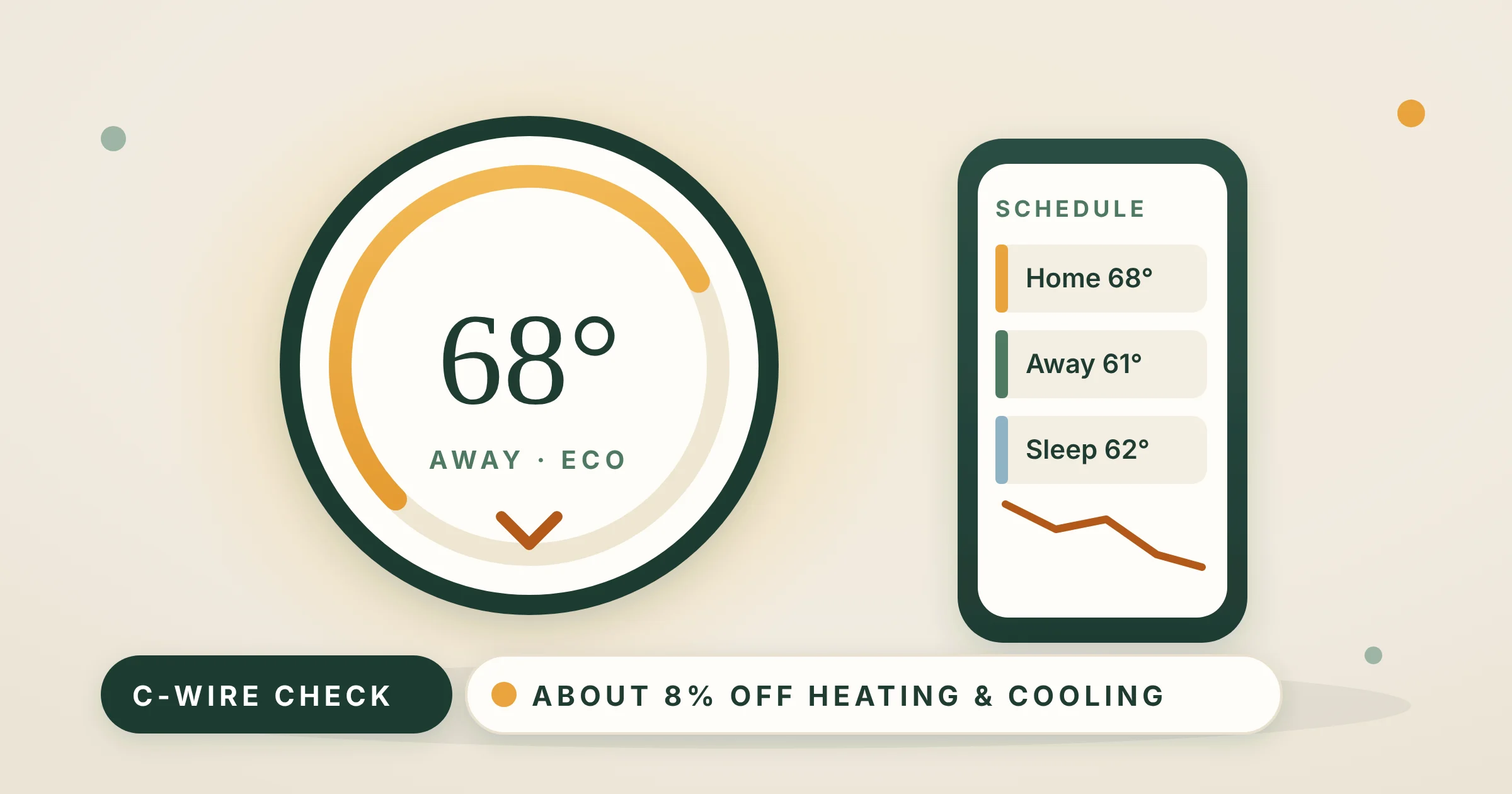
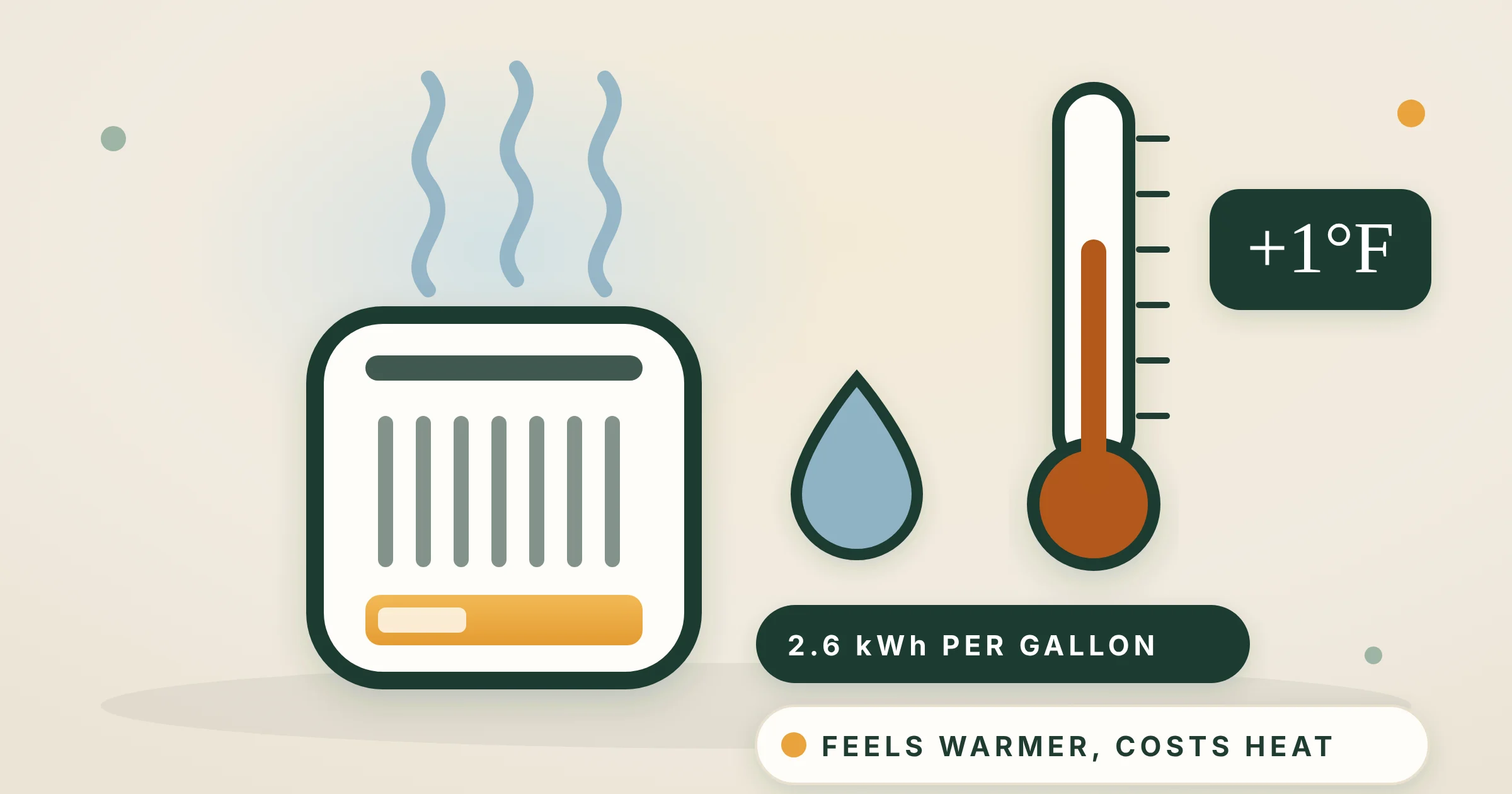
Yes, but only by about 1°F. Raising the humidity from a dry 20% to 40% at 68°F feels about 0.9°F warmer to someone sitting in winter clothes, by the ASHRAE comfort model. But evaporating one gallon of water takes about 2.6 kWh of heat, roughly 15 cents of gas heat or 46 cents of electric heat. Turning the thermostat down 1°F saves less than that in most homes, so a humidifier is not a money-saver. Buy one for dry skin, dry sinuses, static shocks and cracked wood, keep the air at 30–50%, and choose an evaporative model to run cheaply without white dust. Our picks: the Levoit Superior Studio for bedrooms, the Levoit Superior 6000S for a whole floor, and an inexpensive hygrometer to know your number.
Affiliate note: As an Amazon Associate, The Low Bill Home earns from qualifying purchases. Buying through our links costs you nothing extra. We have not tested every humidifier hands-on: picks are based on the makers’ published specs, EPA and medical guidance, and long-term buyer feedback, and we say where a product falls short.
No white dust with tap water, 12 W listed, quiet on low, auto humidity mode. Up to 600 sq ft.
Check price on AmazonWhy we picked it ↓6-gallon tank, up to 3,000 sq ft, 30 W listed, runs up to 72 hours on low.
Check price on AmazonWhy we picked it ↓Shows room humidity and temperature, with high and low records. Use it before and after you buy.
Check price on AmazonWhy we picked it ↓Shopping on Black Friday? Add it to your Amazon cart now so it is ready when the deals start (Black Friday is November 27, Cyber Monday November 30, 2026). Dry-air season peaks in January.
Does humid air really feel warmer?
Yes, a little. Your body loses heat partly by moisture evaporating from your skin and your breath. In very dry air that evaporation is faster, so you lose a bit more heat and feel a bit cooler at the same thermostat setting. Add moisture and the loss slows down.
How much? Building engineers judge comfort with the PMV model in ASHRAE Standard 55 and ISO 7730. We ran it for a typical winter evening: a person sitting quietly in long pants, a long-sleeve top and a sweater, in still air. Here is how much warmer each humidity change feels, written as the thermostat change that would feel the same:
| Humidity change | At 65°F | At 68°F | At 70°F |
|---|---|---|---|
| 20% → 30% | +0.4°F | +0.5°F | +0.5°F |
| 20% → 40% | +0.8°F | +0.9°F | +1.0°F |
| 20% → 45% | +1.0°F | +1.1°F | +1.2°F |
| 30% → 40% | +0.4°F | +0.5°F | +0.5°F |
Our calculation with the ISO 7730 / ASHRAE 55 PMV equations: metabolic rate 1.1 met (seated), clothing 1.0 clo, air speed 0.1 m/s, air and wall temperature equal. Real rooms with cold windows and drafts feel different, and people vary.
So the effect is real and small: about half a degree for every 10 points of humidity in the range that matters. That is the honest version of “a humidifier makes the room warmer”. Dry skin and a scratchy throat are often what make dry rooms feel cold, and that part a humidifier fixes well.
The catch: evaporation takes heat
Turning liquid water into vapor takes a lot of energy. That is why sweat cools you, and why, as the USGS puts it, evaporation removes heat from its surroundings. At room temperature, evaporating one gallon of water takes about 2.6 kWh. Every humidifier pays that bill one way or another:
- Evaporative and ultrasonic (cool mist): the water evaporates using heat from the room air, so the room cools slightly and your heating system puts the 2.6 kWh back.
- Warm mist (steam): the humidifier boils the water with electricity, about 2.75 kWh per gallon, so it pays on your electric bill instead. A small part of that heat stays in the room.
Now compare the two sides. If the extra humidity lets you turn the thermostat down 1°F all day, the usual rule of about 1% of heating per degree for each 8 hours works out to roughly 3% of the heating bill. In a gas-heated home paying the EIA winter average, about $128 a month, that is about $3.80 a month. Evaporating one gallon a day costs about 15 cents of gas plus a few cents for the fan: about $6 a month. With electric resistance heat the gap is wider: about $7 saved against about $15 spent.
So a humidifier does not pay for itself. In a gas home with an efficient evaporative unit it comes close, which is a fair way to think about it: comfort for roughly the price of the heat. A warm mist model, at about 49 cents a gallon, costs the most to run no matter how you heat.
Humidifier cost vs saving calculator
What a humidifier costs you, and what a lower thermostat gives back
Not sure how much water it uses? Weigh it: a full gallon jug is about 8.3 lb, or note how much of the tank is gone each morning. Gas prices are on your bill per therm; the default is a typical winter price.
How humid should your home be in winter?
The Mayo Clinic says the ideal indoor humidity is between 30% and 50%, and the EPA says not to humidify above 50%, because damp air feeds mold, dust mites and bacteria. In cold weather, aim for the low end: the University of Minnesota Extension notes that indoor humidity has to be low in cold weather to prevent condensation, and calls about 25% in winter generally healthy and comfortable.
The practical rule: hold 30–40% in winter, and if water collects on the inside of your windows in the morning, the air is too humid for the cold outside, whatever the number says. Lower the setting or move the humidifier away from the window.
Evaporative, ultrasonic or warm mist?
| Type | Power | White dust and minerals | Germs in the air (EPA) | Watch out for |
|---|---|---|---|---|
| Evaporative: a fan blows air through a wet wick | About 10–40 W | None: minerals stay in the wick | Disperses less | Wicks to wash or replace; output slows as the room gets humid |
| Ultrasonic: a vibrating plate makes a fine mist | About 20–30 W | White dust with tap water; use distilled | Disperses the most | Needs distilled water and frequent cleaning |
| Warm mist / steam: boils the water | About 250 W | Little or none | Disperses less | Burn risk; highest running cost; scale in the heater |
| Hybrid warm + cool: ultrasonic with a heater | About 25 W cool, up to about 280 W warm | Like ultrasonic | Like ultrasonic | Warm mode multiplies the power use |
For a low bill, the choice is easy: evaporative. It uses a fan and a wick, never sprays minerals into the air, and it cannot easily overshoot, because a wick evaporates more slowly as the room gets more humid. Ultrasonic models are quiet and cheap but need distilled water to avoid the fine white dust the EPA describes. Warm mist humidifiers make the cleanest vapor but use roughly ten times the power, and the Mayo Clinic advises against steam models in homes with children because of burns.
How we chose
- Running cost first. We favored evaporative models with low listed wattage, and we tell you the wattage of the warm-mist picks.
- Humidity control. A built-in humidistat or auto mode, so it stops at your target instead of soaking the room.
- Easy cleaning, because the EPA routine is every third day: wide tanks, top fill, dishwasher-safe parts.
- Long buyer feedback on noise, leaks and durability.
- In stock and sold by Amazon or the brand with U.S. delivery when we checked on October 22, 2026.
Wattages are the makers’ listed figures. We skipped a popular evaporative model whose listing shows an obviously wrong 1,500-watt rating, because we could not confirm its real number.
The picks
Levoit Superior Studio Smart Evaporative Humidifier
This is the type we recommend for most rooms, in a size that suits a bedroom or home office. A fan pulls air through a wet wick, so there is no visible mist and no white dust, even with tap water. Levoit lists it at 12 watts, about 5 cents a day if it ran around the clock at 18 cents per kWh. The 4.5-liter tank fills from the top and lasts up to 40 hours on low, and Levoit rates it for rooms up to 600 sq ft with up to 400 mL an hour of output. A built-in sensor holds your target humidity, and you can set it from the VeSync app or a voice assistant.
Cleaning is the other reason it is our pick: there is a self-cleaning mode, the filter frame and water tray go in the dishwasher, and the wick can be washed in a washing machine; Levoit says it lasts up to two years when washed weekly.
- Evaporative, no mist, no white dust
- 12 W listed; up to 600 sq ft
- 4.5 L top-fill tank, up to 40 h on low
- Auto humidity mode, app and voice control
Good: cheapest type to run, tap water friendly, quiet on low, easy to clean.
Watch out: a new model with a short track record; output slows as the room gets humid (by design); the wick needs regular washing.
Skip it if: you want to humidify a whole open-plan floor: the 6000S below is built for that.
Levoit Superior 6000S Evaporative Humidifier
If the whole house is dry, one large evaporative unit in a central spot is usually cheaper and less work than three small ones. The 6000S holds 6 gallons (23 L), puts out up to 1,500 mL an hour, and Levoit rates it for up to 3,000 sq ft, running up to 72 hours on low. It is listed at 30 watts. Like the Studio, it is tap water friendly with no white dust, and it has an improved humidity sensor (Levoit says ±5%) and two auto modes, with app and voice control.
- Evaporative, 6-gallon tank, wheels
- 30 W listed; up to 3,000 sq ft
- Up to 72 hours on low
- Removable pump for cleaning; wick lasts 3–6 months
Good: one machine for a floor, rare refills, low power for its size.
Watch out: big and heavy when full; replacement wicks are an ongoing cost; a lot of water to keep clean.
Skip it if: you only need one bedroom: it is more machine than you need.
Vicks Warm Mist Humidifier (1 gallon)
A simple, long-selling steam humidifier: it boils water and releases warm vapor, with no filter to replace and an automatic shut-off when the tank runs dry. Vicks rates the 1-gallon tank for about 12 hours in rooms up to 500–600 sq ft. Boiling leaves the minerals behind, and the EPA found a tested steam vaporizer released no measurable minerals, so there is no white dust. Many parents use it for colds with Vicks VapoPads.
The costs are power and safety. The listing shows 248 watts, about 4.5 cents an hour at 18 cents per kWh, ten to twenty times an evaporative model. And the water inside is hot: the Mayo Clinic advises not to buy a steam humidifier if you have children.
- Steam (warm mist), filter-free
- 248 W listed
- 1-gallon tank, about 12 hours
- Auto shut-off when empty
Good: clean vapor without distilled water, no filters, simple.
Watch out: highest running cost here; burn risk; scale builds up on the heater and needs vinegar soaks.
Skip it if: you have young children or pets that could knock it over.
Levoit LV600S Smart Warm and Cool Mist Humidifier
A long-selling, large 6-liter ultrasonic humidifier with an optional heater for warm mist. Levoit rates it for rooms up to 753 sq ft. It has a humidity sensor with auto mode, app scheduling, a sleep mode with the lights off and noise under 28 dB, and an aroma pad.
Run it on cool mist most of the time. The listing shows 280 watts, which is the warm mode with the heater on; that multiplies the running cost. Because it is ultrasonic either way, fill it with distilled water to avoid white dust.
- Ultrasonic with optional warm mist
- 280 W listed (warm mode)
- 6 L tank, up to 753 sq ft
- Auto mode, app, sleep mode
Good: big capacity, years of owner feedback, flexible warm or cool.
Watch out: white dust with tap water; ultrasonic tanks need cleaning every few days; warm mode is costly to run.
Skip it if: you do not want to buy distilled water: pick an evaporative model.
DREO HM311 4L Ultrasonic Humidifier
If you want a simple, quiet cool-mist humidifier for one room without spending much, the DREO HM311 is a straightforward choice. Its 4-liter tank fills from the top and runs up to 36 hours, it is rated for about 300 sq ft, and DREO lists it at 28 dB. The listing gives its power as 26 watts, about 11 cents a day if it ran nonstop.
- Ultrasonic cool mist
- About 26 W listed
- 4 L top-fill tank, up to 36 hours
- Up to 300 sq ft; night light
Good: quiet, low power, easy to fill and clean, inexpensive.
Watch out: ultrasonic, so use distilled water; basic controls, so pair it with a hygrometer and turn it down when you reach 40%.
Skip it if: you have hard water and will not buy distilled.
TempPro TP50 Digital Hygrometer
The cheapest item here may be the most useful. A hygrometer tells you whether you need a humidifier at all, and later whether it is set too high. This one shows room humidity and temperature, with a simple dry, comfort or wet face, updates every 10 seconds, and keeps high and low records. The maker lists accuracy of ±2–3% humidity and ±1°F. Put it across the room from the humidifier, not next to it, since built-in sensors read the moist air nearby.
- Humidity and temperature, high/low records
- ±2–3% RH, ±1°F (maker’s figure)
- Stand or magnet; 1 AAA battery included
Good: tells you if you need to spend anything else; costs little.
Watch out: inexpensive sensors drift over time; buy two if you want to compare rooms.
Skip it if: your smart thermostat already shows indoor humidity.
Keep it clean (the EPA routine)
A dirty humidifier tank grows bacteria and mold, and an ultrasonic model can spray them into the room. The EPA’s advice for portable humidifiers:
- Every day: unplug it, empty the tank, wipe the surfaces dry and refill with fresh water.
- Every third day: clean it. Scrub off scale and film. If the maker gives no method, the EPA suggests a 3% hydrogen peroxide solution on parts that touch water, then a thorough rinse.
- Use distilled water in ultrasonic and impeller models. The EPA calls distilled the best low-mineral choice; “spring” or “mineral” bottled water has not had minerals removed.
- Keep humidity at or below 50%, and keep carpets, curtains and furniture near it dry.
- At the end of the season, clean it, dry every part and store it dry.
- Stop using it and see a doctor if breathing problems seem to start when it runs.
Why your air is dry, and free fixes
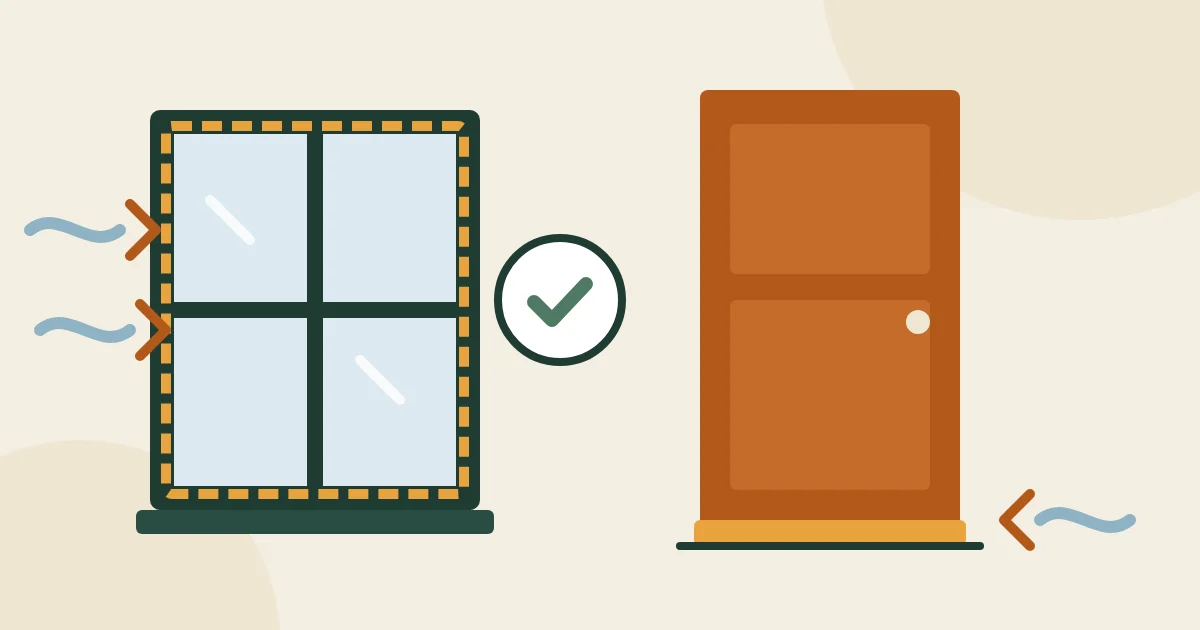
Cold outdoor air holds very little water. When it leaks into the house and warms up, its relative humidity collapses, which is why January air indoors can read 15–20%. That means the leakier the house, the drier the air, and the same drafts that raise your heating bill also dry out your skin. Sealing them helps twice:
- Seal the drafts around doors and windows. ENERGY STAR says air sealing and insulation can save up to 10% on annual energy bills.
- Close the fireplace damper when there is no fire: an open flue pulls warm, moist air out all night.
- Dry some laundry on a rack indoors. It adds moisture and skips a dryer cycle. Keep it away from cold walls and windows.
- Leave the bathroom door open after a shower in the coldest months, once the mirror clears, instead of running the fan for an hour.
- Do not overheat the house. The same air at 72°F reads drier than at 68°F, and you pay more for it.
FAQ
Does a humidifier make a room warmer?
It makes the room feel slightly warmer without raising the air temperature. By the ASHRAE comfort model, raising humidity from 20% to 40% at 68°F feels about 0.9°F warmer to a seated person in winter clothes. Evaporative and ultrasonic humidifiers actually cool the air a little, because evaporation takes heat from the room.
Does a humidifier save money on heating?
Usually not. Evaporating one gallon of water takes about 2.6 kWh of heat, about 15 cents with gas heat or 46 cents with electric resistance heat at typical prices. Turning the thermostat down 1°F saves roughly 3% of the heating bill, which is less than that in most homes. Buy a humidifier for comfort and dry skin or sinuses, not to cut the bill.
What humidity should I keep my house at in winter?
The Mayo Clinic recommends 30% to 50%, and the EPA advises not to humidify above 50%. In cold weather aim for 30% to 40%, and turn it down if water collects on the inside of your windows, which means the air is too humid for the outdoor temperature.
Is warm mist or cool mist better in winter?
For your bill, an evaporative cool-mist humidifier. Warm mist models boil the water and use about 250 watts, ten to twenty times as much, and the hot water is a burn risk around children. Warm mist does not noticeably heat a room: most of its energy goes into turning water into vapor.
Why does my humidifier leave white dust?
Ultrasonic and impeller humidifiers spray the minerals in tap water into the air, and they settle as white dust. The EPA suggests distilled water for these models. Evaporative humidifiers leave the minerals in the wick, and steam models leave them in the tank, so neither makes white dust.
How much electricity does a humidifier use?
It depends on the type. Evaporative models are listed at about 12 to 30 watts, about 5 to 13 cents a day running nonstop at 18 cents per kWh. Ultrasonic models use about 25 to 30 watts. Warm mist models use about 250 watts, about $1.07 a day if they ran around the clock.
Keep going
- Best smart thermostats to lower your heating bill
- How to keep a cold bedroom warm at night
- How to stop window and door drafts
- Energy cost calculator: what any appliance costs to run
- Condensation on windows in winter: the humidity limit for your glass, with a checker
Sources
- U.S. EPA: Use and care of home humidifiers (Indoor Air Facts No. 8)
- Mayo Clinic: Humidifiers, ease skin, breathing symptoms
- University of Minnesota Extension: Controlling moisture problems in your home
- USGS: Evaporation and the water cycle
- CBE Thermal Comfort Tool (ASHRAE 55 PMV model)
- U.S. Department of Energy: Six simple steps to save energy and money this winter
- U.S. EIA: Winter Fuels Outlook 2026–27 (October 2026)
- ENERGY STAR: Seal and insulate

Email me at hello@thelowbillhome.com. I read every message, and when a rate, a rule or a product changes, I update the guide. — Eugene
Affiliate Disclosure: The Low Bill Home is a participant in the Amazon Services LLC Associates Program. As an Amazon Associate we earn from qualifying purchases, at no extra cost to you. Product details and availability change, so check the listing before you buy.