You open the curtains in the morning and the bottom of every window is wet, water is running onto the sill, and the corners are starting to turn black. Window condensation is one of the most common winter questions, and the answer is almost always the same: the inner surface of the glass got colder than the dew point of your room air. Below is a calculator that shows exactly when your windows will sweat, the humidity limit for your kind of glass, and the ten fixes in the order I would try them.
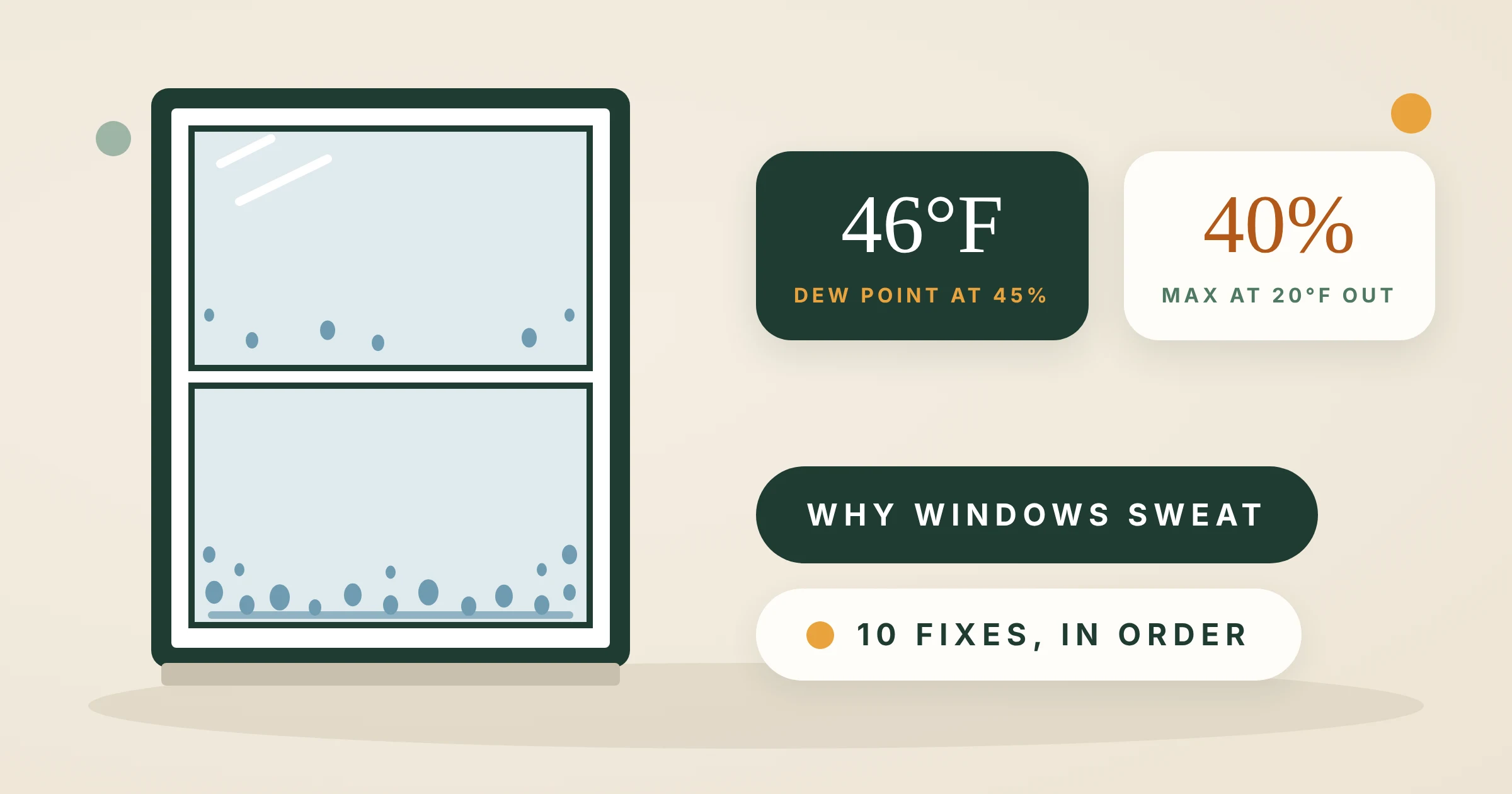
Your indoor air is too humid for how cold the glass gets. At 68°F and 45% humidity, room air has a dew point of about 46°F; on a 20°F night, the inside edge of a clear double-pane window is only about 44°F, so it sweats. Fix it in this order: measure humidity, turn the humidifier down, run the bath fan 20–30 minutes after showers and the kitchen hood while cooking, open curtains a few inches at night, and wipe the glass in the morning. For single panes, shrink film makes the inner surface warmer. Water between the panes means a failed seal, not a humidity problem.
Affiliate note: As an Amazon Associate, The Low Bill Home earns from qualifying purchases. Buying through our links costs you nothing extra. I have not tested these products hands-on: picks are based on the makers’ specs, warranty terms and owner feedback, and I say where a product falls short.
See your real indoor humidity, with high and low records. The cheapest useful tool here.
Check price on AmazonWhy we picked it ↓Replaces the bath fan switch; runs the fan 10–60 minutes, then shuts off.
Check price on AmazonWhy we picked it ↓Shrink film keeps the inner surface warmer and stops drafts. Ten windows.
Check price on AmazonWhy we picked it ↓Shopping on Black Friday? These are small, cheap items, so waiting for a deal saves little. If you want to wait anyway, add them to your cart now (Black Friday is November 27, Cyber Monday November 30, 2026).
Why windows sweat in winter
Warm air can hold more water vapor than cold air. Every room has a dew point: the temperature at which its air would be saturated. Cool the air below it and the extra water comes out as droplets. In winter, the glass is the coldest surface in the room. Heat flows out through it, so the inside of the pane sits somewhere between the room temperature and the outdoor temperature. The colder it gets outside, the colder the glass, and the lower the humidity it can tolerate before it sweats.
The edges go first. Near the frame, the metal spacer between the panes and the frame itself conduct heat out faster, so the bottom edge of the glass is often several degrees colder than the middle. That is why condensation starts as a strip along the bottom and in the corners, and why mold shows up on the sill and the lower corners first.
I’ve worked hands-on with energy-efficient windows in my rental renovations, and the physics here is the whole reason better windows stay drier: a warmer inner pane. But a window is only half the story. The other half is how much water the people in the house put into the air: showers, cooking, laundry, plants, a humidifier and simply breathing.
Condensation checker
Enter your room temperature, the humidity from a hygrometer and tonight’s low. The checker estimates the temperature of the inside edge of the glass, the dew point of your air and the highest humidity at which your windows stay dry.
Will my windows sweat tonight?
Glass edges, frames and the bottom corners run colder than the middle of the pane, so we calculate for the edge. Curtains or blinds closed tight over the glass make it colder still: aim 5 points below the number shown.
How it works: the inside surface temperature comes from a simple heat-flow model using typical center-of-glass insulation values (R-0.9 single pane, R-2.0 single plus film or storm, R-2.1 clear double pane, R-3.8 low-e argon double pane, R-5.5 triple pane), reduced at the edge of the glass, and the standard Magnus formula for dew point. It is an estimate, not a lab measurement, but for clear double panes it lands within a point or two of the University of Minnesota guideline in the next table.
Inside, between the panes or outside?
Before you change anything, look at where the water is. Each place means something different:
| Where the water is | What it means | What to do |
|---|---|---|
| Inside, on the room side | Indoor air is too humid for how cold that glass is | Lower humidity, move air across the glass, or make the inner pane warmer (the fixes below) |
| Between the two panes | The seal of the insulated glass unit has failed; humid air got inside | It cannot be wiped or fixed from the room. Check the window warranty: the glass unit usually has to be replaced |
| Outside, on the street side | Normal on cool, humid mornings. It often means the window insulates well, so the outer pane stays cold | Nothing; it dries when the sun hits it |
| Frost or ice on the inside | Same as condensation, but the glass is below 32°F: usually single panes or failed seals in hard cold | Lower humidity sharply and add a film or storm layer; wipe the melt so it does not soak the sill |
The right indoor humidity by outdoor temperature
The EPA’s general advice is to keep indoor humidity below 60%, and ideally between 30% and 50%. In cold weather, your windows set the real limit. The guideline most window makers publish comes from the University of Minnesota, for a room at 70°F. Next to it are the limits our calculator gives for two common window types:
| Outside temperature | University of Minnesota guideline (max indoor RH at 70°F) | Our calculator, double pane clear | Our calculator, low-e double pane |
|---|---|---|---|
| 20 to 40°F | Not over 40% | 41–59% | 62–75% |
| 10 to 20°F | Not over 35% | 34–41% | 56–62% |
| 0 to 10°F | Not over 30% | 28–34% | 50–56% |
| −10 to 0°F | Not over 25% | 23–28% | 46–50% |
| −20 to −10°F | Not over 20% | 19–23% | 41–46% |
| Below −20°F | Not over 15% | under 19% | under 41% |
So 45% humidity, which feels pleasant and is fine in fall, is too much for clear double panes once nights drop into the 20s. The usual mistake is setting a humidifier to one number in November and leaving it there through January. If your windows are low-e double panes, you can usually keep 40–45% except in the deepest cold.
10 fixes, in order
Start at the top: the first steps cost nothing and fix most homes. The later ones are for windows that keep sweating anyway.
- Measure first. Put a cheap hygrometer in the room where the windows sweat, away from the kitchen and bathroom. Guessing is how people end up running a humidifier into wet windows. The EPA says to keep indoor humidity below 60%, ideally 30–50%; in cold weather the windows set a lower limit (table above).
- Turn the humidifier down or off. If you run one, set it to the number the calculator gives for tonight’s low, not a fixed 45%. Many people add moisture all evening and wonder why the glass is wet at 6 a.m.
- Run the bathroom fan longer. The EPA advises running the bath fan (or opening a window) when showering. A shower puts a lot of water into the air, and most people switch the fan off when they walk out. A countdown timer switch keeps it running 20–30 minutes after the shower without anyone remembering.
- Use the kitchen hood when you boil or simmer, and put lids on pots. Long-simmered soups and pasta water are a big winter moisture source.
- Do not dry laundry on racks indoors in the coldest weeks, and make sure the clothes dryer vents outside, not into the basement or garage.
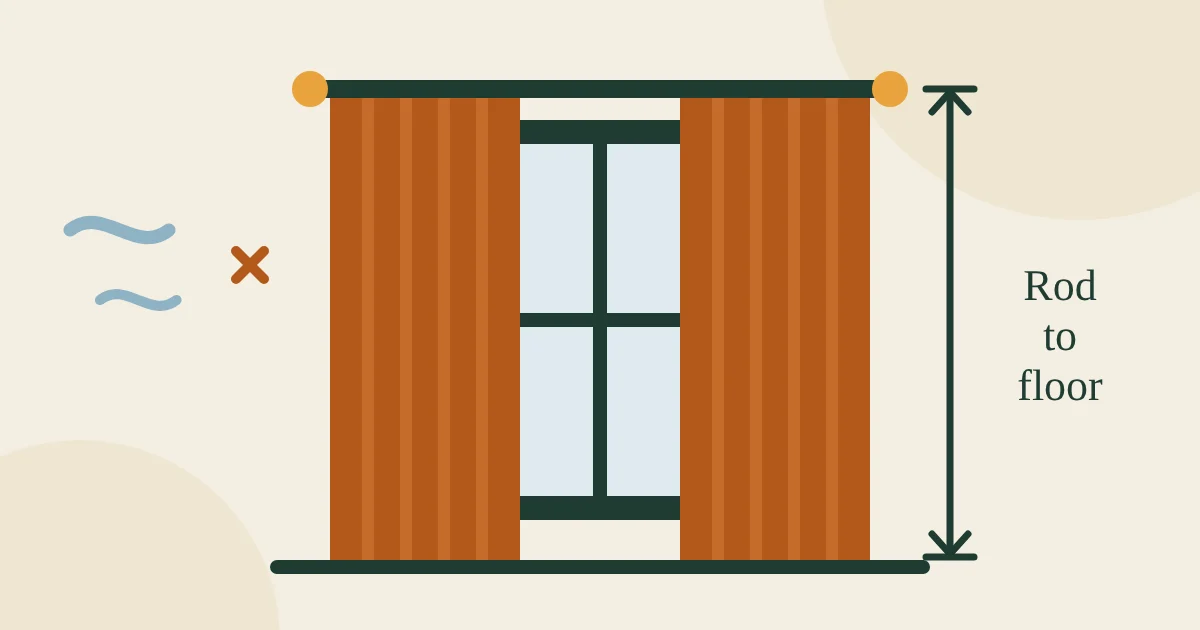
- Open the curtains and blinds a few inches, or leave a gap at the bottom. Heavy drapes trap a layer of cold air against the glass, so it gets colder than the room and sweats more. Window makers and the University of Minnesota both warn that closed coverings need even lower humidity.
- Keep air moving across the glass. Do not block heat registers under windows with furniture, move beds and sofas a few inches away, and run a ceiling fan on low. Removing interior insect screens in winter also helps air reach the glass.
- Wipe it every morning. A small squeegee and a towel take two minutes. Water that sits on the sill soaks paint and wood; the EPA says wet areas should be dried within 24–48 hours to keep mold from growing.
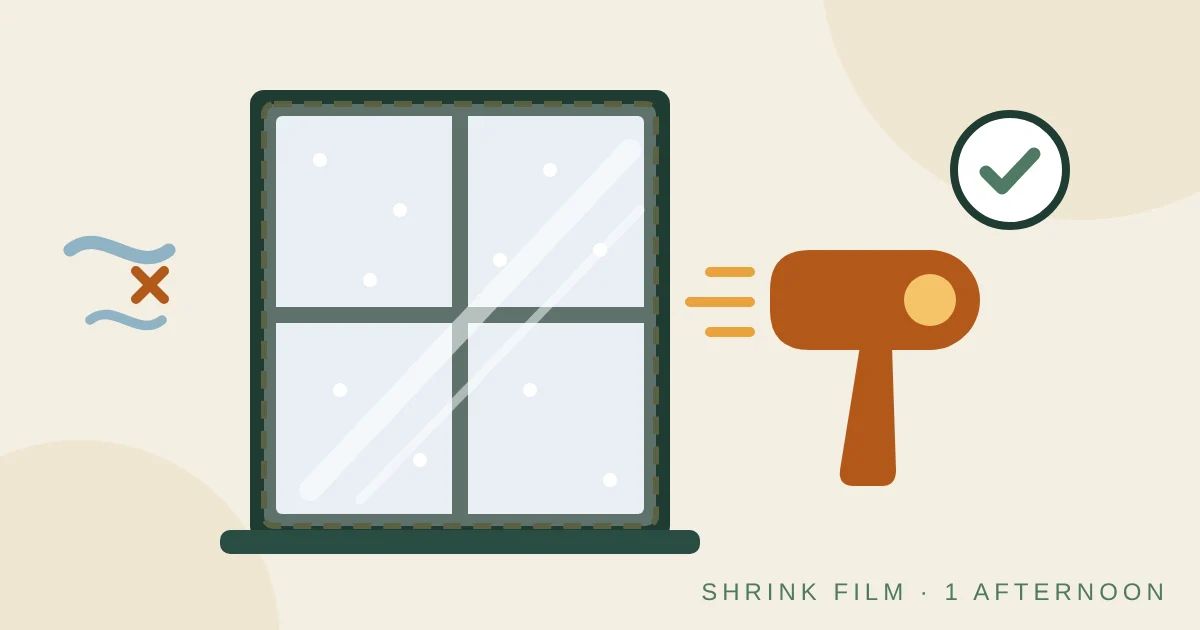
- Make the inner pane warmer. On single panes and leaky old windows, shrink film or a storm window adds an air layer, so the glass you touch stays warmer. In our calculator, film on a single pane raises the “dry” humidity limit at 20°F from about 25% to about 39%.
- Briefly air out on very wet days. The University of Minnesota Extension suggests opening windows “just a little” for a short time in winter, letting dry outdoor air replace humid indoor air. Five minutes of cross-ventilation after cooking does a lot.
If you do all of this and the windows in one room still run with water while the rest of the house is fine, look for a local moisture source in that room: a fish tank, a lot of plants, a gas heater without a vent, or a wet crawl space below. Unvented gas heaters add water vapor to the air as they burn.
Already black corners? Clean up safely
Small spots of mold on a sill or in the corner of a frame are common after a few weeks of daily condensation. The EPA says you can usually clean up an area smaller than about 10 square feet yourself: scrub hard surfaces with detergent and water and dry them completely. Wear gloves and eye protection, and do not mix bleach with ammonia or other cleaners. Painted wood that stays soft or keeps going black after cleaning has soaked up water; it needs to dry out and be repainted, and rotten wood needs repair. Then fix the moisture, or the mold comes back.
How we chose
Condensation is solved mostly by habits and airflow, so we only picked products that do one job in the fix list: measure the humidity, remove shower moisture automatically, clear the morning water, or warm the inner pane. We favored inexpensive, widely sold models, checked that each is in stock for U.S. delivery, compared maker specs, and looked at the common complaints owners report. We left out moisture-absorbing window strips and DampRid-type tubs for windows: they hold a tiny amount of water compared with what a family puts into the air every day.
The picks
TempPro TP50 Digital Hygrometer
Every fix in this guide starts with knowing your real indoor humidity, and the TP50 is the cheapest reliable way to see it. It shows temperature and humidity on a big display, with a simple dry/comfort/wet face, and remembers the high and low readings, which is useful for catching the humidity spike after showers. Buy one for the room with the worst windows; I would also put one in the bedroom, where a closed door and two sleeping people raise humidity overnight.
- Humidity and temperature, high/low records
- ±2–3% RH, ±1°F (maker’s figure)
- Refreshes every 10 seconds
- Stand or magnet; 1 AAA battery
Good: very cheap, easy to read, accurate enough to steer by.
Watch out: no app or alerts; cheap sensors can drift a few points over time, so compare two units side by side if a reading looks odd.
Skip it if: you want alerts on your phone: get the Govee below.
Govee H5075 Bluetooth Hygrometer Thermometer
The Govee adds an app with history graphs and alerts. That matters for condensation, because the problem builds overnight: you can see how high humidity climbs after dinner and showers, and set an alert at the limit the calculator gives for your windows. The maker quotes ±3% RH accuracy and a refresh as fast as 2 seconds, with a 3-inch display.
- Bluetooth, about 164 ft range (no Wi-Fi)
- ±3% RH, ±0.54°F (maker’s figure)
- Graphs and high/low alerts in the Govee app
- Sold by Govee US
Good: history graphs show when the moisture comes from; alerts before the windows fog.
Watch out: Bluetooth only, so the phone has to be nearby to sync and alert; for remote alerts you need a Govee Wi-Fi gateway or a Wi-Fi model.
Skip it if: you just want a number on the wall: the TP50 does that for less.
Leviton DT160 Countdown Timer Switch (10/20/30/60 min)
This replaces the wall switch for the bathroom fan. Press 20 or 30 minutes after a shower and the fan shuts itself off, so the moisture actually leaves instead of drifting to the bedroom windows. It is sold and shipped by Amazon and handles fan loads up to 1/2 HP / 9.8 A, far more than any bath fan. No neutral wire is needed, but it does need a ground wire in the box.
- Presets 10, 20, 30, 60 minutes
- Fan/motor 1/2 HP, 9.8 A; LED 600 W
- No neutral required; ground required
- Single pole, white; sold by Amazon
Good: fixes the habit of switching the fan off too early, with no app or setup.
Watch out: it is a hardwired switch: turn the breaker off before you start, or have an electrician fit it; renters need the landlord’s OK; it will not help a fan that does not really pull air (hold a tissue to the grille to check).
Skip it if: your bath fan has no ground wire in the box, or you rent and cannot change switches.
OXO Good Grips Multi-Use Squeegee
Until the humidity is under control, the water has to come off the glass every morning. A 10-inch silicone blade clears a window in a few strokes and pushes the water to the bottom, where one towel picks it up from the sill. It hangs on a hook, so it can live by the worst window.
- 10-inch silicone blade
- Non-slip handle, hook
- Works on glass, mirrors and tile
Good: faster and drier than towels alone; protects the sill paint.
Watch out: it treats the symptom: if you squeegee every day for weeks, fix the humidity or the cold glass.
Skip it if: your condensation is between the panes: no tool can reach it.
Duck Brand Window Insulation Kit (10 windows)
Shrink film adds a sealed air layer inside the window, so the glass you touch stays warmer and the room air reaches the film instead of the cold pane. It is the cheapest way to make a single-pane or drafty window behave more like a double pane for the winter, and it cuts drafts too. We cover film kits in detail in our window insulation kit guide.
- 2 rolls of film, 62 × 210 in each; 2 rolls of tape
- Up to ten 3 × 5 ft windows
- Shrinks tight with a hair dryer
- Comes off in spring
Good: raises the inner surface temperature and stops drafts in one step.
Watch out: film can still fog on the inside if humidity stays very high; the tape can lift paint when removed in spring on poor paint.
Skip it if: you have newer double-pane low-e windows: fix humidity and airflow first.
FAQ
Why are my windows wet on the inside every morning?
The air in your home holds water vapor, and at night the glass gets colder as the outside temperature drops. When the inner surface of the glass falls below the dew point of the room air, water condenses on it, starting at the edges and bottom corners. Lower the indoor humidity, keep air moving across the glass, and open curtains a little at night.
What indoor humidity stops window condensation?
It depends on how cold it is outside and on your windows. University of Minnesota guidelines for 70 degrees indoors: not over 40% at 20 to 40 degrees outside, 35% at 10 to 20, 30% at 0 to 10, and 25% at minus 10 to 0. Low-e double-pane windows can handle more; single panes need less.
Is condensation on windows bad?
A little on the coldest mornings is normal. Daily water that runs onto the sill is a problem: it peels paint, rots wood frames and can lead to mold. The EPA says wet areas should be dried within 24 to 48 hours. Wipe it each morning and lower the humidity.
Why is there condensation between the panes of my window?
Fog or water between the two panes means the seal of the insulated glass unit has failed and humid air has leaked in. It cannot be wiped or fixed from inside. Check the window warranty; usually the glass unit is replaced, not the whole window.
Does a dehumidifier stop window condensation?
It can, in a damp basement or a home where humidity stays above 50% in winter. In most heated homes in cold weather the air is already fairly dry, and running the bath and kitchen fans, turning off the humidifier and opening curtains fixes the problem for much less electricity. Measure first with a hygrometer.
Will new windows stop condensation?
Better windows have a warmer inner pane, so they tolerate higher humidity: in our calculator a low-e double pane stays dry at about 62% humidity at 20 degrees outside, versus about 41% for clear double pane. But very tight new windows can also trap more moisture, so you still need the bath and kitchen fans.
Keep going
- Does a humidifier make a room feel warmer? The real math, and how much moisture is enough
- Best window insulation kits for single panes and drafty windows
- Best thermal curtains, and when to open them
- How to stop window and door drafts
Sources

Email me at hello@thelowbillhome.com. I read every message, and when a rate, a rule or a product changes, I update the guide. — Eugene
Affiliate Disclosure: The Low Bill Home is a participant in the Amazon Services LLC Associates Program. As an Amazon Associate we earn from qualifying purchases, at no extra cost to you. Product details and availability change, so check the listing before you buy.