Thermal curtains are the easiest way to make a cold room feel warmer at night: no tools, no tape, and the window still opens. But the fabric is only half of it. A thermal curtain hung inside the frame with gaps at the top and sides lets cold air spill right past it. Hung properly, the same curtain seals the window off like a closed door. Here are the best thermal curtains to buy, and the simple way to hang them that makes the real difference.
The NICETOWN Thermal Insulated Blackout Curtains are the best all-round pick: dense triple-weave fabric, dozens of sizes and colors, machine washable. For the best result, hang them on a wrap-around rod mounted above and wider than the window, let the panels overlap in the middle and reach the sill or floor, and close them at dusk.
Affiliate note: As an Amazon Associate, The Low Bill Home earns from qualifying purchases. Buying through our links costs you nothing extra. We have not tested every product hands-on: picks are based on the makers' published specs, official energy-saving guidance and long-term buyer feedback, and we say where a product falls short.
Dense triple-weave blackout fabric in dozens of sizes and colors; machine washable.
Check price on AmazonWhy we picked it ↓Thick, same color on both sides, and one of the best-selling blackout curtains on Amazon.
Check price on AmazonWhy we picked it ↓Curved ends bring the curtain back to the wall and close the side gaps.
Check price on AmazonWhy we picked it ↓Shopping on Black Friday? Add it to your Amazon cart now so it is ready when the deals start (Black Friday is November 27, Cyber Monday November 30, 2026).
How to hang them so they work
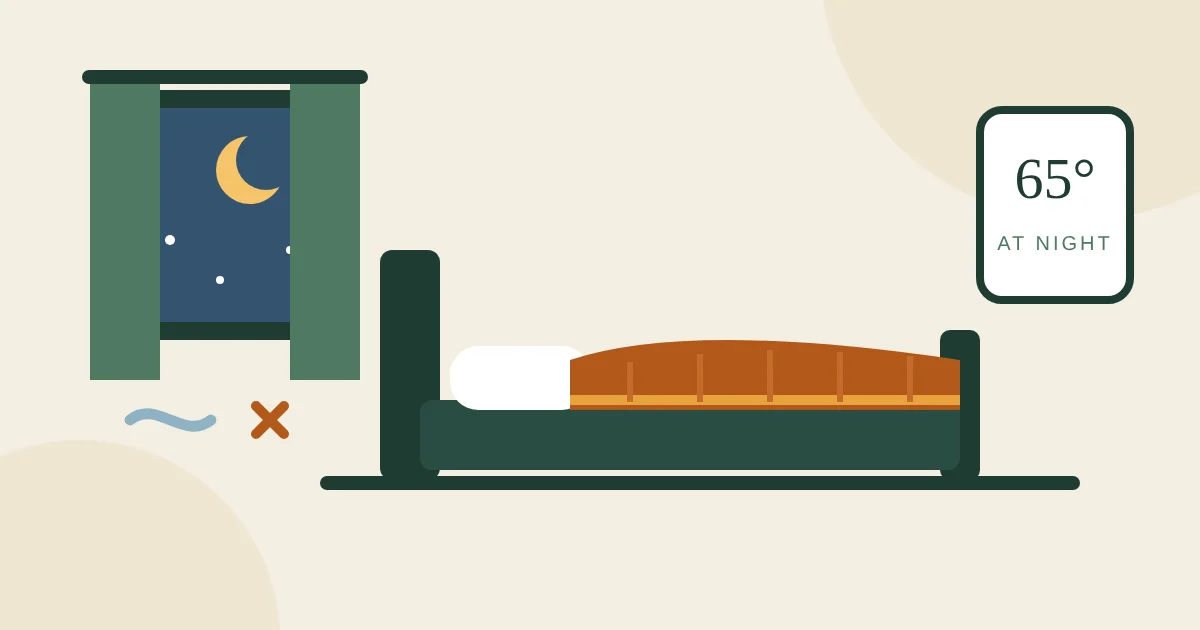
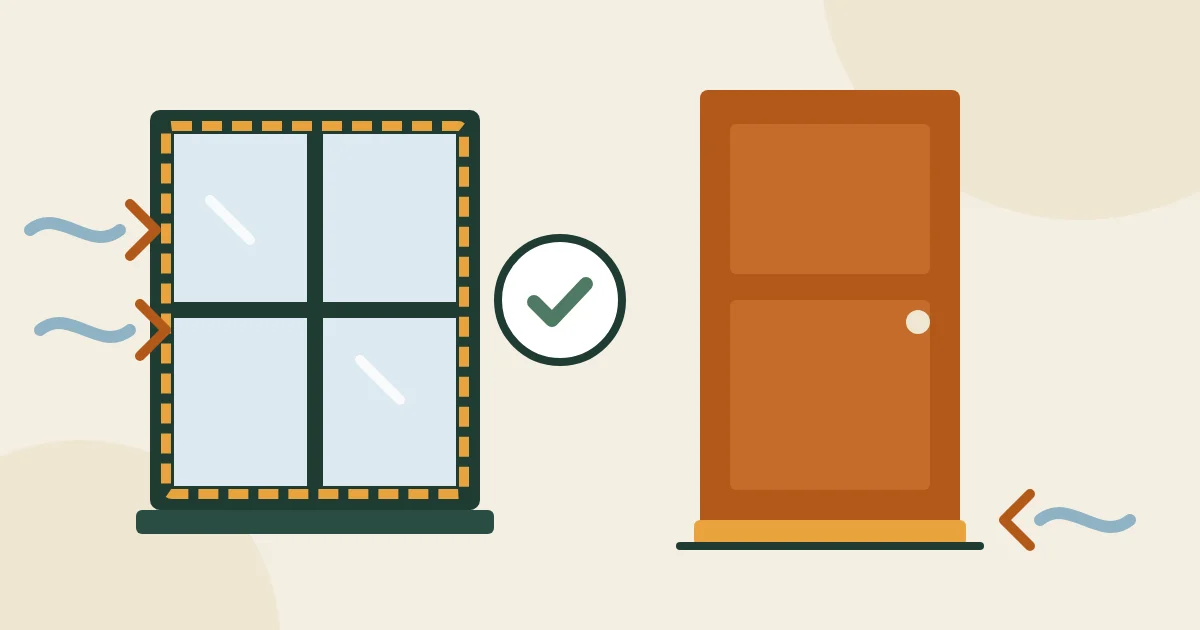
Cold glass chills the air next to it. That air sinks, spills out from under the curtain and pulls warm room air in at the top, a slow loop that runs all night. The goal is to close that loop at every edge.
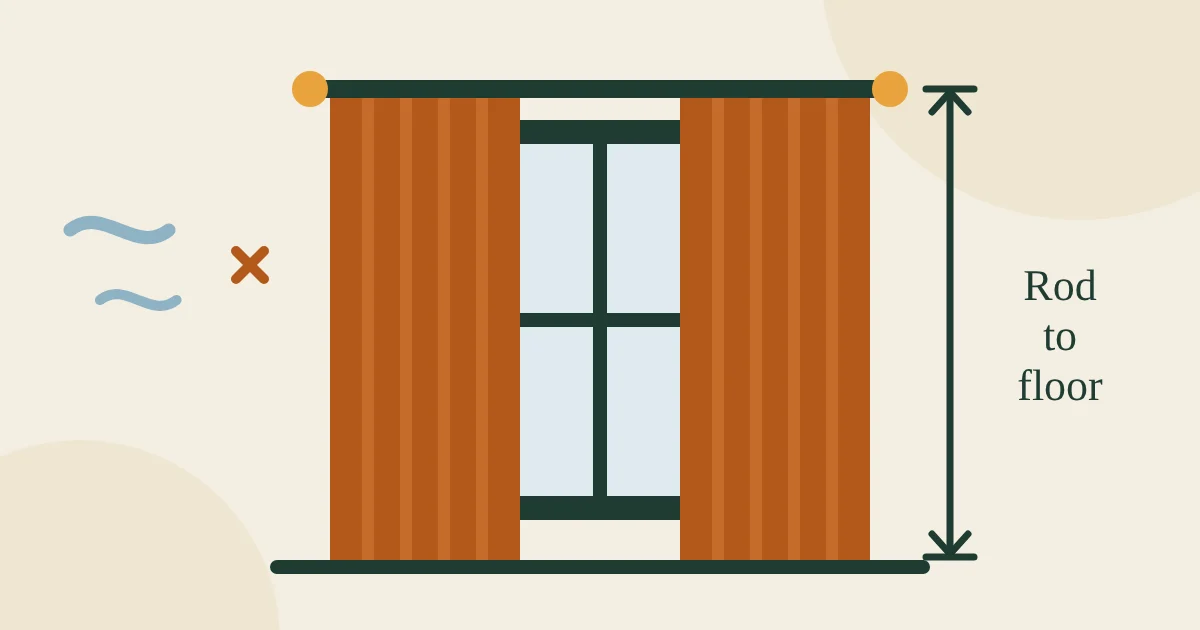
- Mount the rod higher and wider than the frame. A few inches above the top of the trim and a few inches past each side, so the curtain covers the whole frame.
- Use a wrap-around rod, or curtain clips at the sides, so the panel returns to the wall and the side gaps close.
- Let the panels overlap in the middle by a few inches when closed.
- Go down to the sill or the floor. Stop at the sill if there is a radiator or heating vent below the window, so you do not trap the heat behind the curtain.
- Close them at dusk, open them in the sun. The Department of Energy’s Building America Solution Center recommends opening window attachments when the sun shines on the window and closing them at night and on cloudy days.
Thermal vs blackout vs regular curtains
| Type | How it is made | Winter warmth | Light |
|---|---|---|---|
| Thermal / insulated | Dense multi-layer weave or an insulating liner | Best | Usually blocks most light |
| Blackout | Triple-weave fabric or a blackout lining | Good (the density helps) | Blocks most or all light |
| Regular or sheer | Single thin layer | Little | Lets light through |
| Any curtain + thermal liner | Liner hung behind your curtain | Good | Blocks most light |
In practice, a heavy blackout curtain and a “thermal” curtain behave much the same in winter. Weight, density and fit matter more than the word on the package.
What size to buy
- Width: the two panels together should be about 1.5 to 2 times the width of the rod, so they still look full when closed and overlap in the middle.
- Length: 63 inches usually reaches just past the sill of a standard window hung a little high; 84 inches reaches the floor from a rod at about 7 feet; 95 inches suits higher rods.
- Rod fit: check the grommet size against the rod. Our picks use grommets that fit standard rods up to about 1.5 inches thick.
How we chose
- Dense fabric or a real lining. All four curtains are heavy blackout or thermal types; we skipped light “room darkening” panels.
- Sizes and colors. Curtains only work if they fit, so we favored lines sold in many widths and lengths.
- Track record. Every pick has been sold for years with a very large volume of buyer feedback. Common complaints, such as color varying from photos and wrinkles out of the package, are noted.
- The rod. We included the one accessory that changes how well any curtain works.
We have not tested these products in our own home. Picks are based on the makers’ published specifications, safety certifications and patterns in long-term buyer feedback, especially the complaints.
The picks
NICETOWN Thermal Insulated Blackout Curtains
The default choice for a reason: NICETOWN’s thermal curtains use a dense triple-weave fabric that feels soft and heavy without a separate liner, and they come in a huge range of widths, lengths and colors. The maker says they block 85 to 99% of light, with darker colors at the top of that range. The grommets have a 1.6-inch opening, so they slide easily on standard rods, and the panels are machine washable in cold water.
- Sold as 2 panels; listing shown is 42″ x 63″ each, many sizes
- Triple-weave blackout fabric, no liner needed
- 6 grommets per panel, 1.6″ inner diameter
- Machine washable, cold water
Good: warm, heavy fabric, sizes and colors for almost any window, easy care.
Watch out: light colors let more light through; fresh out of the package they need a steam or a few days to hang straight.
Skip it if: you want a linen look: see the H.VERSAILTEX pick.
ChrisDowa Blackout Curtains
One of the best-selling blackout curtains on Amazon, and a good value for a bedroom or a rental. The fabric is thick and the same solid color on both sides, so they look tidy from the street. The maker quotes 98% light blocking for darker colors and says they help reduce heat loss through the window in winter. Like the NICETOWN, they hang from 1.6-inch grommets.
- Sold as 2 panels; listing shown is 42″ x 63″ each, other sizes available
- Same color on both sides
- 6 grommets per panel, 1.6″ inner diameter
- Machine washable on a gentle cycle, below 86°F
Good: strong value, thick fabric, looks the same from outside.
Watch out: fewer colors and sizes than NICETOWN; wash cool or they can shrink.
Skip it if: you need an unusual size: NICETOWN has the widest range.
H.VERSAILTEX 100% Blackout Linen Curtains
Thermal curtains have a reputation for looking heavy and dull. These do not: the face is a textured faux-linen weave, and behind it is a white 100% blackout lining that adds the insulating layer. Each panel is 52 by 84 inches with eight rust-resistant grommets that fit rods up to 1.5 inches, so a pair covers a wide living-room window floor to rod.
- 2 panels, 52″ x 84″ each
- Faux-linen face with 100% blackout lining
- 8 grommets per panel, rods up to 1.5″
- GRS (recycled) certified fabric
Good: the nicest look of our picks, full blackout lining, generous width.
Watch out: heavier panels need a sturdy rod; the white lining faces the street.
Skip it if: you want a darker solid color: the NICETOWN range is wider.
DriftAway Thermal Insulated Curtain Liner
Already have curtains you like? Keep them and add a thermal liner behind them. These blackout liners come as two 50 by 80-inch panels with 16 metal rings included, sized to sit behind standard 84-inch grommet curtains, and they are machine washable and dryable.
- 2 liners, 50″ x 80″ each
- Fits behind 84″ grommet curtains
- 16 metal rings included
- Machine wash and dry
Good: keeps your existing look, adds the insulating layer, cheap way to upgrade every window.
Watch out: adds weight to the rod; rings can be fiddly to attach the first time.
Skip it if: your curtains are already heavy blackout or thermal.
Amazon Basics Wrap-Around Blackout Curtain Rod
The side gaps are where most of the cold air escapes. A wrap-around rod curves back to the wall at both ends, so the curtain does too, and the gap disappears. This one adjusts from 28 to 48 inches end to end, holds up to 16 pounds, and comes with the wall hardware. It has a 5/8-inch rod, so it suits grommet and ring curtains like our picks; for very wide windows, look at the longer sizes in the same listing.
- Adjusts 28–48″ end to end
- Wrap-around ends return to the wall
- 5/8″ rod, holds up to 16 lb
- Wall-mount hardware included
Good: the single change that makes any curtain insulate better, cheap, simple install.
Watch out: needs screws in the wall; check the weight limit for heavy lined curtains.
Skip it if: you rent and cannot drill: curtain clips or adhesive hooks at the sides are the fallback.
How much will they save?
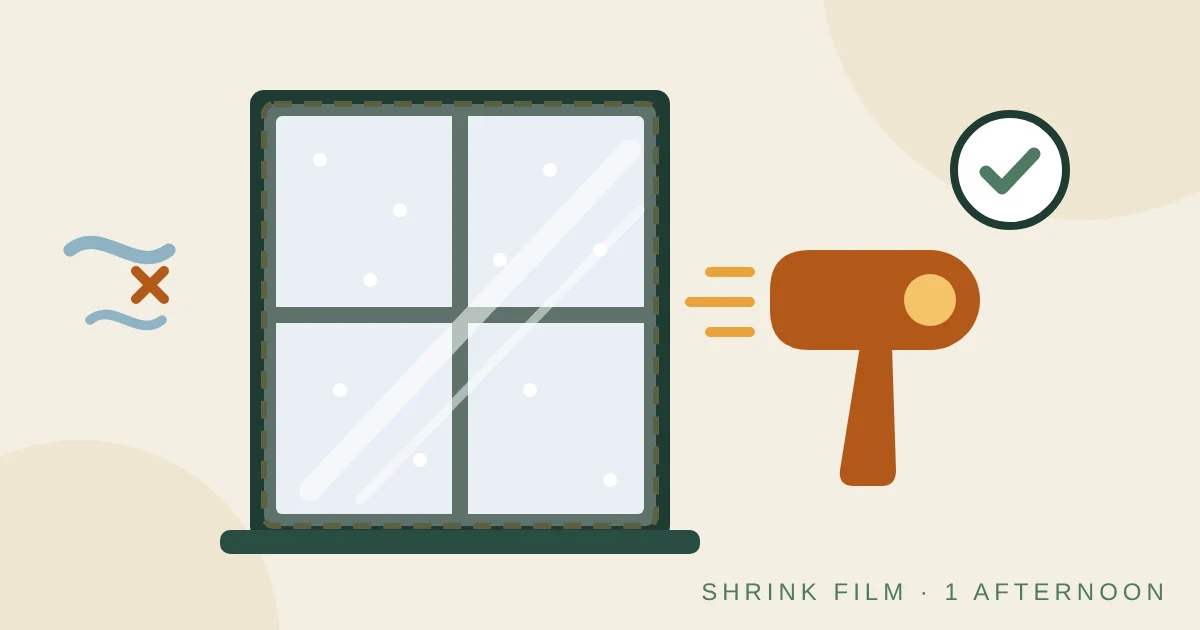
Honest answer: it depends on your windows, climate and habits, and curtains are not the most powerful window upgrade. The Department of Energy’s Building America Solution Center reports field studies where window attachments cut winter heating energy by roughly 12 to 14%, with insulating cellular shades the best performers; curtains offer some insulating value and mainly block air movement. The bigger your windows and the older the glass, the more you gain, and combining curtains with a window insulation kit on the windows you never open gets you the most. For scale, EIA expects the average household heating with electricity to spend about $1,196 on heating this winter (EIA Winter Fuels Outlook, October 2026).
FAQ
Do thermal curtains really keep heat in?
They help, mainly by stopping warm room air from circulating against cold glass at night and adding a layer of fabric over the window. Research summarized by the Department of Energy's Building America Solution Center found window attachments cut winter heating energy by roughly 12 to 14% in field studies, with insulating cellular shades doing best; curtains help more modestly. Fit matters: a curtain that is tight at the sides, top and bottom does far more than one that hangs loosely.
What is the difference between thermal and blackout curtains?
Blackout curtains are made to block light, usually with a dense triple-weave fabric or a lining. Thermal curtains are made to slow heat loss, usually with the same kind of dense fabric or an insulating liner. Many products are both, and for winter warmth the density of the fabric and how well the curtain fits matter more than the label.
Should thermal curtains touch the floor?
For the best seal they should reach the sill or the floor, so cold air cannot pour out from under them. The exception is a window above a radiator or heating vent: there, stop at the sill so the curtain does not trap heat behind it.
When should I open and close thermal curtains in winter?
Open them on sunny days to let free solar heat in, especially on south-facing windows, and close them at dusk and on cloudy days to keep the heat in overnight.
Do thermal curtains help in summer too?
Yes. Closed during the hottest part of the day on sunny windows, they block heat from the sun and reduce cooling costs, and blackout versions keep bedrooms darker.
Can I add a thermal liner to curtains I already have?
Yes. A thermal or blackout liner hangs behind your existing curtains on rings or hooks, so you keep the look you like and add the insulating layer behind it.
Keep going
- Best window insulation kits for winter
- How to keep a cold bedroom warm at night
- Best door draft stoppers
- 20 ways to lower your heating bill this winter
Sources
Affiliate Disclosure: The Low Bill Home is a participant in the Amazon Services LLC Associates Program. As an Amazon Associate we earn from qualifying purchases, at no extra cost to you. Product details and availability change, so check the listing before you buy.