If you can feel a cold line of air down the side of your front door, or see daylight at the top corner, the seal between the door and the frame has given up. New weather stripping is one of the cheapest fixes in the house, and it takes about half an hour. The hard part is choosing, because the aisle is full of foam, rubber, V-strips and kerf seals that each suit a different door and gap.
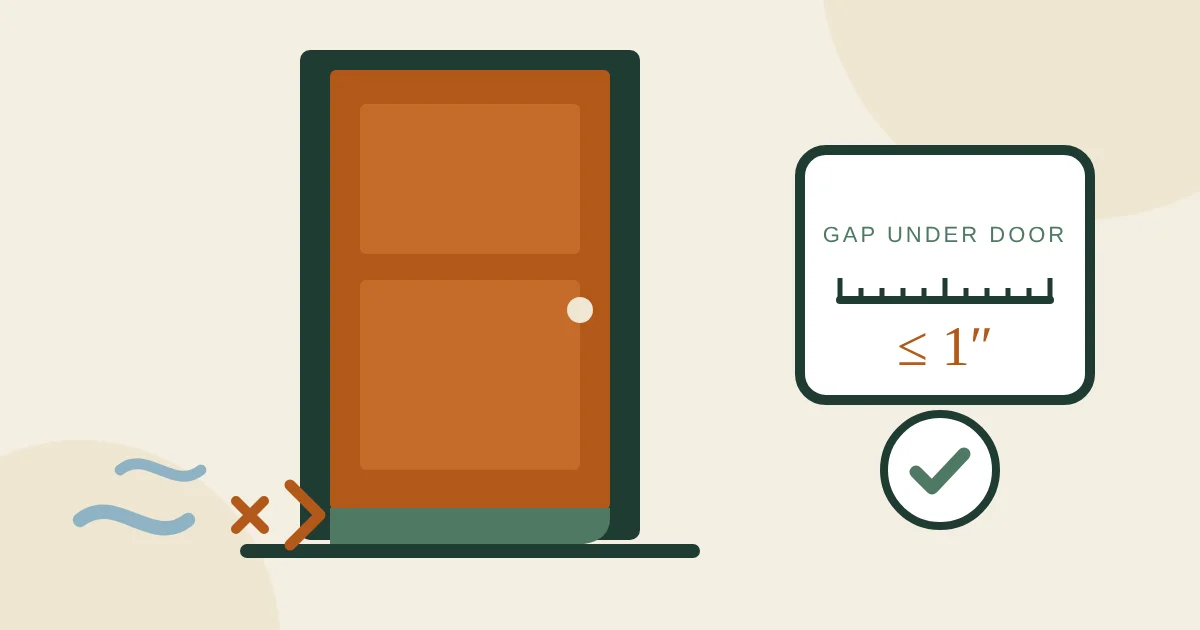
For most doors without a slot in the frame, the Frost King EPDM rubber D-section seal is the best buy: durable rubber that sticks to the door stop. If your exterior door frame has a kerf slot where the old seal was pressed in, replace it with a press-in kerf seal. For uneven gaps at the top and sides, a V-strip flexes to fit. The gap under the door needs a door sweep or draft stopper instead.
Affiliate note: As an Amazon Associate, The Low Bill Home earns from qualifying purchases. Buying through our links costs you nothing extra. We have not tested every product hands-on: picks are based on the makers' published specs, official energy-saving guidance and long-term buyer feedback, and we say where a product falls short.
Durable self-stick rubber for the top and sides of most doors.
Check price on AmazonWhy we picked it ↓Presses into the slot in modern exterior door frames. No adhesive.
Check price on AmazonWhy we picked it ↓A V-shaped strip that springs open to fill gaps of varying size.
Check price on AmazonWhy we picked it ↓Shopping on Black Friday? Add it to your Amazon cart now so it is ready when the deals start (Black Friday is November 27, Cyber Monday November 30, 2026).
Which weather stripping for which door
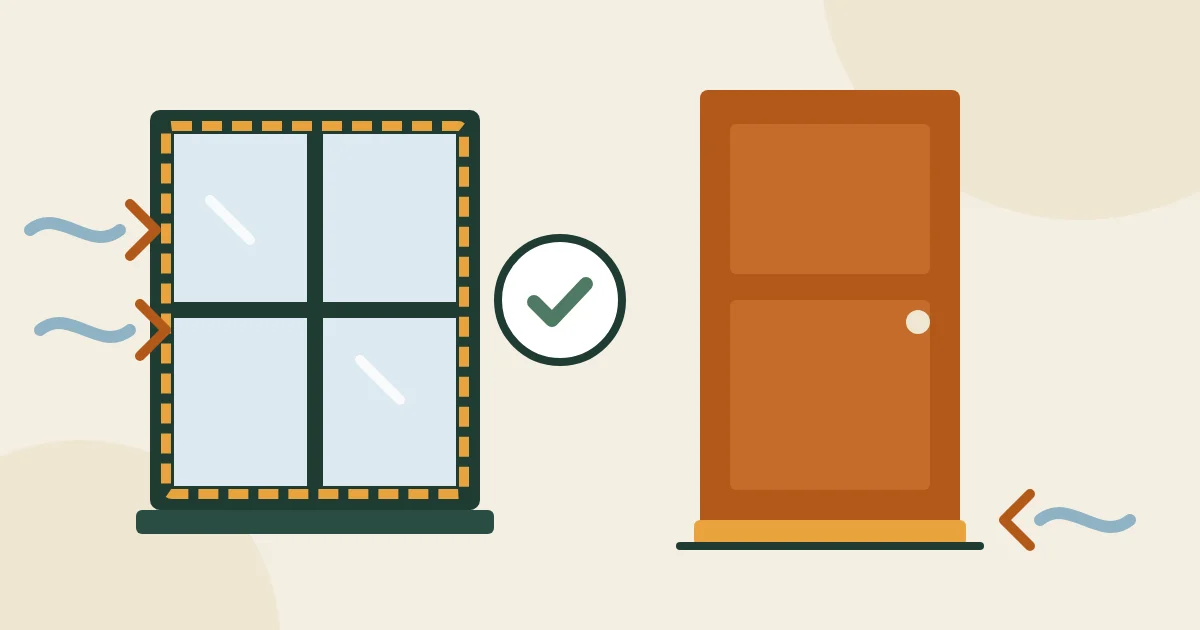
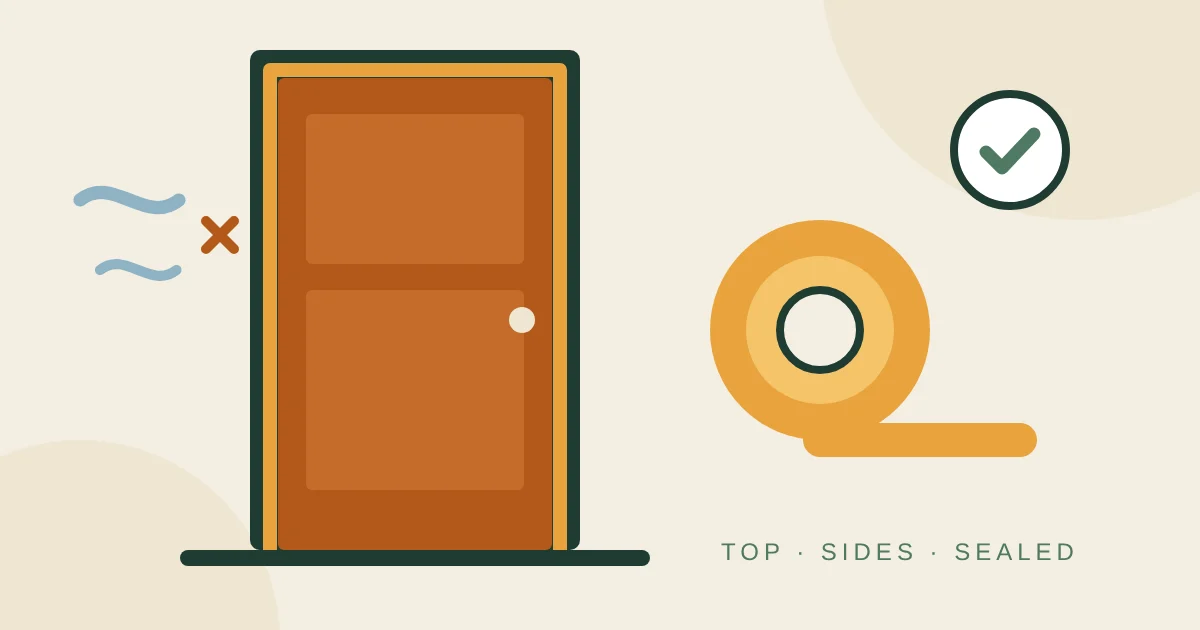
Two questions decide it: where the leak is (top and sides, or bottom), and how the seal is held (pressed into a slot, or stuck on). Weather stripping goes on the top and sides, where the door closes against the stop in the frame. The bottom of the door is a different job.
| Your door | Best type | Our pick |
|---|---|---|
| Exterior door, frame has a thin slot where the old seal pressed in | Press-in kerf seal | 40 ft kerf seal |
| Any door without a slot, small even gap | Self-stick EPDM rubber (D profile) | Frost King EPDM D-section |
| Older door, gap wider at one end than the other | V-strip (tension seal) | M-D V-Flex |
| Interior door, closet, attic hatch, low traffic | Foam tape | Frost King R338H |
| Irregular gaps up to about an inch, sliding or rarely used doors | Silicone flap seal | Holikme flap seal |
| Gap under the door | Door sweep or under-door draft stopper | Door draft stoppers |
Find the leak in two minutes
- The paper test. Close the door on a strip of paper at the top, the latch side and the hinge side. If it slides out without resistance, the seal is not touching there.
- The daylight test. On a sunny day, turn off the hall light and look for light around the edges of the closed door.
- The hand test. On a windy day, run the back of your hand slowly around the frame. Cold air is easy to feel.
- Look at the old seal. Flattened, cracked, torn or missing sections tell you it is time.
Our guide to stopping window and door drafts covers the rest of the house.
How we chose
- Material first. Government energy guides are clear that material matters: EPDM rubber, vinyl and silicone hold up well, while open-cell foam dries out and felt barely stops air. The Maryland Energy Administration notes that reinforced felt lets through more than 250 times as much air as closed-cell foam, so we left felt out.
- One pick per kind of door. Kerf frames, plain door stops, uneven gaps, low-traffic doors and odd gaps all need something different.
- The complaints. The common failures are adhesive letting go and a seal that is too thick to let the door latch. We explain how to avoid both below.
We have not tested these products in our own home. Picks are based on the makers’ published specifications, safety certifications and patterns in long-term buyer feedback, especially the complaints.
The picks
Frost King EPDM Rubber Self-Stick Weatherseal, D-Section
EPDM is the rubber used in car door seals, and it keeps its bounce through years of cold and sun far better than foam. This D-shaped strip sticks to the door stop, so the door squeezes the hollow “D” when it closes and seals the gap. At 5/16 of an inch wide and 1/4 of an inch thick it suits the ordinary gap on most interior and exterior doors. Frost King has made weather stripping for decades and sells this in black and in white to match the frame.
- EPDM rubber, D profile
- 5/16″ wide x 1/4″ thick x 17 ft
- Self-stick adhesive backing
- Black; a white version is also sold
Good: durable rubber, neat look, easy to cut and stick.
Watch out: 17 feet does one standard door; adhesive needs a clean, dry, room-temperature surface.
Skip it if: your frame has a kerf slot: a press-in seal lasts longer there.
Kerf Weather Stripping Door Seal, 40 ft
Most modern exterior doors have a thin groove, about 1/8 of an inch wide, cut into the frame. The factory seal has a flange that presses into it. When that seal gets flattened or chewed by the dog, you pull it out and press a new one in. No adhesive is involved, so it does not let go in the cold. This 40-foot roll fits 1/8-inch kerf slots and, according to the maker, 1/4 to 1/2-inch gaps when the door is closed. That is enough for a full door and leftovers for the garage entry door.
- Press-in flange for 1/8″ kerf slots
- Seals 1/4″ to 1/2″ closed-door gaps (maker’s spec)
- 40 ft roll
- No adhesive; white
Good: the most durable fix for kerf frames, tool-free, enough for two doors.
Watch out: only works if the frame has a kerf slot; check the slot width before you order.
Skip it if: your frame is flat with no groove: use the EPDM strip.
M-D V-Flex Weatherseal
A V-strip (or tension seal) is folded along its length, so it springs open to fill the space between the door and the frame. That makes it forgiving on older doors where the gap is wide at the top and tight at the bottom. Energy guides recommend this type for the sides of doors and for the tracks of double-hung windows. M-D’s V-Flex installs along the top and sides of a door and comes in a 17-foot roll.
- V-shaped tension seal
- 17 ft x 3/8″
- For the top and sides of doors, and window tracks
- White
Good: adjusts to gaps of varying size, nearly invisible once installed.
Watch out: the folded edge must face the right way (open side toward the outside); can make a door slightly stiffer to close.
Skip it if: the gap is even all the way round: the D-strip is simpler.
Frost King R338H Self-Stick Rubber Foam Weatherseal
Foam tape is the quickest and cheapest seal, and it works well where the door is opened a few times a day or less: a basement door, a closet on an outside wall, an attic hatch, a window sash. This is a rubber foam rather than the cheap open-cell kind that turns to powder, and it needs very little compression, so it will not stop a door from latching.
- Self-stick rubber foam
- 3/8″ wide x 3/16″ thick
- Needs minimal compression
- Black
Good: cheap, easy, gentle on doors that are hard to close.
Watch out: the least durable choice on a busy door; expect to replace it sooner than rubber.
Skip it if: it is the front door you use all day.
Holikme Silicone Weather Stripping Seal Strip (1.8 inch)
A wide silicone flap with a clear adhesive strip, for the gaps that standard seals cannot reach: around a sliding door, a door that has sagged, or the side of an interior door with a big uneven gap. The maker says it suits gaps up to 1.2 inches. You get two rolls, 33 feet in total.
- Silicone flap seal, 1.8″ wide
- 2 rolls, 33 ft total
- Gaps up to 1.2″ (maker’s spec)
- Clear self-adhesive backing
Good: covers big, irregular gaps; long rolls.
Watch out: more visible than a hidden compression seal; adhesive needs a clean surface.
Skip it if: a regular gap of 1/4 inch or less: a D-strip looks and works better.
How to install it
These steps follow the do-it-yourself guide from the Department of Energy’s Building America Solution Center.
- Remove the old weather stripping. Pull out kerf seals; scrape off old foam and adhesive.
- Clean the surface with dish soap and water, then let it dry completely. For self-stick seals, a wipe with rubbing alcohol helps.
- Work at room temperature. Adhesive bonds poorly to a cold frame. On a cold day, warm the frame with a hair dryer first.
- Measure and cut each piece: one for the top, one for each side. Do not stretch the strip as you apply it.
- Stick it to the door stop, the strip of frame the door closes against, so the door squeezes the seal instead of rubbing along it.
- Test the fit. Open and close the door. It should close with gentle pressure and latch without slamming. Redo the paper test.
Door will not latch now? The seal is too thick on the latch side. Swap that side to a thinner profile; the hinge side and top can usually keep the thicker one.
What it saves (honestly)
New weather stripping makes a cold room feel warmer immediately. The direct energy savings are smaller than the packaging suggests: the Maryland Energy Administration points out that drafts around doors and windows contribute little to a home’s total heat loss. The bigger win is comfort, which often means you leave the thermostat a degree or two lower. ENERGY STAR estimates that sealing air leaks and adding insulation together can save up to 10% on annual energy bills. Weather stripping is the easiest part of that job.
Mistakes to avoid
- Putting tape where the door rubs. On the edge of the door it wears off within days. Put it on the stop.
- Buying too thick. A door that will not latch is worse than a small draft. Start thin.
- Using weather stripping under the door. The bottom gap needs a sweep or draft stopper.
- Skipping the cleaning. Dust and old adhesive are the main reason self-stick seals fall off.
- Sealing the top and sides but not the corners. Butt the pieces tightly together in the top corners, where the most light shows.
FAQ
What is the best weather stripping for exterior doors?
If your door frame has a thin slot (a kerf) where the old seal was pressed in, a replacement kerf seal is the most durable choice because it is held mechanically, not by adhesive. If there is no slot, self-stick EPDM rubber in a D or P profile is the best all-round option for the top and sides. The bottom of the door needs a door sweep or threshold seal.
How do I know what size weather stripping to buy?
Close the door on a strip of paper at several points around the frame. Where the paper slides out easily, the gap is bigger than you think. Pick a profile slightly thicker than the gap so it compresses when the door closes, but not so thick that the door will not latch. If you are unsure, buy the thinner size first and add a second layer only where needed.
Does weather stripping really save money?
It makes rooms noticeably more comfortable, which often lets you keep the thermostat lower. The direct energy savings from weather stripping alone are modest: the Maryland Energy Administration notes that drafts around doors and windows contribute little to overall heat loss. ENERGY STAR estimates that sealing air leaks and adding insulation together can save up to 10% on annual energy bills.
Why does my self-stick weather stripping keep falling off?
Usually because the surface was dusty, greasy or cold when it went on, or because it was installed where it rubs instead of being squeezed. Clean with dish soap and water, let it dry completely, install at room temperature, and put it on the door stop so the door presses against it rather than sliding across it.
Can I use foam tape on a door?
Yes, on the stop of a door that closes against it, but it is the least durable option. Open-cell foam dries out within a season or two; closed-cell and rubber foam last longer. For a front door you use all day, EPDM rubber or a kerf seal is worth the small extra effort.
How often should door weather stripping be replaced?
When it is flattened, cracked, torn or no longer touches the door all the way around. Foam tape may need replacing every year or two; good rubber and kerf seals usually last several years. Check every fall with the paper test.
Keep going
- Best door draft stoppers for the gap under the door
- Best window insulation kits
- How to stop window and door drafts: 7 cheap fixes
Sources
Affiliate Disclosure: The Low Bill Home is a participant in the Amazon Services LLC Associates Program. As an Amazon Associate we earn from qualifying purchases, at no extra cost to you. Product details and availability change, so check the listing before you buy.