Warm air rises. In a room with a high ceiling you can easily have air several degrees warmer near the ceiling than where you sit, and your heating system pays for every one of those degrees. A ceiling fan in winter mode is the cheapest way to bring some of that heat back down. It’s a ten-second change, and it’s also one of the most over-promised energy tips online, so let’s be honest about when it helps.
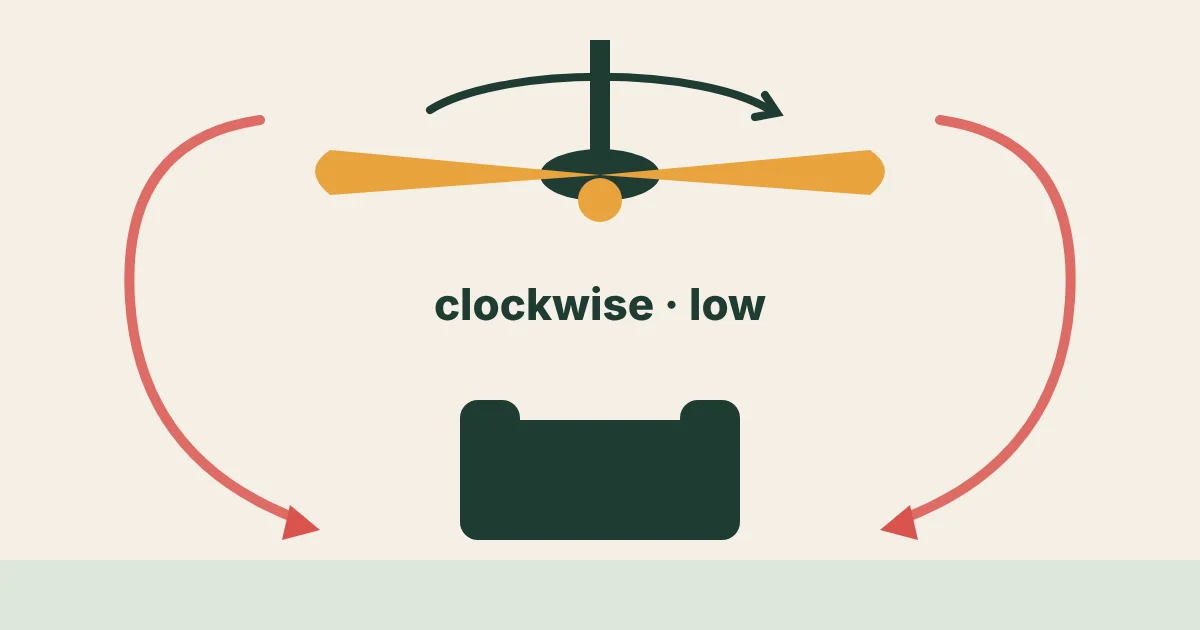
In winter, run your ceiling fan clockwise (looking up) on low. It pushes warm air from the ceiling down the walls without making a draft. It saves money only if it lets you lower the thermostat a degree or two, and it matters most with high or vaulted ceilings. With standard 8-foot ceilings the effect is small, but the fan costs so little on low that it rarely hurts.
Affiliate note: As an Amazon Associate, The Low Bill Home earns from qualifying purchases. I haven’t tested the specific products linked here.
How to set and check it
- Turn the fan off and let it stop completely. Flipping the switch while the blades spin can damage the motor.
- Find the direction switch. On most fans it’s a small slide switch on the motor housing, just above the light kit or the blades. On many newer DC-motor fans the direction button is on the remote or in the app.
- Set it to the winter position and turn the fan on low.
- Do the test: look up. The blades should turn clockwise. Stand under the fan: in winter mode you should feel little or no breeze. If you feel a clear downdraft, it’s still in summer mode.
If your fan has no remote and the switch is hard to reach, a universal ceiling fan remote kit is a cheap add-on, but check that it supports reverse; many basic kits only control speed and light. Swapping a wall switch for a smart fan switch is an electrician-or-confident-DIY job.
When it helps, and when it doesn’t
| Room | Benefit | Why |
|---|---|---|
| Vaulted or cathedral ceiling, loft, two-story living room | Real | A lot of warm air collects high up; mixing it lets you feel warmer at the same setting |
| Room with a wood stove or fireplace insert | Real | Spreads concentrated heat instead of baking the area near the stove |
| Heat pump with ceiling vents | Some | Helps mix the warm air that heat pumps deliver at lower temperatures |
| Standard 8-foot ceiling, floor vents | Small | Little temperature difference to recover; low speed won’t hurt, but don’t expect much |
| Radiant floor heating | None to negative | The heat already starts at the floor; extra air movement only cools you |
From my renovations: the best returns I’ve seen came from fixing what lets heat escape first: insulating the roof, sealing gaps, better windows. A fan only moves heat you’ve already paid for around the room. In a room with a high ceiling it’s worth doing; it isn’t a substitute for stopping drafts.
Fan cost vs savings calculator
Is winter mode worth it in your room?
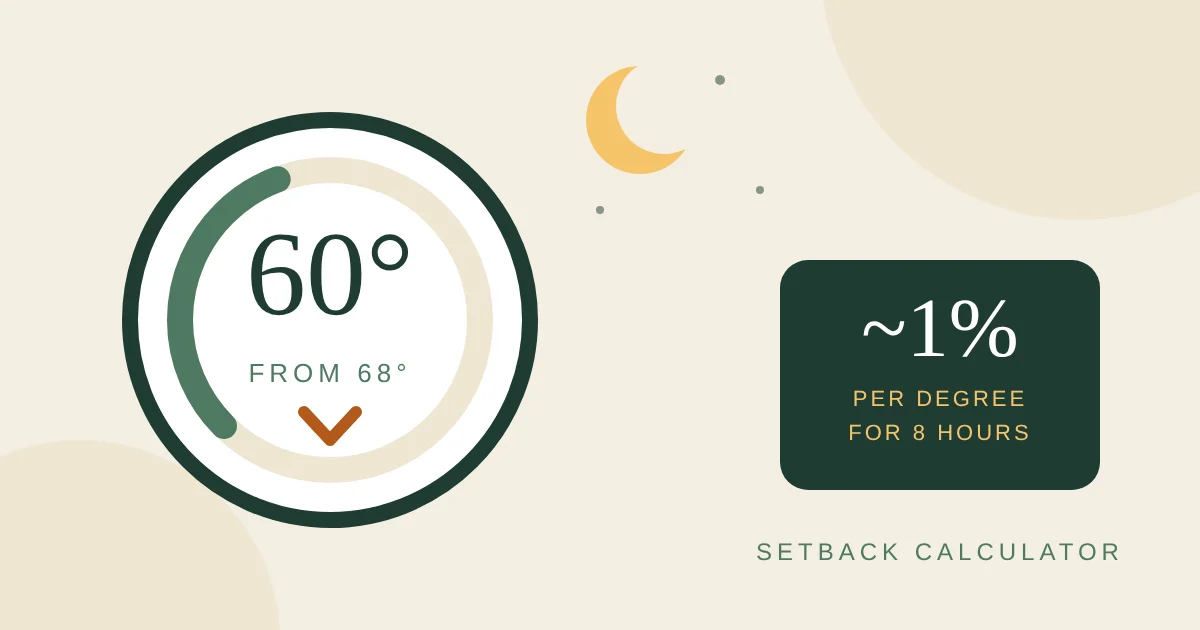
Low speed on most fans uses roughly 5–30 W; DC-motor fans sit at the bottom of that range. The savings estimate uses the common rule of thumb of about 1% of heating cost per degree for the hours the setback applies. It’s an estimate, not a promise.
Four common mistakes
- Running it on high. Even in reverse, high speed creates a draft and makes you feel colder. Low is the setting.
- Running it in an empty room. Fans make people feel cooler; they don’t warm a room. Off when you leave.
- Forgetting to switch back. In spring, counterclockwise again for the cooling breeze.
- Not lowering the thermostat. If the setting stays the same, the fan just adds a little to the electric bill. Try one degree lower for a week and see if anyone notices. Our thermostat setback calculator shows what each degree is worth.
FAQ
Which way should a ceiling fan turn in winter?
Clockwise, as you look up at it, on the lowest speed. The blades pull air up toward the ceiling and push the warm air that collects there down along the walls, without blowing a draft on you. In summer, switch it back to counterclockwise for a cooling breeze.
How do I change the direction of my ceiling fan?
Most fans have a small slide switch on the motor housing, above the light kit. Turn the fan off and wait for it to stop completely before you flip it. Many newer fans change direction from the remote or the app instead.
Does running a ceiling fan in winter save money?
Only if it lets you lower the thermostat, or keeps the room you sit in warmer without turning the heat up. The fan itself uses little electricity on low. It helps most in rooms with high or vaulted ceilings, lofts and rooms with a wood stove; with 8-foot ceilings the difference is often small.
Should I run my ceiling fan all the time in winter?
No. Run it when the room is occupied and the heat is on. A fan cools people by moving air, it doesn’t heat the room, so running it in an empty room just uses electricity.
Is clockwise right for every fan?
Almost always. A few fans have unusual blade pitch; the test is simple: on low, stand under the fan. If you feel a breeze, it’s blowing down (summer mode). In winter mode you should feel little or nothing directly underneath.
Sources
- U.S. Department of Energy: Fans for cooling (ceiling fan direction and settings)
- ENERGY STAR: Ceiling fans
- U.S. Department of Energy: Programmable thermostats (setback savings)
- EIA: Winter Fuels Outlook 2026–27

Email me at hello@thelowbillhome.com. I read every message, and when a rate, a rule or a product changes, I update the guide. — Eugene
Affiliate Disclosure: The Low Bill Home is a participant in the Amazon Services LLC Associates Program. As an Amazon Associate we earn from qualifying purchases, at no extra cost to you. Product details and availability change, so check the listing before you buy.