Renting makes winter harder: the drafty windows and the gap under the door are not yours to replace, and anything that peels off the paint can come out of your security deposit. The good news is that most of the cold in an apartment comes in through gaps you can close with fixes that slide, press or clamp in place and come out clean. Here are twelve, starting with the free ones.
Close the gap under the door with a slide-on stopper, press rope caulk into window gaps, put thermal curtains on a tension rod and close them at dusk, and fit foam gaskets behind outlet covers on outside walls. None of these needs screws or strong adhesive. Report broken seals and heating problems to your landlord in writing: those repairs are often their job.
Affiliate note: As an Amazon Associate, The Low Bill Home earns from qualifying purchases. Buying through our links costs you nothing extra. We have not tested every product hands-on: picks are based on the makers' published specs, official energy-saving guidance and long-term buyer feedback, and we say where a product falls short.
Slides under a 30–36″ door: no adhesive, no screws, also blocks hallway noise and light.
Check price on AmazonWhy we picked it ↓Press into gaps by hand; peels off in spring without tools.
Check price on AmazonWhy we picked it ↓Spring tension rods for 32–66″ frames, with non-slip ends.
Check price on AmazonWhy we picked it ↓Shopping on Black Friday? Add it to your Amazon cart now so it is ready when the deals start (Black Friday is November 27, Cyber Monday November 30, 2026).
The deposit-safe chart
| Fix | Marks risk | How it comes off | Ask first? |
|---|---|---|---|
| Slide-on door stopper | None | Slide it off | No |
| Weighted draft blocker | None | Pick it up | No |
| Rope caulk in window gaps | Very low | Peel off by hand | No |
| Tension-rod curtains | Very low | Twist and remove | No |
| Thermal liner on existing curtains | None | Unhook | No |
| Foam outlet gaskets | None | Unscrew the plate, remove | No |
| Clear removable tape on sash seams | Low (test first) | Peel slowly, warm with a hair dryer | Optional |
| Shrink-film window kit | Medium (tape can lift paint) | Warm and peel slowly | Yes |
| Stick-on door sweep | Medium (adhesive residue) | Warm, peel, clean with alcohol | Yes |
| Screw-on sweeps, new weatherstripping in the frame | Permanent change | — | Ask the landlord to do it |
What to ask your landlord
Rules vary by state and city, but these are commonly the landlord’s responsibility. Ask in writing through the maintenance system and keep a copy:
- Heat that does not keep up, radiators that stay cold or a thermostat that does not work.
- Worn or missing weatherstripping around exterior doors and windows, and a missing door sweep on the entry door.
- Broken or cracked glass, windows that will not close or lock, and storm windows that are missing.
- Daylight around the frame of an exterior door, which usually means the frame seal needs replacing.
Getting the permanent fixes done costs you nothing and helps the next tenant too. ENERGY STAR says sealing air leaks and adding insulation can save up to 10% on annual energy bills, which matters to whoever pays for the heat.
Free fixes (1–4)
1. Close the curtains at dusk, open them in the sun
The Department of Energy’s Building America Solution Center recommends opening window coverings when the sun is on the window and closing them at night and on cloudy days. It costs nothing and works with whatever curtains or blinds came with the apartment.
2. Get furniture off the heat
A sofa over a baseboard heater or a bed against a radiator traps the heat behind it. Pull furniture a few inches away and keep curtains above, not over, radiators.
3. Report what is broken, in writing
Use the checklist above. Note the date and keep the confirmation.
4. Turn the thermostat back if you control it
If your apartment has its own thermostat and you pay for heat, turning it back 7–10°F for 8 hours a day can save up to 10% a year on heating, according to the Department of Energy. With a heat pump, use smaller setbacks.
No-mark fixes (5–11)
Everlasting Comfort Under Door Draft Stopper
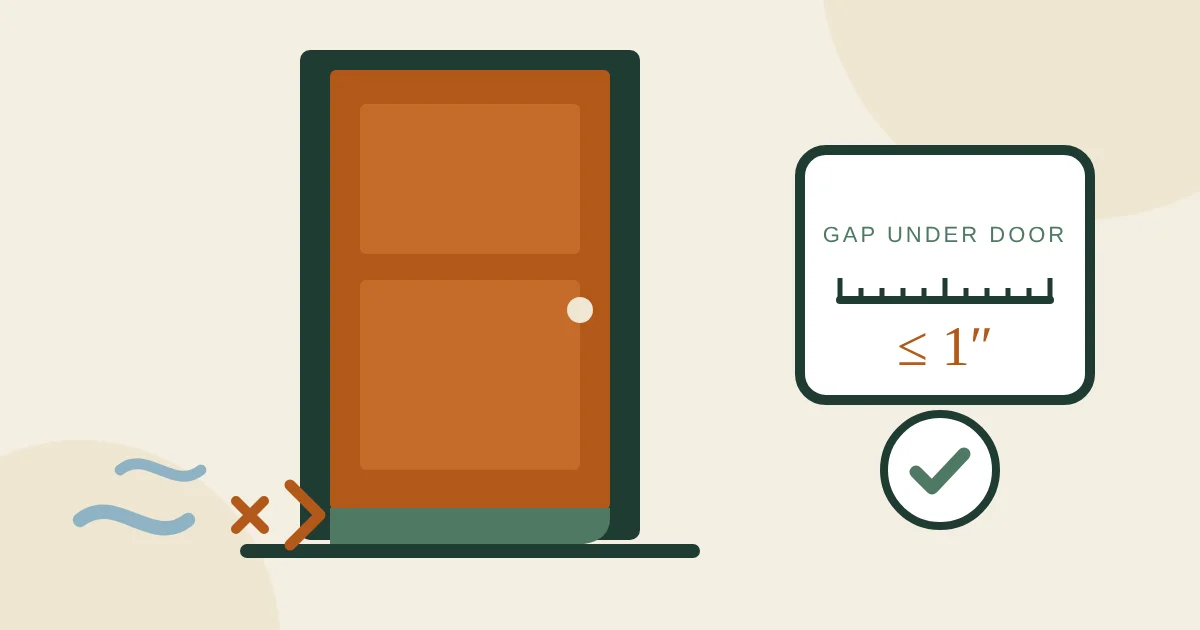
The biggest single draft in many apartments comes under the entry door from a cold hallway or stairwell. This dense foam stopper slides under a 30 to 36-inch door and moves with it, so there is nothing to stick or screw on. It also cuts hallway noise, light and cooking smells. A two-tube version that grips both sides of the door, the Holikme under door draft stopper, is an alternative for doors without a raised threshold.
- For 30–36″ doors
- Dense foam, slides under the door
- No adhesive or screws
- Also blocks noise, light and odors
Good: zero marks, quick, makes the apartment quieter too.
Watch out: a little drag when the door opens; does not suit tall thresholds.
Skip it if: the gap is bigger than an inch: use a weighted blocker.
GORILLA GRIP Weighted Door Draft Stopper
For a balcony door you do not use in winter, or the door to a cold spare room, a weighted blocker lies against the bottom of the door and fills gaps up to about 3 inches, with grip dots so it stays put. Nothing to install, and you take it with you when you move.
- 32″ long (other lengths sold)
- Gaps up to about 3″
- About 2.2 lb, grip dots underneath
- No installation
Good: handles big gaps, portable, completely damage-free.
Watch out: you move it every time you open the door.
Skip it if: it is your main entry door.
M-D Replaceable Caulk Cord
Rope caulk is a soft, putty-like cord you press into cracks around window sashes and frames with your fingers. It holds without tools and peels off in spring, which makes it the classic renter’s window fix. A 90-foot roll does many windows.
- 90 ft x 1/8″ roll
- Press in by hand, no caulk gun
- Removable
- Gray
Good: cheap, invisible from a distance, peels off.
Watch out: a seasonal fix; the window stays shut while it is in place; pets may pick at it.
Skip it if: you need to open that window during winter.
XFasten Transparent Window Weather Sealing Tape
Clear tape over the seam where two sashes meet, or around a window that stays shut all winter, stops the air without blocking the view. XFasten says its tape removes without residue; still, test it on a hidden spot of the frame first and peel it off slowly, warming it with a hair dryer.
- 2″ wide x 30 yards
- Clear, pressure-sensitive adhesive
- Maker says it removes cleanly
- For sash seams and AC unit gaps
Good: nearly invisible, quick, one roll does the apartment.
Watch out: any adhesive can lift weak paint: test first; the window stays shut while taped.
Skip it if: your landlord has asked you not to put tape on the frames.
ENJOYBASICS Tension Curtain Rod (2-pack)
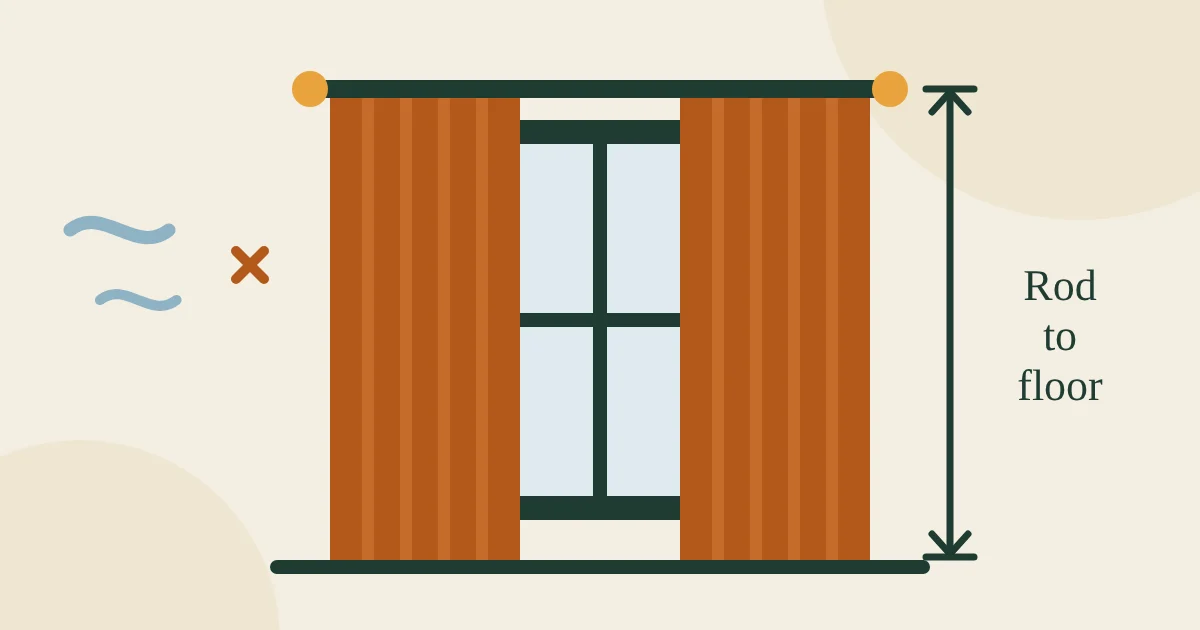
A spring tension rod presses against the inside of the window frame, so you can hang thermal curtains with no screws in the wall. These adjust from 32 to 66 inches, come as a pair and have non-slip ends. Inside-mount curtains leave a small gap at the sides, so pair them with heavy curtains, close them fully at night and add a liner if the window is very cold.
- 2 rods, 32–66″ adjustable
- Spring tension, non-slip ends
- No tools or drilling
- Stainless steel, black
Good: no holes, quick to fit, works in most window frames.
Watch out: inside-mount leaves side gaps; tension rods hold less weight than wall brackets.
Skip it if: the window is wider than 66 inches: buy a longer tension rod.
NICETOWN Thermal Insulated Curtains
Dense triple-weave curtains slow heat loss through the glass at night and darken the room for sleep. Grommet tops slide straight onto a tension rod. They come in many sizes and colors; measure the inside of the frame for width and pick a length that reaches the sill. More on fit in our thermal curtain guide.
- Triple-weave blackout fabric
- Grommet top fits tension rods
- Many widths, lengths and colors
- Machine washable
Good: warmer nights, blackout for sleep, you take them with you.
Watch out: light colors let more light through; need a sturdy rod.
Skip it if: the landlord’s curtains are fine: add a liner instead.
DriftAway Thermal Curtain Liner
If the apartment came with curtains you are not allowed to replace, hang a thermal blackout liner behind them on the same rod with the included rings. Two 50 by 80-inch liners, machine washable and dryable.
- 2 liners, 50″ x 80″
- 16 metal rings included
- Blackout, thermal
- Machine wash and dry
Good: adds the insulating layer without changing the look.
Watch out: adds weight to the existing rod.
Skip it if: the curtains are already heavy blackout ones.
Tondiamo Foam Outlet Insulation Gaskets
On a windy day you can often feel cold air coming from outlets and switches on outside walls. Foam gaskets fit behind the cover plate: switch off the breaker, unscrew the plate, press the gasket on and screw the plate back. Invisible, and nothing to remove at move-out. The pack has pre-marked cut-outs for outlets and toggle or rocker switches.
- 50 pieces, outlets and switches
- Fit behind standard cover plates
- No adhesive
- Permanent and invisible
Good: seconds per outlet, invisible, no marks.
Watch out: a small saving per outlet; only worth doing on outside walls.
Skip it if: you are not comfortable removing a cover plate: ask maintenance.
Warm yourself, not the apartment (12)
12. A heated throw or mattress pad
A heated throw uses about 100 watts, about 1.8¢ an hour at 18¢ per kWh, against 27¢ an hour for a 1,500-watt space heater on high. If you pay for electric heat, that difference adds up fast. We did the math, with a calculator, in heated blanket vs space heater, and our sister site reviewed the best heated blankets. If your lease allows a space heater, see oil-filled radiator vs ceramic heater and follow the CPSC safety rules: 3 feet of clearance, wall outlet only, off when you sleep (CPSC).
Move-out removal checklist
- Tape: warm each strip with a hair dryer and peel slowly, pulling back along the surface. Remove leftover adhesive with a little rubbing alcohol on a cloth.
- Rope caulk: pull it out in long strands; roll up any bits with a ball of fresh caulk.
- Tension rods and liners: twist the rod to release it; check the frame for rub marks and wipe them.
- Outlet gaskets: leave them in (they are invisible) or take them out, as you prefer.
- Door stoppers: slide off and pack.
- Photos: take before-and-after photos of the windows and doors, like the ones you took at move-in.
FAQ
How can I insulate my apartment without damaging anything?
Use fixes that clamp, slide or press in rather than stick or screw: a slide-on door draft stopper, a weighted draft blocker, rope caulk pressed into window gaps, tension-rod curtains, a thermal liner on your existing curtains and foam gaskets behind outlet covers. Test any tape on a hidden spot first, and remove everything slowly before you move out.
Is my landlord responsible for drafty windows and doors?
Often, at least in part. Rules differ by state and city, but repairing broken windows, worn-out weatherstripping and heating problems is commonly the landlord's job. Report problems in writing through your maintenance request system, keep a copy, and check your lease and local tenant rules.
Will window insulation film damage paint?
It can. The double-sided tape in shrink-film kits can lift fresh or poorly bonded paint, and it should never go on drywall or plaster. In a rental, ask your landlord first, use it only on glass-adjacent vinyl or aluminum frames or well-painted trim, and remove it slowly with a hair dryer to soften the adhesive.
Can I use a space heater in my apartment?
Check your lease: some buildings restrict them. If allowed, choose one with tip-over and overheat protection, keep it 3 feet from anything that can burn, plug it directly into a wall outlet and turn it off when you leave the room or go to sleep, as the Consumer Product Safety Commission advises.
How do I hang curtains without drilling?
A tension rod presses against the inside of the window frame with a spring, so it needs no screws. Inside-mount curtains leave a small gap at the sides, so close them fully at night and add a thermal liner for more warmth.
What is the cheapest way to keep an apartment warm?
Close the gaps first (door stopper, rope caulk, curtains closed at dusk), then warm yourself rather than the air: a heated throw uses about 100 watts, a small fraction of a 1,500-watt space heater.
Keep going
- Best door draft stoppers: which type fits your door
- Best thermal curtains and how to hang them
- How to keep a cold bedroom warm at night
- How to stop window and door drafts: 7 cheap fixes
Sources
Affiliate Disclosure: The Low Bill Home is a participant in the Amazon Services LLC Associates Program. As an Amazon Associate we earn from qualifying purchases, at no extra cost to you. Product details and availability change, so check the listing before you buy.