The first winter after a furnace is replaced with a heat pump, almost everyone puts a hand over a vent and thinks it’s broken. It isn’t, usually. I’ve installed heat pumps in rentals and lived with them, and the first tenant calls are always the same: “it’s blowing cold air.” Most of the time the system was working exactly as designed. This guide helps you tell the difference in a few minutes, and points out the cases where you shouldn’t wait.
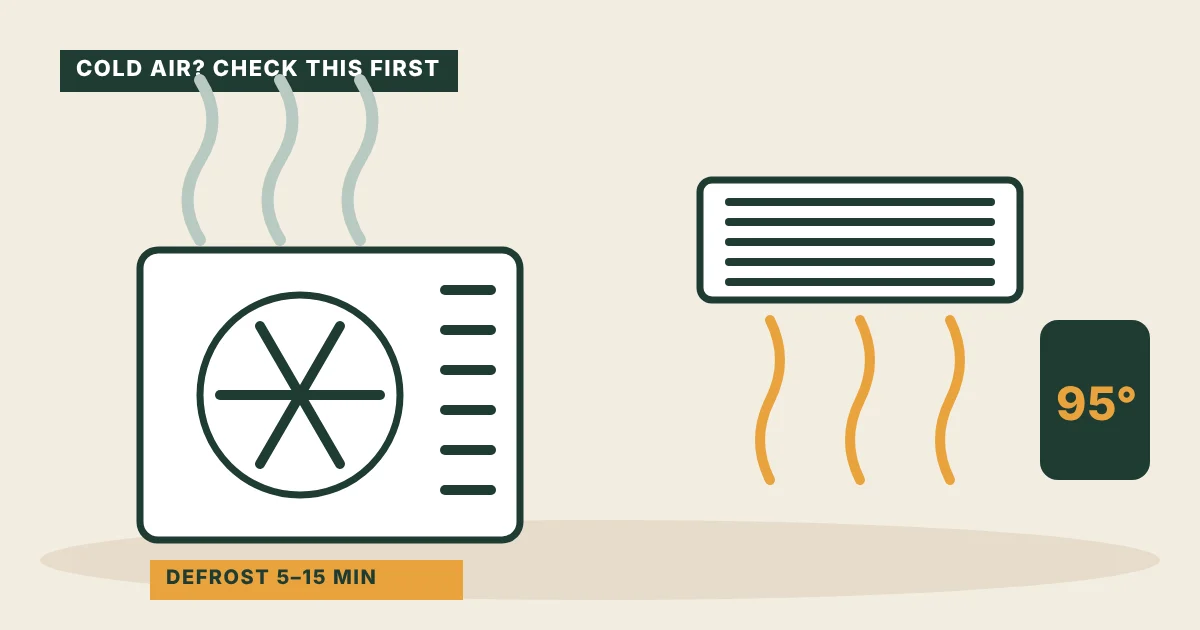
A heat pump’s air feels cooler than a furnace’s because it is: about 90–110°F at the vent instead of 120°F or more. Moving air at that temperature feels cool on skin. It also blows cool for 5 to 15 minutes during a defrost cycle, often with steam rising from the outdoor unit. Check that the thermostat is on Heat (not Cool or Auto with a low setpoint) and the fan on Auto, the filter is clean and the outdoor unit isn’t buried in ice. If the air stays cold for more than about 20 minutes, call a technician.
Affiliate note: As an Amazon Associate, The Low Bill Home earns from qualifying purchases. The one product linked here is a cheap infrared thermometer for checking vents; I haven’t tested that specific model, and the pick is based on its listing and review summary as of October 29, 2026.
What’s normal for a heat pump
| What you notice | Normal? | Why |
|---|---|---|
| Air feels lukewarm, not hot | Yes | Heat pumps move heat instead of burning fuel. Supply air of about 90–110°F is typical; a furnace blows closer to 120–140°F. |
| Cool air for a few minutes, outdoor fan stops, steam outside | Yes | Defrost cycle. The unit reverses briefly to melt frost off the outdoor coil. Usually 5–15 minutes. |
| Runs for long stretches in cold weather | Yes | Heat pumps work best running long and steady, not in short bursts. |
| Light frost on the outdoor coil | Yes | It should clear after the next defrost. |
| Cold air for 20+ minutes with heat called for | No | Settings, airflow, refrigerant or a stuck reversing valve. |
| Outdoor unit encased in solid ice | No | Defrost isn’t working, or water is dripping onto it from above. |
Vent temperature checker
Is your heat pump heating normally?
Measure after the system has run at least 10 minutes. Hold a kitchen probe thermometer in the airflow; an infrared thermometer reads the grille surface, which runs a little lower.
6 things to check yourself
1. Thermostat mode and setpoint
Set the mode to Heat, not Cool, and the setpoint at least 5 degrees above the room temperature for the test. “Auto” mode with heating and cooling setpoints close together can flip the system into cooling.
2. Fan: Auto, not On
With the fan on On, the blower keeps running between heating cycles and pushes room-temperature air that feels cold. Auto runs the fan only while the system heats.
3. The filter
A clogged filter cuts airflow, and with less air moving the system heats poorly. Lennox suggests replacing filters every 1 to 3 months, more often with pets. If you can’t see light through it, change it.
4. The outdoor unit
Clear snow, leaves and ice from around it and keep about 2 feet of space on all sides. If water from a gutter drips onto the top and freezes, fix the gutter; the unit can’t defrost a block of ice from above.
5. Breakers and the outdoor switch
If only the indoor fan is running, the outdoor unit may have lost power. Check for a tripped breaker in the panel and the disconnect box next to the outdoor unit. If a breaker trips again right away, stop and call a pro.
6. Vents and doors
Closed or blocked vents and closed interior doors without return paths starve the system of airflow. Open the vents in rooms you use and keep furniture off them.
From my rentals: the most common fix I’ve seen is the simplest. A tenant set the fan to On because “the air felt nicer moving,” then called because it blew cold. Switching to Auto ended it. The second most common is a filter nobody had changed.
Emergency heat: what it costs
“EM heat” switches off the heat pump and runs electric resistance strips instead. It’s there for breakdowns, not for cold days. A typical 10-kilowatt strip heater at 18¢ per kWh costs about $1.80 an hour while it runs. Use it only if the heat pump has stopped working, and call for service.
What does emergency heat cost you?
The strip size is on the air handler’s label or in the installation papers. Full-power figures; strips cycle, so real costs are a little lower.
When to call a technician
- Cold air for more than 20 minutes in Heat mode, after the six checks.
- The outdoor unit is a block of ice, or it hasn’t defrosted for hours.
- The outdoor unit hums but its fan doesn’t spin, or it makes loud grinding or screeching noises.
- A breaker trips again after you reset it.
- Ice on the refrigerant lines, or an oily stain under the connections, which can point to a leak.
Low refrigerant and a stuck reversing valve both cause cold air, and both need a licensed technician. Lennox recommends professional tune-ups twice a year, before the heating and cooling seasons. In my experience, a fall check-up costs far less than an emergency call on the coldest night of the year.
Want a cheap way to check vents yourself? An Etekcity infrared thermometer reads vent grilles and radiator surfaces in a second; owners call it accurate and use it for HVAC checks and cooking. For an air reading, a probe thermometer held in the airflow is better.
Frequently asked questions
Why does my heat pump blow cold air in heat mode?
Usually one of three normal things: heat pump air is only about 90–110°F at the vent, which feels cool when it blows on your skin; the unit is in a defrost cycle for 5 to 15 minutes; or the fan is set to On, so it keeps blowing between heating cycles. If the air stays cold for more than about 15–20 minutes with the thermostat set well above room temperature, something is wrong.
How long does a heat pump defrost cycle last?
Typically 5 to 15 minutes. Units defrost on demand or on a timer, often every 30, 60 or 90 minutes in frosty weather. You may see steam rising from the outdoor unit and the fan stop; that’s normal.
Should I use emergency heat when it’s cold?
Only if the heat pump itself has stopped working. Emergency heat runs electric resistance strips, which typically cost two to three times as much to run as the heat pump. Many systems bring in backup heat automatically when needed.
At what temperature does a heat pump stop working?
It depends on the model. Older standard heat pumps lose a lot of capacity in freezing weather and lean on backup heat, while cold-climate models are designed to keep heating well below 0°F. Check the minimum operating temperature in your model’s specifications.
What temperature should air from a heat pump vent be?
Commonly around 90 to 110°F when it’s heating normally. Air that measures close to room temperature for more than about 15–20 minutes, outside a defrost cycle, is worth a closer look.
Sources
- Lennox: Why is my heat pump blowing cold air? (defrost 5–15 minutes, filters, clearance, tune-ups)
- Energy Vanguard: Is heat pump supply air too cold for heating? (90–110°F supply air)
- U.S. Department of Energy: Heat pump systems
- Etekcity infrared thermometer (Amazon listing)

Email me at hello@thelowbillhome.com. I read every message, and when a rate, a rule or a product changes, I update the guide. — Eugene
Affiliate Disclosure: The Low Bill Home is a participant in the Amazon Services LLC Associates Program. As an Amazon Associate we earn from qualifying purchases, at no extra cost to you. Product details and availability change, so check the listing before you buy.