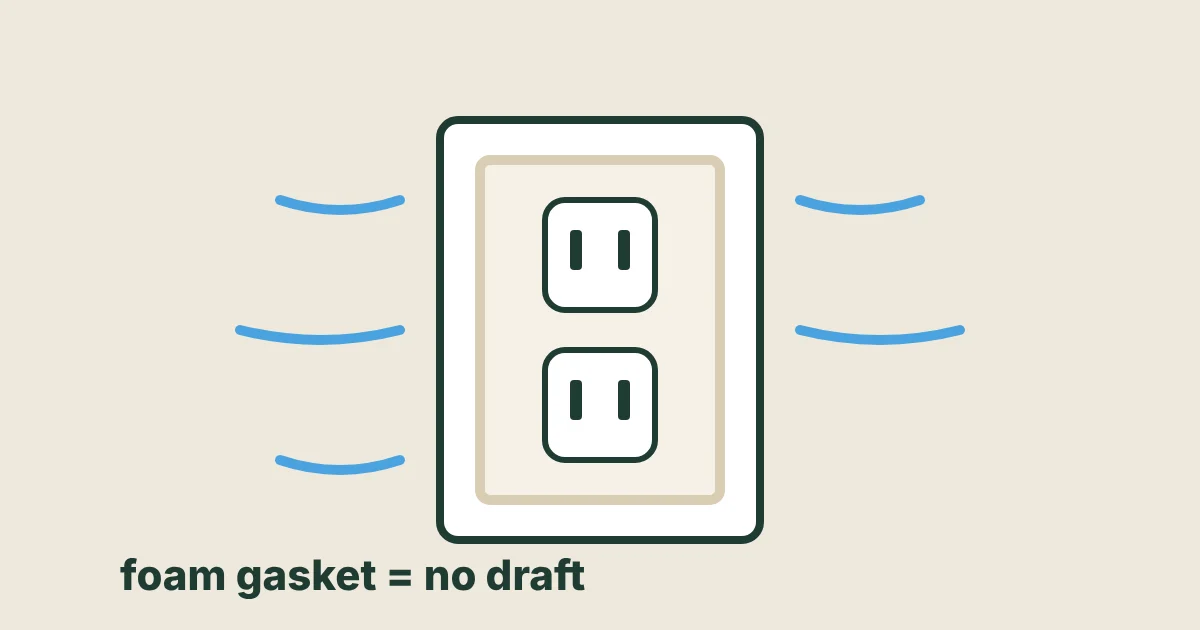
When I insulated walls during renovations, the outlets on the outside walls were always the weak spots: a hole cut into the insulation and the air barrier, with a plastic box and a thin cover plate in front of it. In an older house with little insulation, you can feel the air moving on a windy day. Foam gaskets don’t fix the wall, but they stop that draft for a few dollars and a screwdriver.
Outlets and switches on outside walls leak air through the gaps around the electrical box. Fix them with foam outlet gaskets under the cover plates: switch off the breaker, remove the plate, press the gasket on, refit the plate. About 1–2 minutes per outlet. For outlets you never use, add child safety plugs, which also block air through the slots. Don’t use spray foam or fiberglass inside the box.
Affiliate note: As an Amazon Associate, The Low Bill Home earns from qualifying purchases. I haven’t used these exact products; notes come from specs and the owner-review summaries on each listing.
Outlet draft checker
Is it worth sealing your outlets?
Measure with an infrared thermometer: aim at the cover plate, then at the wall a foot away. A plate several degrees colder than the wall is leaking.
How to find the leaky ones
- Pick a cold, windy day and turn off any fans so the air is still.
- Feel each outlet and switch on outside walls with the back of your hand, or hold a lit incense stick near the plate and watch the smoke.
- Use an infrared thermometer for the subtle ones. An Etekcity infrared thermometer reads the plate and the wall in a second; owners call it accurate and use it for HVAC checks too.
- Mark the cold ones with painter’s tape, then do them all at once.
Install foam gaskets in 15 minutes
- Turn off the breaker for the room. Check with a lamp that the outlet is dead.
- Unscrew the cover plate. Don’t pull or loosen the outlet itself.
- Press the gasket on over the outlet or switch. Pre-cut gaskets have tear-out tabs for single and double outlets and switches. A 30-pack of outlet insulators covers most homes; owners say they’re easy to fit and stop the draft.
- Refit the plate, snug but not cracked.
- Add safety plugs to outlets you don’t use: plastic plug covers block the slots too.
- Switch the breaker back on and test each outlet.
From my rentals: I do this at the same time as replacing old, yellowed cover plates before a new tenant moves in. The plate is off anyway, so the gasket adds a few seconds per outlet.
If an outlet is loose in the wall, warm to the touch, scorched or buzzing, stop and call an electrician; that’s a safety problem, not a draft.
Bigger leaks to seal first
Outlets are the quick extra. The biggest drafts in most homes are elsewhere:
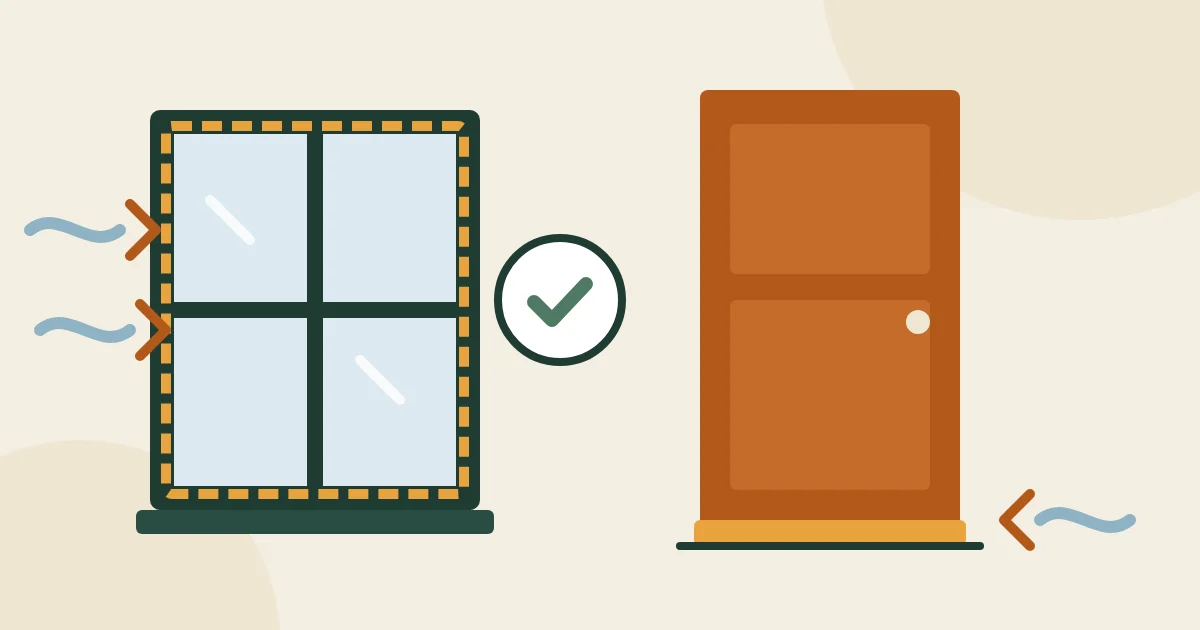
- Doors: worn weatherstripping and the gap under the door. See weather stripping for doors and door draft stoppers.
- Windows: film kits for old windows: 3M vs Duck window insulation kits.
- Attic hatch, pipes and cables through walls, and baseboards on outside walls. The full list is in how to stop window and door drafts.
FAQ
Why is cold air coming out of my electrical outlet?
Outlets on exterior walls sit in a box cut into the wall, and the wall cavity behind it is connected to the outside through small gaps. Cold air moves through the cavity and out around the box and the cover plate, especially on windy days and in older homes with little insulation.
Do outlet foam gaskets really work?
They stop the draft you feel around the cover plate, which is cheap and quick to do. They won’t fix a wall with no insulation, and the savings for a single outlet are small, but in a drafty house with many outlets on outside walls, sealing them all is one of the easiest air-sealing jobs.
Is it safe to put foam insulation behind outlet covers?
Yes, outlet gaskets are made for that: thin foam that sits under the cover plate. Don’t stuff fiberglass or loose material into the electrical box, and don’t use spray foam inside the box. Turn off the breaker if you’re unsure.
Should I turn off the power to install outlet gaskets?
It’s the safest way. You only remove the cover plate screw, but a metal plate or a screwdriver can touch a terminal on old or loose outlets. Switch off the breaker, install the gaskets, then switch it back on.
What else should I seal besides outlets?
Start with the biggest leaks: around doors and windows, the attic hatch, where pipes and cables go through walls, and gaps along baseboards. Outlet gaskets are a quick extra once those are done.
Sources
- U.S. Department of Energy: Air sealing your home
- ENERGY STAR: Air seal and insulate
- ENERGY STAR: A do-it-yourself guide to sealing and insulating (PDF)
- U.S. CPSC: Electrical safety

Email me at hello@thelowbillhome.com. I read every message, and when a rate, a rule or a product changes, I update the guide. — Eugene
Affiliate Disclosure: The Low Bill Home is a participant in the Amazon Services LLC Associates Program. As an Amazon Associate we earn from qualifying purchases, at no extra cost to you. Product details and availability change, so check the listing before you buy.