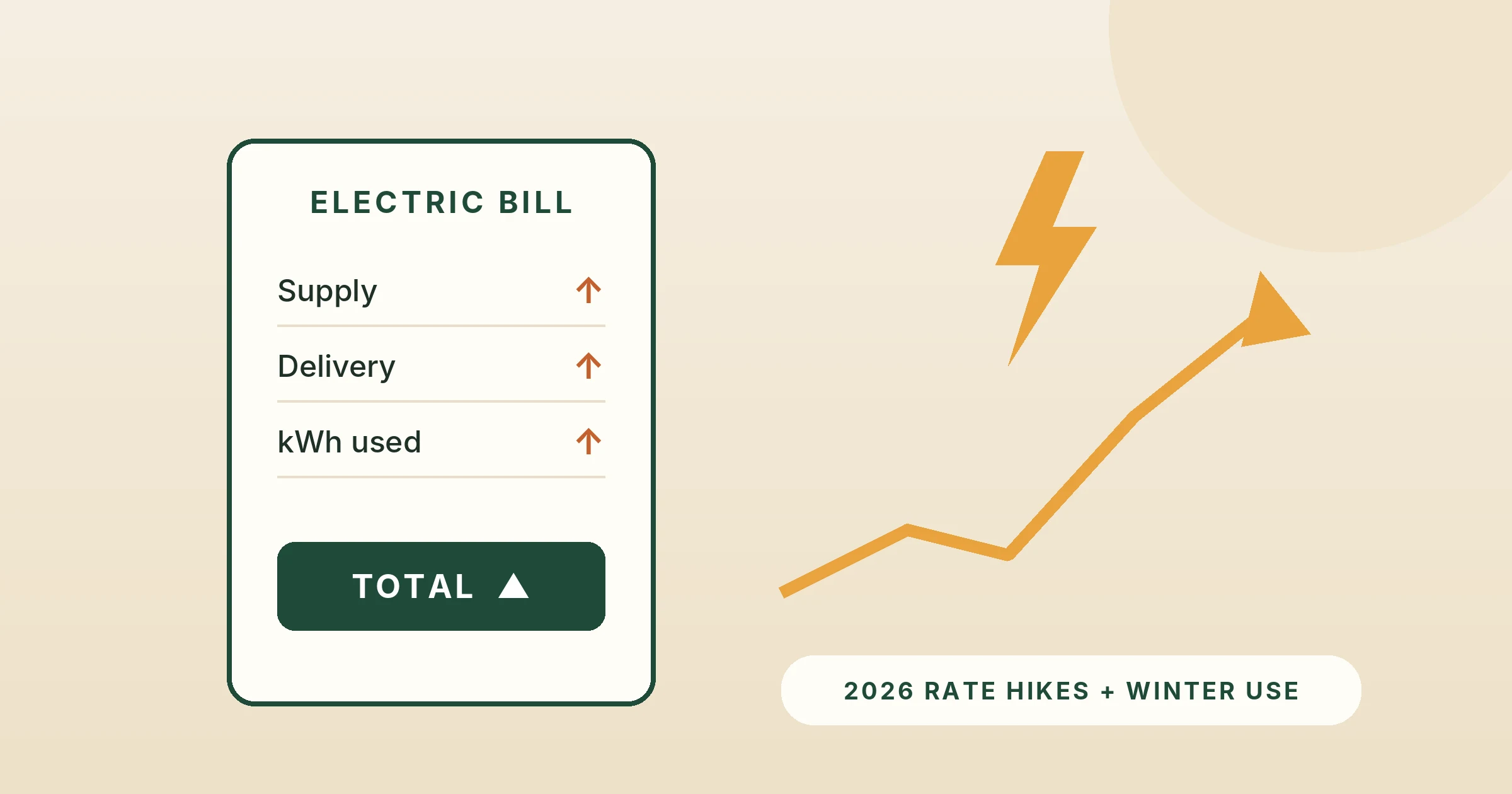
with dark evenings, a typical home runs its lights noticeably longer every day until March. The fastest payback is replacing the bulbs you use 3+ hours a day with LEDs, which use at least 75% less energy than incandescent bulbs, and putting motion night lights in hallways and bathrooms so nobody leaves an overhead light on all night. If you already have LEDs everywhere, lighting is a small part of your bill and you should spend your effort on heating instead.
Affiliate note: As an Amazon Associate, The Low Bill Home earns from qualifying purchases. It never changes what I recommend.
Why November is when lighting shows up on the bill
Daylight saving time ended at 2 a.m. on Sunday, November 1. The sun now sets around 4:30–5 p.m. in much of the East, and it will keep getting darker until the winter solstice. In practice that means one to two more hours of lights every evening, in every room people are in.
In our rentals I see the same pattern every year: the bill jump in November is mostly heating, but lighting is the part tenants notice, because it is the hallway light that never goes off and the old bulbs in the bathroom. Lighting has historically been about 15% of an average home's electricity use, according to the U.S. Department of Energy, though that share drops a lot once a home is mostly LED.
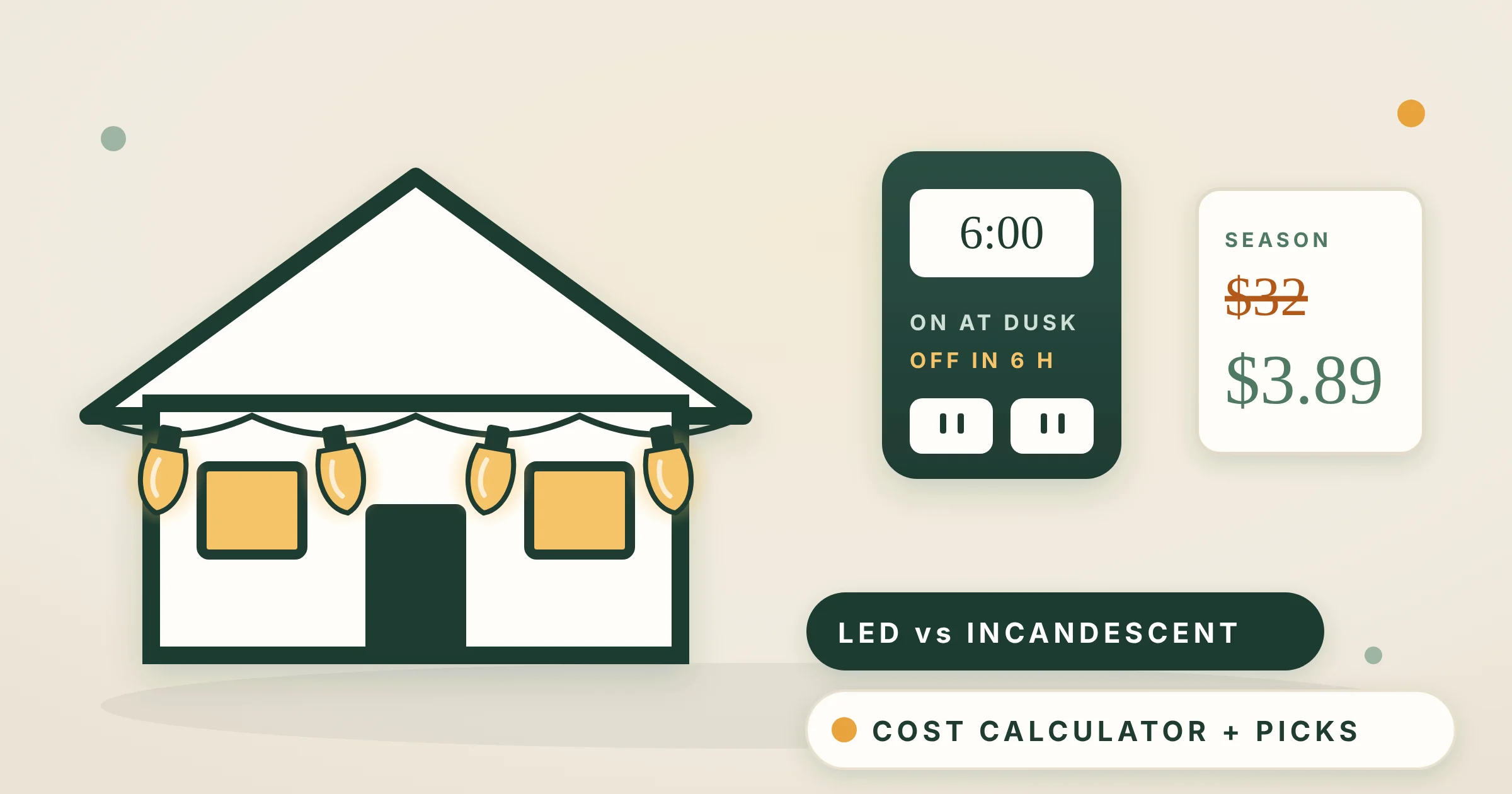
How much do your lights cost per month?
What do your lights cost now?
The swaps, ranked by payback
| Swap | Cost | Payback | Worth it? |
|---|---|---|---|
| Incandescent to LED, bulbs on 3+ hours a day | Low | Months | Yes, do it first |
| Motion night lights in hallway and bathroom | Low | Months, plus fewer lights left on | Yes |
| Battery motion lights under kitchen cabinets | Low | Comfort more than savings | Yes, if you cook in the evening |
| Smart plugs on lamps with schedules | Low | Depends on habits | Yes for "always forgotten" lamps |
| LED to newer LED | Low | Years | Only when the old one dies |
| Replacing working CFLs | Low | Long | Wait until they burn out, then recycle |
The Department of Energy says residential LEDs, especially ENERGY STAR rated ones, use at least 75% less energy and last up to 25 times longer than incandescent lighting. That is why the first row wins by so much.
Cheap picks for dark evenings
| Pick | Why | What owners complain about |
|---|---|---|
| Bulbs Amazon Basics A19 LED Bulbs, 60W equivalent | Dimmable 9W bulbs that replace 60W incandescents. Owners mention real energy savings and smooth dimming. | Lifespan is mixed: most last, but some owners had bulbs fail early, and a few see uneven dimming at the bottom of the range. |
| Hallway L LOHAS LED Motion Sensor Night Light | Plug-in, comes on only when someone walks by, with adjustable brightness. Owners say it is bright enough without blinding you. | Lifespan reviews are mixed. Keep the receipt. |
| Whole house AUVON Plug-in Motion and Dusk-to-Dawn Night Lights, 4 pack | A 4-pack covers hallway, bathroom and kids' rooms. Owners like the warm glow and three brightness levels. | Few complaints in the review summary; the main question is whether you want plug-in lights in every outlet. |
| Kitchen MCGOR Rechargeable Motion Under-Cabinet Lights, 2 pack | Magnetic, no tools, motion-activated. Good for the counter in the evening without turning on the big ceiling light. | Battery life is the complaint: some owners recharge every few weeks, and some units quit after a few months. |
| Lamps Kasa Smart Plug Ultra Mini, 4 pack | Puts a schedule on the lamps that always get left on. Works with Alexa and Google. | A share of owners report units dropping off Wi-Fi. A 2.4 GHz network with a good signal helps. |
I haven’t owned every item here. Picks are based on specs, warranty terms and thousands of owner reviews. Small items like these often drop in price during Black Friday week.
Mistakes I see in rentals
- Daylight 5000K bulbs in the living room. They save the same energy as warm bulbs but make the room feel like an office, so people add lamps. Use 2700K–3000K where you relax.
- Non-dimmable LEDs on a dimmer. They flicker or buzz. Check the box says dimmable.
- Outdoor lights on all night. A dusk-to-dawn sensor or a timer is cheaper than a security light that burns 13 hours; our sister site compares dusk-to-dawn bulbs vs smart bulbs.
- Buying "smart" for every bulb. A smart plug on the one lamp that always gets left on does most of the job for a fraction of the price.
FAQ
When did daylight saving time end in 2026?
At 2 a.m. local time on Sunday, November 1, 2026. It starts again on Sunday, March 14, 2027.
How much does it cost to leave a light on all night?
A 9W LED left on for 10 hours uses 0.09 kWh, about 1–2 cents at typical U.S. rates. A 60W incandescent uses 0.6 kWh, so roughly 7 times more.
Do LED bulbs really save money?
Yes. The U.S. Department of Energy says residential LEDs use at least 75% less energy and last up to 25 times longer than incandescent bulbs.
Are motion night lights worth it?
For hallways and bathrooms, yes. They use very little power and stop people from leaving an overhead light on all night.
Should I replace bulbs that still work?
Replace incandescent and halogen bulbs you use often. Leave working LEDs and CFLs alone until they burn out.
Sources
- U.S. Department of Energy: LED Lighting
- U.S. Department of Energy: Guide to Energy-Efficient Lighting (PDF)
- ENERGY STAR: Learn about LED bulbs

Email me at hello@thelowbillhome.com. I read every message, and when a rate, a rule or a product changes, I update the guide.
Affiliate Disclosure: The Low Bill Home is a participant in the Amazon Services LLC Associates Program. Some links on this page are affiliate links; if you buy through them, I may earn a small commission at no extra cost to you.