It worked last winter, and now the controller blinks, one side stays cold or nothing happens at all. Before you throw a heated blanket out, check the simple things: many of the problems owners describe come down to the plug between the controller and the blanket, and that fix takes a minute. Here is a troubleshooter that walks you through it, what the blinking lights and letter codes usually mean, and the signs that a blanket really is done.
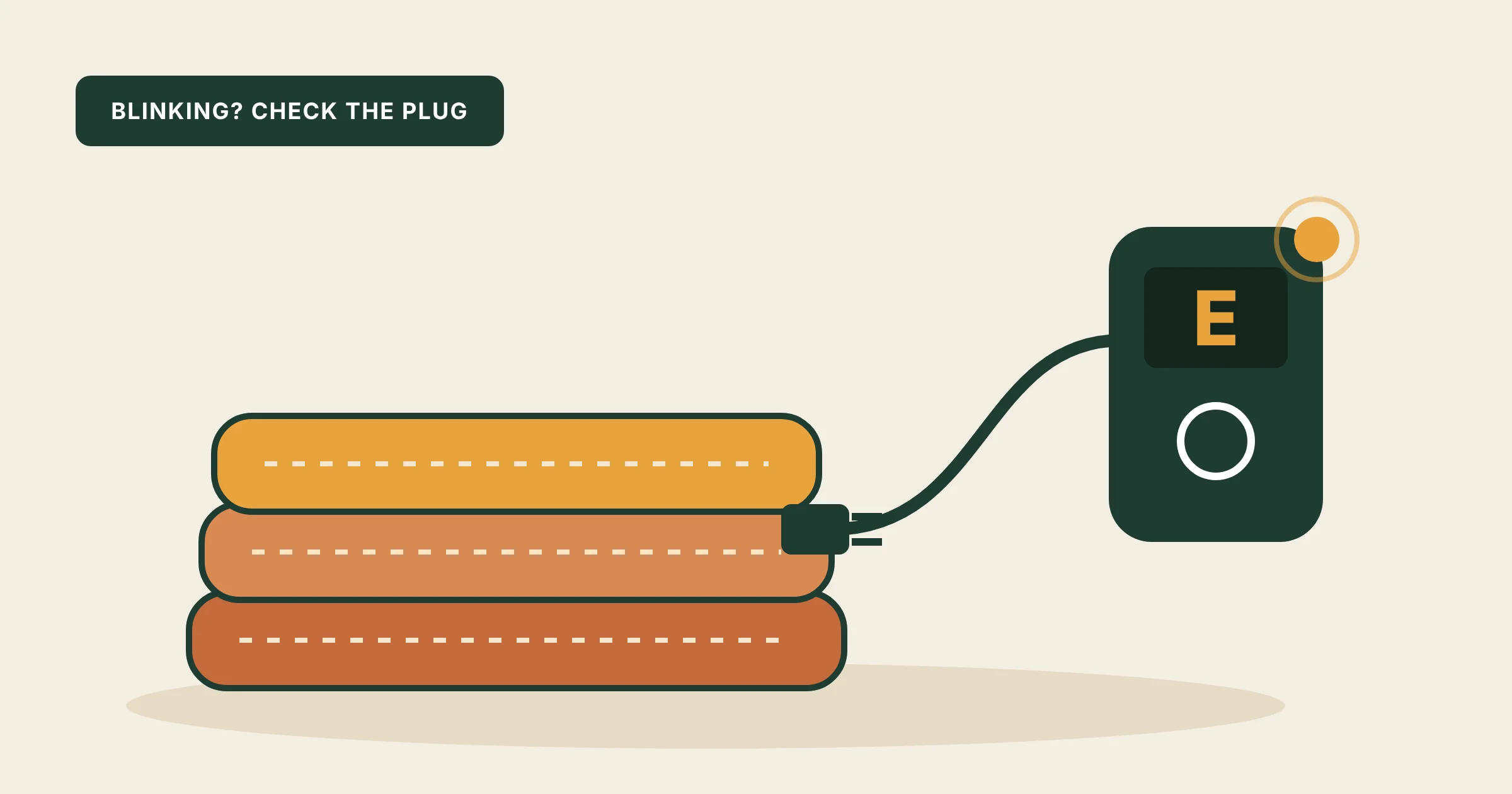
Unplug everything, wait a minute, push the blanket plug firmly into the blanket’s connector until it seats fully, plug the controller straight into a wall outlet and switch on. A blinking light or an E or F code on most brands means the controller can’t sense the blanket, usually because of that connection. Remember that a heated blanket feels warm, not hot. Replace it if you see dark or scorched spots, a frayed or cracked cord, or a controller that gets hot, or if it’s more than about 10 years old.
Affiliate note: As an Amazon Associate, The Low Bill Home earns from qualifying purchases. Buying through our links costs you nothing extra. I haven’t tested these blankets hands-on: the replacement picks are based on the listings and their review summaries as of October 28, 2026.
2-minute troubleshooter
What’s your blanket doing?
General steps that apply to most brands. Your manual’s code list is the final word.
What blinking lights and codes usually mean
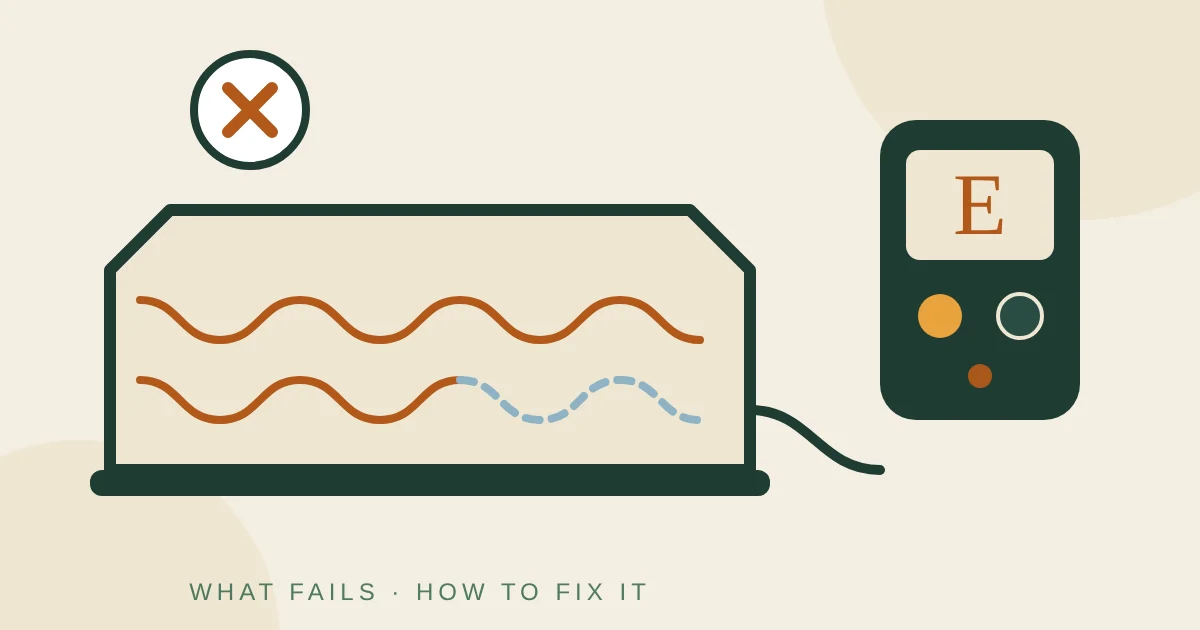
Brands use different codes, but they point to the same few causes. On Sunbeam controllers, a flashing light or an “F” or “FF” display is described as a signal that the system needs a reset; third-party guides list E and F variants for loose connections and power problems.
| What you see | Usually means | Try |
|---|---|---|
| Blinking light, “E”, “F” or “FF” | Controller can’t sense the blanket: loose or half-seated plug at the blanket | Unplug from the wall, reseat the blanket plug firmly, plug back in, switch on |
| Code right after washing | Connector still damp, or plug pushed in at an angle | Let the blanket and connector dry completely, then reconnect |
| No display at all | No power: outlet, power strip or the plug at the wall | Test the outlet with a lamp; plug straight into the wall |
| Code keeps coming back | Damaged connector, cord or wiring in the blanket | Stop using it; contact the maker if it’s under warranty |
Fixes by symptom
No heat, or barely warm
- Give it time: set it to high for 15–20 minutes before judging.
- Check the heat setting and timer: an 8- or 10-hour auto-off may have run out.
- Fold test: lay the blanket loosely folded on a bed, set it to high for 5–10 minutes, and feel between the folds. If there’s warmth, it works; unfold it right away.
- Heat-sensing controllers lower the power as the blanket warms, so it may never feel “hot.” That’s by design.
One side cold
- Dual-control blankets have two controllers and two plugs. Check both are seated and both are switched on.
- Make sure you’re adjusting the right side: swap the controllers and see whether the problem moves.
- Set the cold side to high for 20 minutes. If it stays cold, the wiring on that side may be damaged; contact the maker.
Turns off by itself
- That’s usually the auto-off timer doing its job. Many throws switch off after 4, 8 or 10 hours.
- Bunched or folded fabric can trigger overheat protection. Spread it flat.
Hot spots, a burning smell or scorch marks
Stop using it and unplug it now. A hot spot means damaged wiring. Don’t try to repair a heated blanket.
When to replace it
The Electrical Safety Foundation says heating pads and electric blankets cause nearly 500 fires a year, and most involve blankets more than 10 years old. Replace yours if you see:
- dark, charred or frayed spots on the fabric;
- a cracked or frayed cord, or a damaged plug;
- a controller that gets hot or smells;
- error codes that come back after every reset.
And use it the safe way: don’t fold or tuck it in while it’s on, don’t pile blankets or let pets lie on top of it while it’s heating, keep the cord out from under the mattress, and plug the controller straight into a wall outlet. ESFI also advises not to use heating blankets while you sleep; a good middle ground is to warm the bed before you get in and let the auto-off handle the rest.
What it costs to run
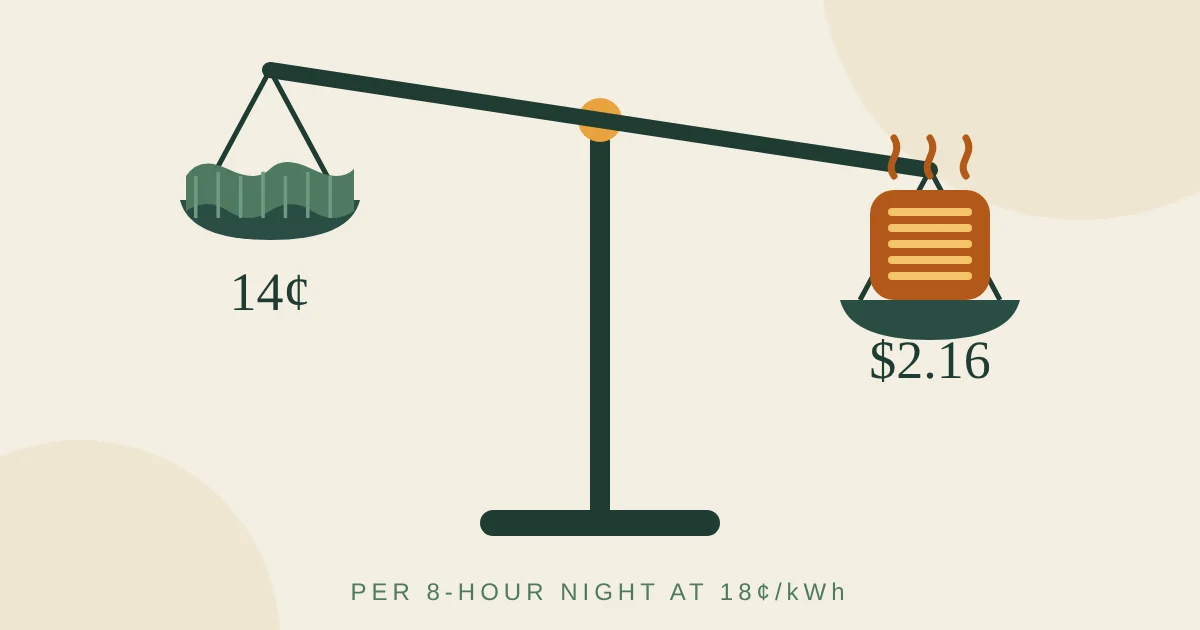
A throw uses about 100 watts: about 1.8¢ an hour at 18¢ per kWh, or about 14¢ for 8 hours. That’s why a heated blanket is one of the cheapest ways to stay warm. Compare it with a heater in heated blanket vs space heater, or check your own numbers with the energy cost calculator.
If you need a new one
Durability is the top complaint for heated blankets of every brand. Keep the receipt and register the warranty when it arrives.
Bedsure Heated Throw with Preheat
A 50 × 60-inch flannel and sherpa throw with 6 heat levels, 6 timer settings (1 to 10 hours), a default 8-hour auto-off and a preheat mode. 100 watts, ETL and FCC certified, machine washable once the controller is removed.
- 6 heat levels, 1–10 h timer
- About 100 W
- Washable
Good: soft (789 of 812 softness mentions positive), fast preheat.
Watch out: durability 504 of 933 mentions negative; uneven heat 252 of 408 negative.
Sunbeam Royal Ultra Heated Blanket (Full)
An 84 × 72-inch fleece blanket with a backlit digital controller, 12 heat settings, a selectable 1 to 12-hour auto-off and heat-sensing control. Detach the controller and it’s machine washable and dryable. Dual-control versions come in larger sizes.
- 12 settings, 1–12 h auto-off
- Backlit controller
- Machine wash and dry
Good: easy controller at night; long auto-off range.
Watch out: thin fabric (153 of 166 mentions negative); durability split almost evenly.
Comparing throws? See Bedsure vs Westinghouse. Mattress pad acting up? Read heated mattress pad problems.
FAQ
Why is my heated blanket controller blinking?
On most brands a blinking light or an E or F code means the controller can't sense the blanket: usually the plug between the controller and the blanket is loose or not fully seated. Unplug everything, reconnect the blanket plug firmly, plug into a wall outlet and switch on again.
Why is only one side of my heated blanket warm?
On dual-control blankets each side has its own controller and connection. Check that both controllers are plugged into the blanket and the wall, and that you're adjusting the right side. If one side still won't heat after a reset, the wiring on that side may be damaged.
Why does my heated blanket not feel hot?
Heated blankets are designed to feel warm, not hot, and many have heat-sensing controls that lower power as they warm. Test by folding the blanket loosely on high for 5 to 10 minutes and feeling between the layers. Don't leave it folded while it's on.
How long do heated blankets last?
The Electrical Safety Foundation says most fires involving heating pads and electric blankets involve blankets more than 10 years old. Replace any blanket with dark or scorched spots, frayed or cracked cords, or a controller that gets hot.
Can I use a heated blanket with a smart plug or timer?
Usually not: most controllers stay off when power returns, as a safety feature, so a plug timer can't switch them on. Use the blanket's own timer or auto-off setting instead.
How much does a heated blanket cost to run?
A typical throw uses about 100 watts, roughly 1.8 cents an hour at 18 cents per kWh, so 8 hours a night costs about 14 cents.
Sources
- Electrical Safety Foundation (ESFI): Heating pads and electric blankets
- Hunker: How to troubleshoot a Sunbeam blanket
- Bedsure heated throw: settings and auto shut-off (Amazon listing)
- Sunbeam Royal Ultra heated blanket: controller and washing (Amazon listing)

Email me at hello@thelowbillhome.com. I read every message, and when a rate, a rule or a product changes, I update the guide. — Eugene
Affiliate Disclosure: The Low Bill Home is a participant in the Amazon Services LLC Associates Program. As an Amazon Associate we earn from qualifying purchases, at no extra cost to you. Product details and availability change, so check the listing before you buy.